
Blinken opens rare Beijing visit in bid to lower temperature
 Add BT as a preferred source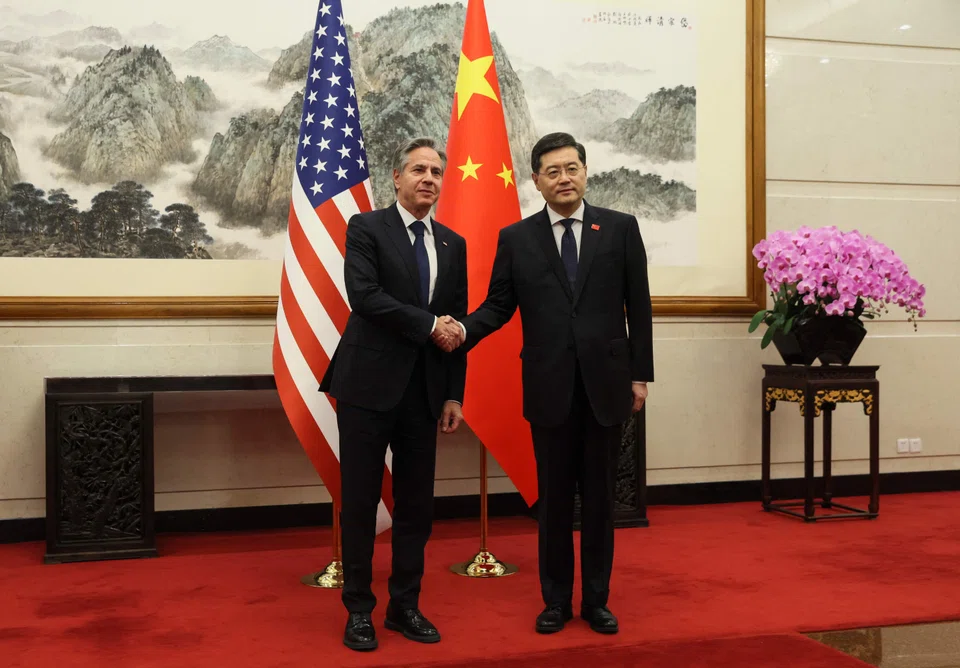
US SECRETARY of State Antony Blinken began talks in China on Sunday (Jun 18) on the highest-level trip by a United States official in nearly five years as the two powers looked to notch down the temperature in an escalating rivalry.
Both sides have voiced guarded hope of improving communication and preventing conflict, with the world’s two largest economies at odds on an array of issues from trade to technology and regional security.
Blinken and his aides opened the two-day visit by meeting Foreign Minister Qin Gang at an ornately decorated state villa in Beijing’s ancient Diaoyutai gardens, where the Chinese hosts will later throw a banquet dinner.
Qin and Blinken walked along a red carpet and shook hands next to a pair of national flags standing in front of a painting of craggy mountains and wispy clouds.
Blinken earlier said he would seek to avoid “miscalculations” and to “responsibly manage” relations with the country identified by US policymakers across party lines as the greatest challenge to Washington’s global primacy.
He was originally scheduled to visit in February but abruptly scrapped his plans as the US protested – and later shot down – what it said was a Chinese spy balloon flying over its soil.
Navigate Asia in
a new global order
Get the insights delivered to your inbox.
US President Joe Biden played down the balloon episode as Blinken was heading to China, saying: “I don’t think the leadership knew where it was and knew what was in it and knew what was going on.”
“I think it was more embarrassing than it was intentional,” Biden told reporters on Saturday.
Biden said he hoped to again meet President Xi Jinping after their lengthy and strikingly cordial meeting in November on the sidelines of a Group of 20 summit in Bali, where they agreed on Blinken’s visit.
“I’m hoping that, over the next several months, I’ll be meeting with Xi again and talking about legitimate differences we have but also how there’re areas we can get along,” Biden said.
The two leaders are likely to attend the next G20 summit, in September in New Delhi, and Xi is invited to travel to San Francisco in November when the US hosts the Asia-Pacific Economic Cooperation forum.
Array of disputes
The US and China are at odds over a slew of issues including trade, technology and Taiwan.
Beijing has not ruled out seizing Taiwan by force and has conducted military drills twice since August near the self-governing democracy, in response to the actions of top US lawmakers.
Ahead of Blinken’s visit, Chinese foreign ministry spokesman Wang Wenbin said the US needed to “respect China’s core concerns” and “give up the illusion of dealing with China ‘from a position of strength’.“
Beijing has been especially irritated by Biden’s restrictions on the export of high-end semiconductors to China, with the US both fearing their military application and eager to prevent the communist state from dominating next-generation technologies.
In a rising domestic priority for theUS, an aide said Blinken is expected to press China to curb precursor chemicals sent to Latin America to produce fentanyl, the powerful painkiller behind an addiction pandemic that kills tens of thousands of Americans a year.
Washington has also lashed China over human rights, with Blinken’s visit the first by a Cabinet member since the US formally accused Beijing of genocide against the mostly Muslim Uyghur minority.
Keeping allies close
As part of the Biden administration’s focus on keeping allies close, Blinken spoke by telephone with his counterparts from both Japan and South Korea during his 20-hour trans-Pacific journey.
Biden’s national security adviser, Jake Sullivan, travelled to Tokyo for separate three-way meetings involving Japan and both South Korea and the Philippines.
In recent months, the US has reached deals on troop deployments in southern Japan and the northern Philippines – both strategically close to Taiwan.
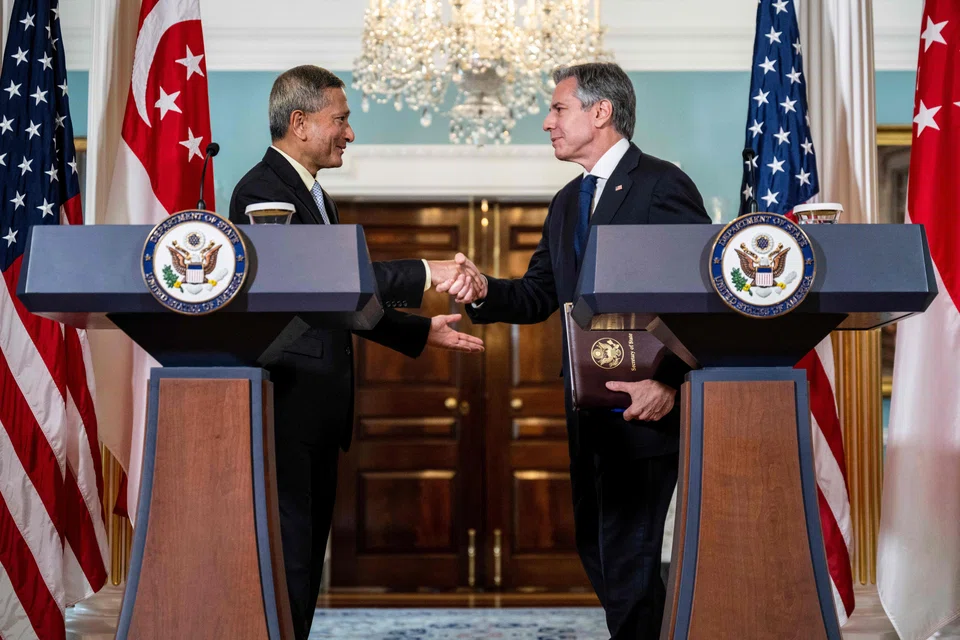
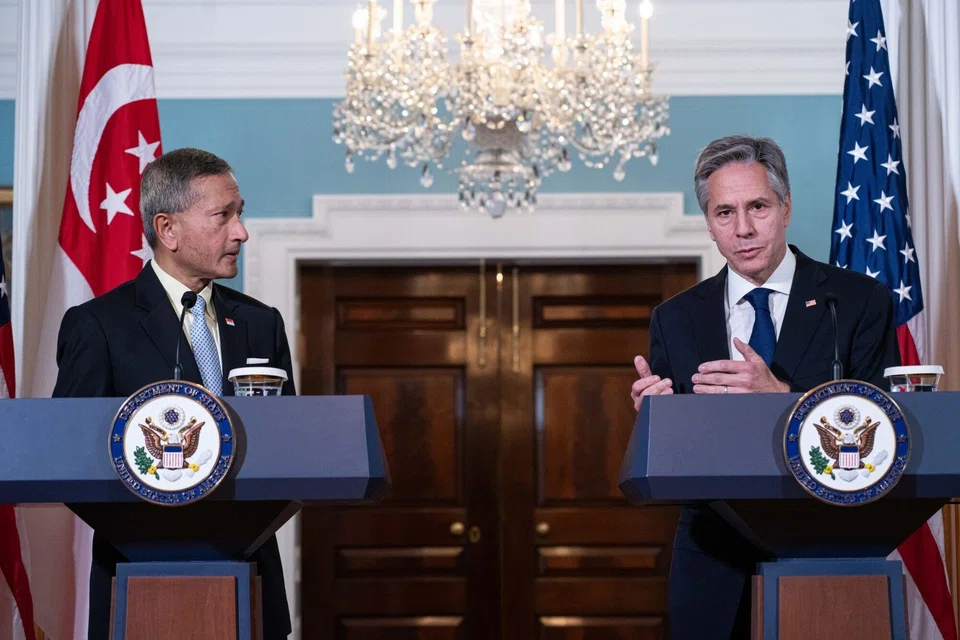
Blinken, before his departure, also met in Washington with his counterpart from Singapore, who voiced the hope that the US would stay as a power but also find ways to coexist with a rising China.
Blinken’s “trip is essential, but not sufficient”, Foreign Minister Vivian Balakrishnan said.
“There are fundamental differences in outlook, in values. And it takes time for mutual respect and strategic trust to be built in.”
Blinken is the first top US diplomat to visit Beijing since a stop in 2018 by his predecessor Mike Pompeo, who later championed no-holds-barred confrontation with China in the final years of Donald Trump’s presidency.
In an update late on Sunday, the US State Department said Blinken held “candid, substantive, and constructive” talks with Qin.
“The Secretary emphasized the importance of diplomacy and maintaining open channels of communication across the full range of issues to reduce the risk of misperception and miscalculation,” State Department spokesperson Matthew Miller said, adding that Blinken invited Qin to Washington to continue discussions.
“They agreed to schedule a reciprocal visit at a mutually suitable time”, Miller added.
Decoding Asia newsletter: your guide to navigating Asia in a new global order. Sign up here to get Decoding Asia newsletter. Delivered to your inbox. Free.
Share with us your feedback on BT's products and services

