

BOJ awaits outcome of key Fed meeting
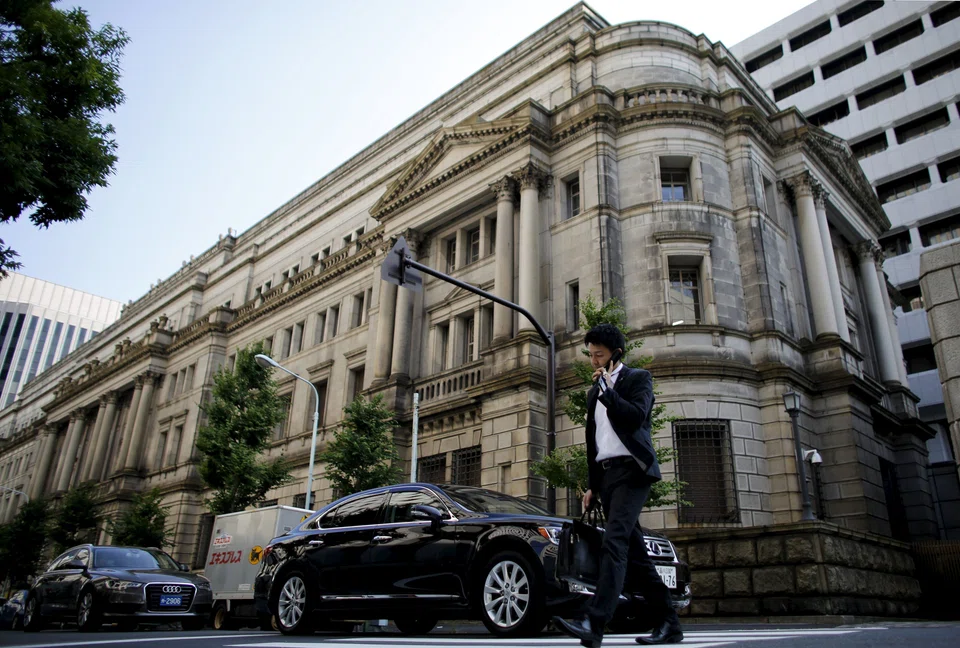
Tokyo
MEETING in the shadow of this week's critical meeting of the US Federal Reserve's rate-setting Open Markets Committee, the Policy Board of the Bank of Japan (BOJ) on Tuesday maintained its monetary easing stance.
The Fed's decision could set the stage for further policy action by the BOJ and other central banks. If the Fed decides to begin raising rates, currency and stock markets will need to adapt to a "new reality", and the BOJ and others may need to adjust their policies, said analysts.
But if the Fed holds off action for now - as it is expected to do - the sense of uncertainty will be prolonged, and central banks may need to take stabilising actions.
Market expectations of a further move by the BOJ have been growing given the slowdown in China and other emerging markets, and the fact that annual consumer price inflation remains stubbornly at around zero, far short of the BOJ's target of 2 per cent.
But any moves the BOJ makes now - in advance of a Fed decision - could be overtaken by events. Hence the need to hold off on any action.
Meanwhile, the BOJ downgraded its view on prospects for overseas economies, with governor Haruhiko Kuroda noting at a briefing that China's economy had recently slowed, and that the slowdown in emerging economies was generally already affecting Japan's exports and output.
As global economies - mainly those of the advanced nations - continue to recover, the positive effect is spreading and helping emerging economies emerge from the slowdown, he said. "Export growth is flat now, but is likely to increase gradually ahead, due in part to the effects of the weak yen. China's economy has recently slowed, (with weakness seen) mainly in the manufacturing sector. But it is expected to grow stably with support from the authorities' fiscal and monetary measures."
Meanwhile, the BOJ has kept up a moderately upbeat tone on global economic prospects in a written statement that was issued after Tuesday's meeting of its nine-member Policy Board. "Overseas economies, mainly advanced economies, have continued to grow at a moderate pace despite the slowdown in emerging economies.
"Exports and industrial production have been more or less flat, due mainly to the effects of the slowdown in emerging economies."
It noted that, on the domestic demand side, business fixed investment has been on a moderately upward trend, as corporate profits have continued to improve markedly. "Private consumption has been resilient, and housing investment has been picking up against the background of steady improvement in the employment and income situation."
Japan's economy is expected to continue recovering moderately while the annual rate of increase in the consumer price index is likely to be around zero per cent for the time being, due to the effects of the decline in energy prices, it added.
The BOJ's inflation target or "price goal" is measured by price changes in the headline consumer price index, which includes oil. Stripping out oil prices, the underlying rate of inflation has reached around one per cent as the prices of increasing numbers of items in the index show an upward trend, BOJ sources said.
READ MORE: Yen gains as BOJ refrains from more stimulus






