

BOJ's policy tweak does not signal exit from ultra-low rates, says deputy governor
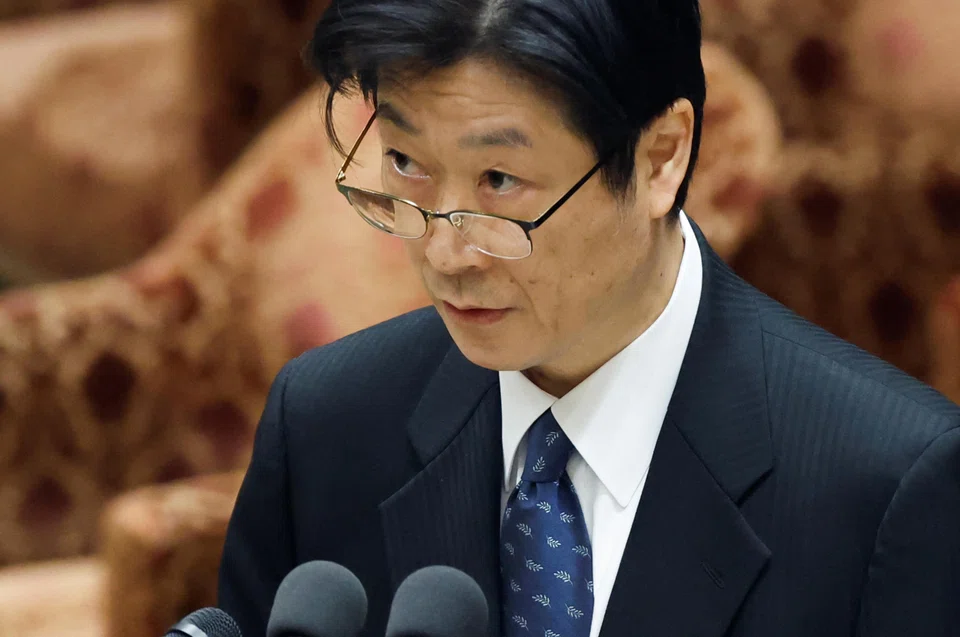
THE Bank of Japan’s decision last week to tweak its bond yield control policy was aimed at making its massive stimulus more sustainable, not a prelude to an exit from ultra-low interest rates, its deputy governor Shinichi Uchida said on Wednesday (Aug 2).
Uchida said there was still a long way to go before conditions fall in place for the BOJ to raise its short-term interest rate target from the current -0.1 per cent.
He added the BOJ stood ready to step in to stem sharp rises in long-term interest rates, even before the 10-year bond yield hits the newly set 1.0 per cent cap.
“Depending on the speed of the moves, we will step in to stop the rise,” Uchida told reporters after meeting business leaders in Chiba prefecture. “If economic and price conditions remain roughly unchanged, I don’t expect interest rates to rise sharply.”
Under a policy called yield curve control (YCC), the BOJ has guided short-term interest rates at -0.1 per cent and the 10-year bond yield around 0 per cent. It also set an allowance band of 0.5 per cent up and down around the 10-year yield target.
The central bank last week stunned markets by modifying YCC to allow long-term interest rates to rise more freely in line with increasing inflation.
While the bank left unchanged its interest rate targets and the allowance band, it said it would now allow the 10-year yield to rise by as much as 1 per cent.
With corporate price-setting behaviour changing and inflation expectations showing signs of re-accelerating, the BOJ made the tweaks to balance the cost and benefits of YCC, Uchida said.
“Every policy has its positive effects, but it also always comes with costs. There is no free lunch for any policy,” Uchida said in a speech.

“When inflation expectations rise, not only the easing effects but also the side effects strengthen. It is necessary to strike an optimum balance between the two,” he said.
Given “extremely high” uncertainty over the economic and price outlook, the BOJ’s decision to make YCC more flexible was aimed at sustaining ultra-loose policy, Uchida said.
“Needless to say, we do not have an exit from monetary easing in mind.” REUTERS
Decoding Asia newsletter: your guide to navigating Asia in a new global order. Sign up here to get Decoding Asia newsletter. Delivered to your inbox. Free.
Share with us your feedback on BT's products and services
TRENDING NOW

Temasek’s Wan Chee Foong to helm PIL, Lars Kastrup to be board adviser

Chagee, Mixue and Luckin won the market. Sustaining their edge is the harder part

He built the Vingroup empire. Now South-east Asia’s richest man is handing some key roles to his sons

One-third of Singapore-listed firms at risk in severe AI downturn: MAS

