

BOJ’s Ueda says Japan is getting closer to sustainable inflation
Markets bet the central bank will lift rates to 0.75%, the highest since 1995, on Dec 19
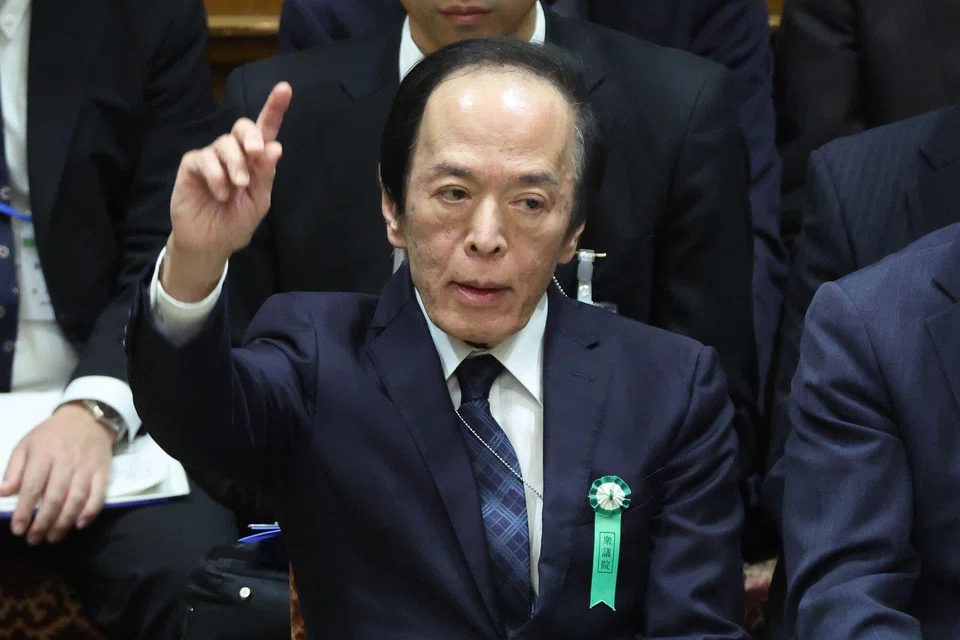
[TOKYO] Bank of Japan (BOJ) governor Kazuo Ueda said the central bank is getting closer to attaining its inflation target, adding to signals that the BOJ may raise its interest rate at a policy meeting next week.
“We are closer to 2 per cent inflation on a sustained basis,” Ueda said in an interview with the Financial Times recorded on Monday night and streamed on Tuesday (Dec 9). “I can say that I think.”
Ueda spoke amid elevated expectations that the BOJ will raise borrowing costs to 0.75 per cent, the highest level since 1995, when it delivers its next policy decision on Dec 19.
Bloomberg reported last week that officials at the bank are ready to raise interest rates at the meeting, provided there’s no major shock to the economy or financial markets in the meantime, according to people familiar with the matter.
In his interview with the FT, the governor indicated that the bank is not likely to be done once it has raised rates again as it continues to adjust the level of support for the economy.
The bank will continue to adjust degree of monetary accommodation slowly “until we get to 2 per cent inflation on a sustained basis and until when our policy rate is back to the natural level. Wherever it is,” Ueda said.
The yen strengthened a touch as Ueda’s comments were streamed, briefly dipping below the 156 mark against the US dollar.
Traders see about an 88 per cent chance of a rate hike at the upcoming gathering, based on overnight swaps. A key focus is how Ueda will indicate the future rate path and his thinking on the neutral rate at which borrowing costs neither stimulate nor restrict the economy.
Ueda also reiterated the BOJ’s stance that it is closely monitoring the impact of foreign exchange rates on inflation. The yen reached 157.89 per US dollar last month, the lowest level since January, stoking concerns over additional inflationary forces. For some BOJ watchers, the ongoing weakness in the currency is among the factors favouring a December move.
SEE ALSO




The yen has weakened partly due to rising concerns over Japan’s fiscal health as Prime Minister Sanae Takaichi compiled a bigger-than-expected economic package in November.
“We try to stay away from making explicit comments on fiscal policy,” Ueda said. “We usually say things like, ‘It’s the government’s job to deliver on medium to long term fiscal sustainability.’” BLOOMBERG
Decoding Asia newsletter: your guide to navigating Asia in a new global order. Sign up here to get Decoding Asia newsletter. Delivered to your inbox. Free.
Share with us your feedback on BT's products and services
TRENDING NOW

DBS, OCBC, UOB rout lops billions off STI as inflation, rate concerns spook investors

Grab CEO’s wife Chloe Tong on life with Anthony Tan and finding her purpose

OCBC sheds S$8 billion in value as shares close nearly 6% down; analysts cautious on banks

Deal between tycoon friends sparks scrutiny of Philippine power sector

