
Bond market rate-cut bets rattled by Powell pushback, job surge
 Add BT as a preferred source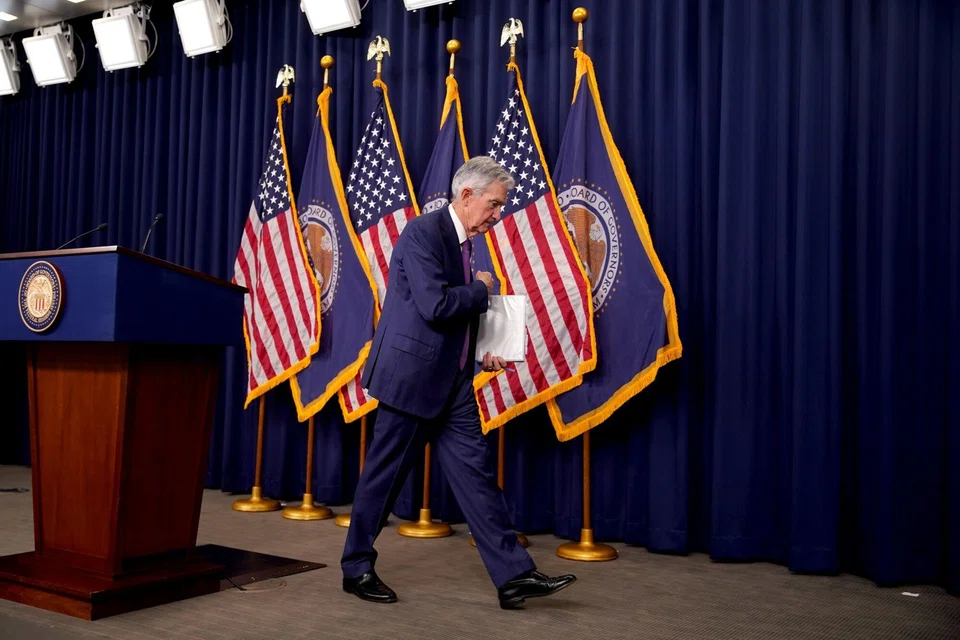
THE United States economy is testing bond traders’ faith that the Federal Reserve will deliver a series of interest-rate cuts this year.
The unexpected surge in hiring in January showed there’s little pressure on the central bank to start easing monetary policy just yet, giving it time to see if inflation is headed sustainably towards its 2 per cent target.
Fed chair Jerome Powell – who is scheduled to appear on CBS’s 60 Minutes on Sunday (Feb 4) – endorsed such a wait-and-see approach last week, driving traders to slash bets on a first rate cut before May.
But Powell left little doubt that the central bank will start loosening this year as the post-pandemic inflation surge subsides. That’s left bond traders convinced rates are coming down at some point – even as questions mount about how far the central bank will go.
“The Fed can deliver three to four rate cuts as the rate of inflation keeps coming down,” said Kevin Flanagan, head of fixed income strategy at Wisdom Tree Investments. But he said the jump in job growth and wages in January do “challenge the Treasury market’s narrative that the labour market is going to soften to the point where you’re going to have aggressive Fed easing”.
For Priya Misra, portfolio manager at JP Morgan Asset Management, the uncertainty about the Fed’s timing has increased the appeal of five-year notes, which she sees as likely benefiting from a longer rate-cutting campaign.
Navigate Asia in
a new global order
Get the insights delivered to your inbox.
“The later the Fed begins the process of normalisation, the more it will likely have to do due to lags,” she said.
The economy has consistently defied fears that the Fed’s rate hikes – which stopped in July – would set off a recession. Instead, it has continued to expand at a solid pace, and employers added 353,000 jobs to their payrolls in January, the biggest monthly jump in a year and nearly twice what economists expected.
The figures unleashed a fresh sell-off in the bond market on Friday, pushing up yields across the board. Those on two-year Treasuries jumped as much as 20 basis points to over 4.4 per cent, the biggest one-day spike since March.




Yet the still-widespread conviction that the Fed will start easing policy by mid-year is setting a sort of floor under the bond market. Whenever yields spike, buyers have tended to flood back in, seeking to lock in the relatively high payouts before they disappear.
Moreover, there’s a record US$6 trillion stashed in money-market funds, which may start to be shifted towards bonds once short-term rates start coming down.
While the current strength of the economy has meant there is little urgency, policymakers are mindful of the risk of keeping interest rates too high for too long. The rate is now in a band of 5.25 to 5.5 per cent, more than twice the level that’s seen as neutral to growth. As inflation comes down, that leaves plenty of room to make policy less restrictive.
Powell on Wednesday said that the central bank is “in a risk management mode” before changing course. Moreover, he said officials welcome a strong labour market as long as inflation continues to recede.
That messaging is a reason why the futures market continues to price in about five quarter-point cuts this year and still put some odds on a first move in March, even after Powell said that was unlikely.
So there may be room for bonds to rally. Bruno Braizinha, rates strategist at Bank of America Corp., advised investors to prepare for the risk that 10-year Treasury yields – now just over 4 per cent – could fall to 3 per cent this year.
“If the market begins to bring down their pricing of the Fed’s neutral policy rate that could pull yields lower,” he said. “Also, there still remains risk for a shock to the economy that will result in the market’s current expectation for a soft-landing not happening. Additionally, inflation may begin to fall more aggressively.” BLOOMBERG
Decoding Asia newsletter: your guide to navigating Asia in a new global order. Sign up here to get Decoding Asia newsletter. Delivered to your inbox. Free.
Share with us your feedback on BT's products and services

