‘Born rebel’: Hong Kong pro-democracy media mogul Jimmy Lai
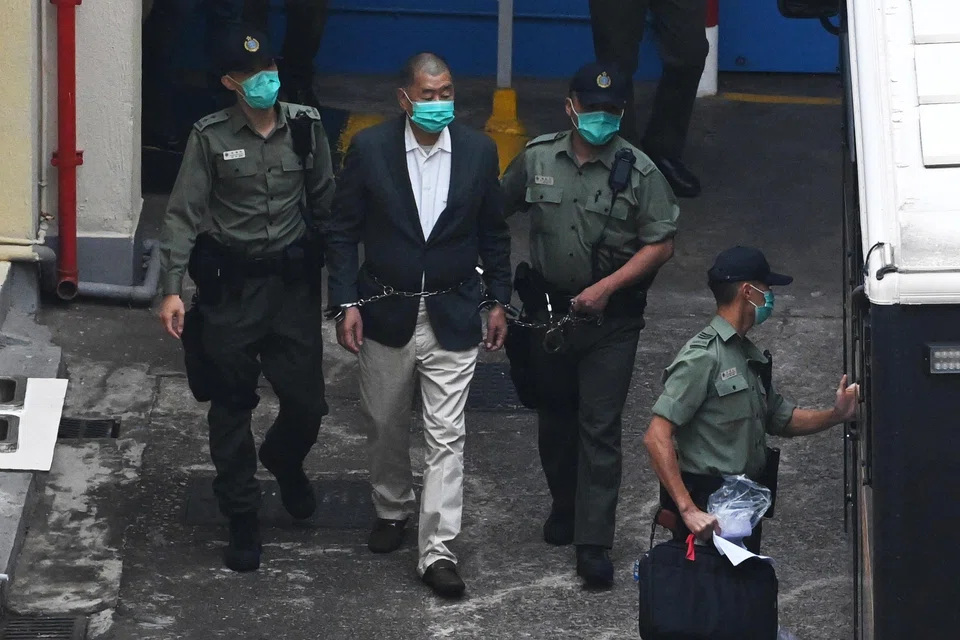
JIMMY Lai, a jailed media tycoon and prominent critic of the Chinese Communist Party, will stand trial on Monday (Dec 18) on internationally condemned national security charges.
The 76-year-old has been in prison for three years and faces the possibility of spending the rest of his life there.
He is the first person to contest a “foreign collusion” charge under Hong Kong’s national security law, imposed in 2020 after huge democracy protests engulfed the city.
Here is what we know about Lai:
A rags-to-riches millionaire, Lai is a self-styled “troublemaker” and staunch advocate of Hong Kong’s now-quashed democracy movement.
Born in mainland China, he was smuggled into Hong Kong as a stowaway at the age of 12 and as a child worked in sweatshops before he later built up the hugely successful Giordano clothing empire.
Lai established his first publication shortly after China sent tanks to crush protests in Beijing’s Tiananmen Square in 1989, writing columns that regularly criticised senior Chinese leaders.
His two primary outlets – the Apple Daily newspaper and the digital-only Next magazine – were hugely popular in Hong Kong, mixing tabloid sensationalism with hard-hitting political reportage.
They were also among the few publications that openly backed Hong Kong’s massive, and at times violent, democracy protests in 2019.

Lai was vilified in China’s state media as a “traitor”.
Asked why he did not keep quiet and enjoy his wealth like other Hong Kong tycoons, Lai told AFP before his arrest: “Maybe I’m a born rebel, maybe I’m someone who needs a lot of meaning to live my life besides money.”
Bail denied
He was first arrested in August 2020 when Hong Kong police raided Apple Daily and paraded him through the newsroom.
A judge briefly granted him bail in December 2020 on steep conditions, including posting HK$10 million (S$1.7 million), but that lasted only a week before the top court ordered him back to prison.
He has been there ever since, with his son Sebastien Lai calling him “the oldest political prisoner in Hong Kong”.
A different, tougher set of bail rules now apply to national security cases since the reversal in Jimmy Lai’s case, affecting dozens of other prosecutions.
Jimmy Lai, a UK passport holder, was also denied his choice of representation for his collusion trial: veteran British human rights lawyer Tim Owen.
Hong Kong courts initially sided with Jimmy Lai, but Beijing responded by granting new powers to Hong Kong’s leader to screen overseas lawyers in security-related cases.
The city’s pro-Beijing legislature went a step further in May, passing laws requiring overseas lawyers to get special permission to join security cases.
This separate dispute will continue with another court hearing next year.
A death knell
Jimmy Lai has already been found guilty in five separate cases during the more than 1,100 days he has been in prison.
He was handed a sentence of 20 months for organising and participating in marches during the democracy protests that formed the basis of four prosecutions.
He was convicted in the fifth case of “conspiracy to defraud” for breaching the terms of an office lease. That added another 69 months to his sentence.
Separately, he tried to stop police from going through two of his cellphones, citing legal protections against searching journalistic materials, and attempted to protect his Apple Daily shareholder voting rights after the company’s assets were frozen.
Jimmy Lai lost both cases after High Court judges stressed the importance of national security.
He told AFP before his arrest in 2020 that Beijing’s national security law would be “a death knell for Hong Kong”.
“It will supersede or destroy our rule of law and destroy our international financial status,” he said. AFP
Decoding Asia newsletter: your guide to navigating Asia in a new global order. Sign up here to get Decoding Asia newsletter. Delivered to your inbox. Free.
Share with us your feedback on BT's products and services