

Britain getting ready to scale up negative-emissions technology
 Add BT as a preferred source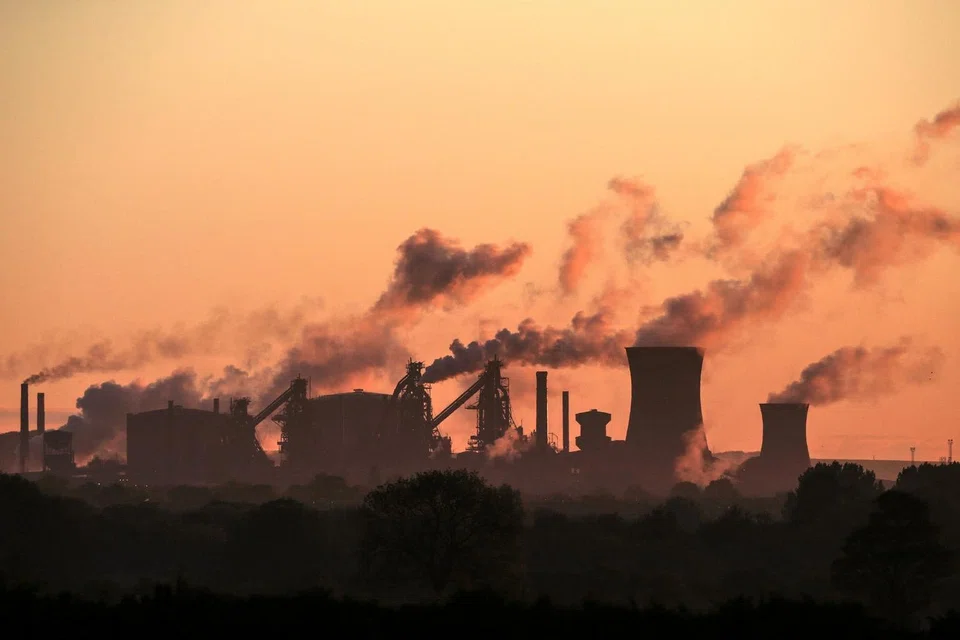
[LONDON] British companies are preparing for the UK government to decide how to spend more than US$1 billion on infrastructure capable of capturing and burying millions of tonnes of carbon dioxide pollution.
The money - £800 million (S$1.44 billion) - will go towards partially funding a "cluster" that captures emissions from factories and power stations by the middle of this decade. In a bid to shore up its climate credentials, the Conservative party made the promise to spend the sum in its manifesto, before it won a majority in the general election in December.
In 2015, a previous Conservative-led government made the surprise decision to scrap a US$1.4 billion carbon-capture and storage (CCS) contest. Yet no pathway to limit global warming to tolerable levels exists that doesn't envision some use of the technology. Even if all electricity came from renewables, it doesn't address the emissions from cement and steel plants-more than 10 per cent of the global total- which have few technology alternatives working at scale.
Last year, the UK became the first major country to target net-zero emissions by 2050. That might seem like a long time in the future, but it isn't, said Dominic Nash, utilities analyst at Barclays plc. In energy project investment terms "30 years is basically tomorrow".
Carbon capture projects would make most sense in five main clusters of industrial plants in the UK including near the Humber River, Merseyside, Teesside, Runcorn and Grangemouth, according to a report by the consulting group Element Energy Ltd. Those places employ more than 90,000 people in chemicals and oil refining.
The utility Drax Group plc wants government support for an initiative in the Humber region of England. The system would remove emissions and potentially pipe them to an oil field under the North Sea. "The government would be able to make the greatest contribution toward delivering its world-leading climate ambitions," said Will Gardiner, chief executive officer of Drax.
Navigate Asia in
a new global order
Get the insights delivered to your inbox.
Drax's consortium, which includes Equinor ASA and National Grid plc, is already working on a system that removes carbon dioxide from burned biomass. It says this will create "negative emissions" because the trees removed CO2 from the atmosphere as they grew and the capture plant would then additionally bury the emissions from burning them.
The technology is called bioenergy with carbon capture and storage, or BECCS, and it's being tested by Drax in a partnership with Leeds-based startup C-Capture Ltd. The pilot plant is currently capable of capturing one tonne of carbon dioxide each day. With an investment of £50 million the plant can be scaled up this year to capture 100 tonnes each day, said C-Capture chief executive Tom White.
Going from the current pilot plant to a fully scaled up plant capturing 10,000 tonnes of carbon dioxide each day is "like going from a tricycle to an aircraft", said Mr White. Building it in the next five to seven years is possible, he said, "We are confident we can do that. "Even then, the project would capture only about a sixth of the emissions at Drax, the UK's most polluting station.
"The UK has been toying with CCS for more than a decade," Mr Nash said. "This year is the year it might actually push the button on a project."
Whether that's likely is unclear because government officials declined to comment. In an indication of the government's interest in CCS, UK Energy Minister Kwasi Kwarteng visited Drax last week.
BLOOMBERG
Share with us your feedback on BT's products and services
TRENDING NOW

Middle East-linked energy supply shocks put Asean Power Grid back in focus

Thai and Vietnamese farmers may stop planting rice because of the Iran war. Here’s why

US-China rivalry and the Kindleberger Trap: Why inaction – not escalation – is the biggest risk
Will the Philippines hit the brakes on a deregulated oil industry amid fuel pain?

