

Britain’s deficit narrows but fuel duty fall points to Iran war drag
Government borrowing in 12 months to end-March is equivalent to 4.3% economic output; gap of £132 billion is £700 million less than most recent official forecast
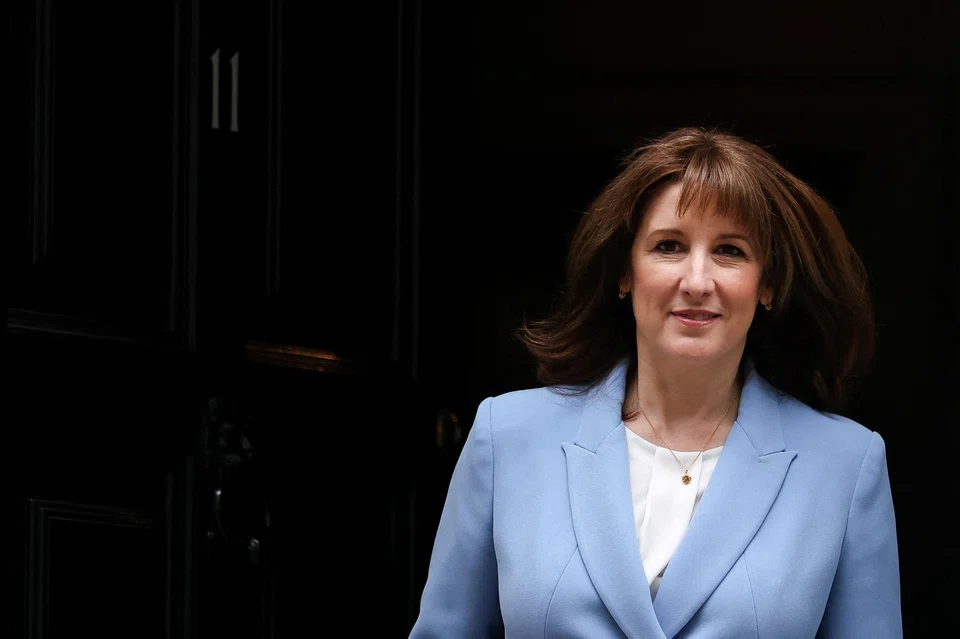
[LONDON] Britain’s budget deficit for the last financial year narrowed to a six-year low but official data published on Thursday (Apr 23) also showed an early impact of the Iran war as consumers scaled back their spending on fuel which has shot up in price.
Government borrowing in the 12 months to the end of March was equivalent to 4.3 per cent of economic output – much bigger than before the Covid-19 pandemic but the smallest deficit since the 2019/20 financial year.
The gap of £132 billion (S$227 billion) was £700 million less than the most recent official forecast that underpins the budget plans of finance minister Rachel Reeves.
The total was down from £151.9 billion in 2024/25.
However, debt interest spending in 2025/26 was £97.6 billion, up from £85.4 billion a year previously and marking the second-highest figure in cash terms since 2022/23, when inflation soared after Russia’s invasion of Ukraine.
Reeves has highlighted the need to bring down Britain’s debt costs as she tries to keep her budget plans on track to balance day-to-day spending with tax revenues by the end of the decade.
That so-called current budget deficit was equivalent to 1.7 per cent of gross domestic product in 2025/26, 0.9 percentage points lower than the previous financial year and the lowest value since the 12 months to March 2020, when it was 0.7 per cent of GDP.
But in a reminder of how the Iran war could add to the challenge of meeting her target, Thursday’s data showed revenue from fuel duty – which is set at a fixed level – fell to £1.8 billion in March, the lowest for any month since July 2023.
While representing only a fraction of government revenue, the drop in fuel duty in response to higher prices for petrol and diesel could be an early warning sign of how the war might weaken activity across the economy and hit overall tax revenues.

Last week, the International Monetary Fund cut Britain’s economic growth forecasts for 2026 by more than for any other Group of Seven nation due to the country’s exposure to higher energy prices with its heavy use of natural gas. “A more stagflationary backdrop is forecast to take shape, with speculation already building about the impact of weaker growth on the chancellor’s headroom,” Nabil Taleb, economist at PwC UK, said, referring to Reeves’ ability to meet her borrowing target.
“Recent moves in bond markets, with gilt yields briefly touching 5 per cent for the first time since 2008 before easing, also highlight the UK’s vulnerability to uncertainty.”
In March alone, the Office for National Statistics reported public sector net borrowing of £12.6 billion. Economists polled by Reuters had a median forecast of a £10.3 billion deficit for the month. REUTERS
Decoding Asia newsletter: your guide to navigating Asia in a new global order. Sign up here to get Decoding Asia newsletter. Delivered to your inbox. Free.
Share with us your feedback on BT's products and services
TRENDING NOW

DBS, OCBC, UOB rout lops billions off STI as inflation, rate concerns spook investors

Grab CEO’s wife Chloe Tong on life with Anthony Tan and finding her purpose

OCBC sheds S$8 billion in value as shares close nearly 6% down; analysts cautious on banks

Deal between tycoon friends sparks scrutiny of Philippine power sector

