

Britain’s universities bet on foreign students. Now they’re turning elsewhere
Tighter visa rules and increased competition from Asia are affecting international student flows into country
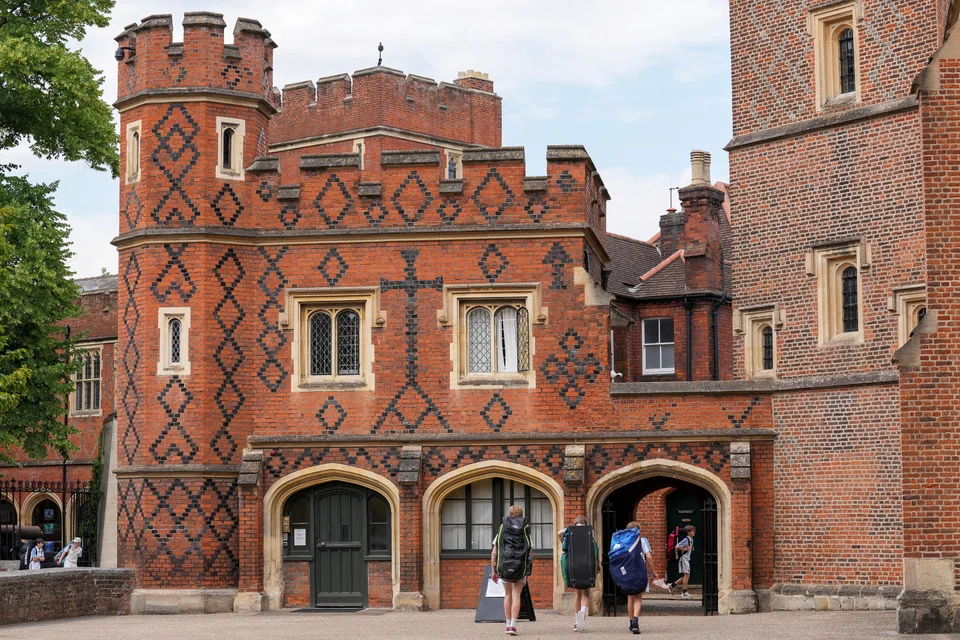
[LONDON] As thousands of teenagers prepare for their first day of higher education, the universities of Greenwich and Kent in southern England are taking their own step into the unknown.
The two mid-ranking institutions are merging into one of the UK’s biggest, forging a blueprint for others in the economically challenged sector to follow.
While both schools will continue under their individual names, the combination aims to create “greater economies of scale” and allow for a “centralising of some services” under a restructuring that is still being drawn up.
The radical move, first discussed three years ago, is a sign of the times in a sector that is struggling to stave off a full-blown financial crisis. British universities have long traded off their stellar global reputation to attract higher-paying international students, but domestic demographics, tighter visa rules and increased competition from Asia is strangling that golden goose.
“I do think there will be some failures in the sector if the government doesn’t do anything,” said Jane Harrington, CEO of London and South East University Group – the merged Greenwich and Kent entity – told Bloomberg News. “They need to understand that the cost of a university failing will be far more than them providing some support.”
Funding hit
Figures from trade body Universities UK suggest that its members are facing a combined £3.7 billion (US$5 billion) funding hit by the end of the decade from government policy decisions, such as tighter immigration rules.
While the top universities, including Oxford and Cambridge, are somewhat insulated from the crisis, many are in a more precarious position from declining international student income, with the lowest ranked the most exposed, according to the Tony Blair Institute for Global Change.
Years of frozen domestic tuition fees and rising costs have compounded the problem.
“It is fair to say that we are experiencing unprecedented levels of system-wide pressure,” said Nick Vaughan-Williams, provost at the University of Birmingham. His university is able to “weather the storm”, but he warns that the big international student markets of the UK, Canada, Australia and the US are now facing much tougher competition.


“We absolutely need to call out and think through the fundamental decline in key international student markets,” he said. “More East Asian students are choosing to remain in East Asia, and East Asian governments are investing hard in campus infrastructure and in their universities.”
While the UK has enjoyed a modest bump in applications from US students in recent years, it has seen students from the EU slide since Brexit ended freedom of movement between Britain and the bloc.
Students from India, China, Pakistan and Nigeria currently arrive in the greatest numbers. However, universities in many developing countries are rapidly improving, particularly in China – with many of its institutions climbing global league tables.
The flow of students is also often dependent on economic conditions in their country, as evidenced by volatility in arrivals from Nigeria in recent years after a plunge in its currency. Conflict in the Middle East was cited as the latest threat to international student numbers by the Office for Students, the independent higher-education regulator.
Whatever the source, students from abroad pay between £11,400 and £38,000 per year for undergraduate courses, according to the British Council. That compares with an annual cap of just under £9,790 for UK students.
Drop in number of student visas
Andy Burnham’s arrival in No 10 Downing Street will do little to calm nerves after he railed against the university channel for young people, in favour of getting more into technical education.
The “days of a school system configured entirely around the university route will be brought to an end”, he said in June before becoming prime minister. With Shabana Mahmood reappointed as the UK’s home secretary, there is little sign the new government will let up on efforts to reduce immigration, either.
“We need to think carefully about how we support international student recruitment in the realities of the political context that we operate,” said Vaughan-Williams.
The number of student visas has declined sharply in recent years after the government stopped most international students bringing family members and raised the threshold on savings needed to arrive. Home Office data suggests that study visas granted have slipped by around 30 per cent from the peaks of more than 600,000 in 2022 and 2023.
A new £925 per year levy on universities for each international student that is set to take effect in 2028 is another looming threat – a £570 million annual blow, according to the Office for Students. Universities will not pay the charge on the first 220 students per year.
The Office for Students predicted that almost half of the country’s 279 higher-education institutions will report a deficit for 2025-26. That would reach almost 60 per cent if student recruitment was flat over the coming years.
Universities are already taking drastic action to shore up their finances. Many are slashing staff and closing down entire departments that are too costly and low in demand.
The University of Nottingham – which is ranked by QS as the 97th best in the world – is considering closing its modern languages department entirely, though a final decision is yet to be made.
Others are being more aggressive in student recruitment, offering perks such as free laptops and gym memberships. And a price war has broken out to attract prized international students.
“This is like 30-dimensional chess,” said Vivienne Stern, chief executive of Universities UK, which represents the sector. “You can make your own good decisions as a strategic leader of an institution, but then the naira collapses, which is what happened in Nigeria just a few years ago.” BLOOMBERG
Decoding Asia newsletter: your guide to navigating Asia in a new global order. Sign up here to get Decoding Asia newsletter. Delivered to your inbox. Free.
Share with us your feedback on BT's products and services
TRENDING NOW

Malaysian king buys stake in Singapore-listed mining firm expanding into rare earths

Family offices ‘kept captive’ by relationship managers turn to independent advisers, direct deals

Once staunchly pro-China, Malaysian Chinese businesses are now distancing themselves from Beijing

Could stablecoins be the future of money?

