

Brookfield bets on AI inference, clean power in India while tackling curtailment risks
It expects the country to add 6 GW in data centre capacity for AI inference over the next 5 years

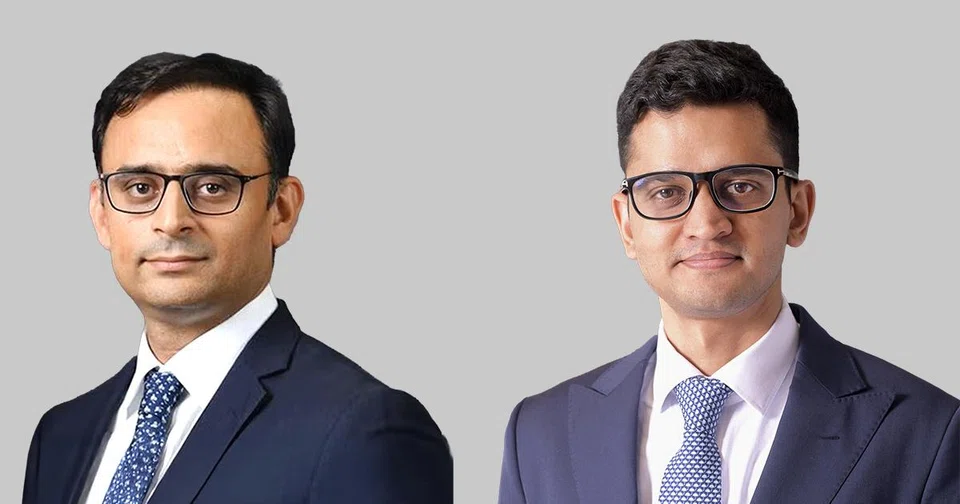
[SINGAPORE] Global asset manager Brookfield is betting on growth in data centre capacity for artificial intelligence inference in India, alongside renewable energy solutions – albeit with an eye on mitigating the risk of curtailment where grids are underdeveloped.
“Data centres are a fascinating area where India hasn’t really caught the AI wave yet,” said Arpit Agrawal, Brookfield’s head of India infrastructure.
India currently has about 1.5 gigawatts (GW) of installed data centre capacity, but “almost all of it is non-AI”, he told reporters at a virtual media roundtable on Tuesday (Jul 28).
But he also noted: “Over the next five years, we expect 6 GW of AI (inference) demand to be added to that business. There’s a lot of runway for that business to grow, and we are quite excited about it.”
AI inference is the process where a trained AI model applies the patterns it learnt to make predictions on new data.
Brookfield invested in India’s data centre market via Digital Connexion, a joint venture formed in 2023 with data centre giant Digital Realty and conglomerate Reliance Industries.
The joint venture’s portfolio includes 160 megawatts (MW) of data centre capacity across Chennai and Mumbai, of which 60 MW is operational and fully leased.
“We do have ambitions to grow this in multiples. There is no specific, set number; I think it will be dependent on the market opportunity, and the supply and demand at various points in time,” said Agrawal.
Brookfield has more than US$32 billion in assets under management in India, across the real estate, infrastructure, energy and private equity sectors.
Clean power and curtailment risks
Brookfield expects demand for renewable energy solutions to grow in parallel with India’s data centre boom, as well as broader economic growth.
The country already has over 250 GW of renewable energy capacity and aims to hit 500 GW by 2030, noted Nawal Saini, Brookfield’s head of India energy.
“India is adding nearly – on average – between 35 and 45 GW of renewable power every year, and we don’t think that that pace is going to slow down at least for the next... 10 years, 15 years from today, just given the requirement for power,” he said.
The company has 12 GW of operational renewable energy investments in India, and another 33 GW under development.
Still, Brookfield is mindful of infrastructure constraints as well, with Saini noting that renewable capacity can be added more quickly than transmission lines.
Curtailment is thus a concern. This occurs when the output of solar or wind power has to be intentionally reduced, due to inadequate grid infrastructure.
Some of Brookfield’s assets have faced curtailment, but “not so materially that it kills the business case”, said Saini.
“While it (makes an impact) a bit in the short term, we are very long-term investors. Long-term cash flows are generally okay,” he said, citing protections against grid losses in power purchase agreements.
He also highlighted that one of Brookfield’s platforms has scaled down from North India – where there is curtailment – and shifted capital and contracts to wind power assets in South India.
Other Brookfield platforms are supplying electricity directly to industrial customers via state networks, “where curtailment issues are not so bad”, he said, adding that energy storage solutions are another means to mitigate this risk.
Saini further noted that the Indian government is also focused on “supply chain indigenisation” for renewable energy.
The country has built up over 100 GW of capacity in solar module manufacturing capacity and, since June, has mandated the use of domestically made cells in solar panels.
If manufacturers can become “fully integrated and cost-competitive”, new export markets could open up, said Saini.
TRENDING NOW

Once staunchly pro-China, Malaysian Chinese businesses are now distancing themselves from Beijing

Looking beyond looming CEO succession, should UOB potentially pursue a transformative merger?

Could stablecoins be the future of money?

Grab CEO’s wife Chloe Tong on life with Anthony Tan and finding her purpose

