Budget 2022 boosts Singapore's green building efforts

Michelle Quah
Published Sun, Feb 27, 2022 · 09:50 PM

    Singapore

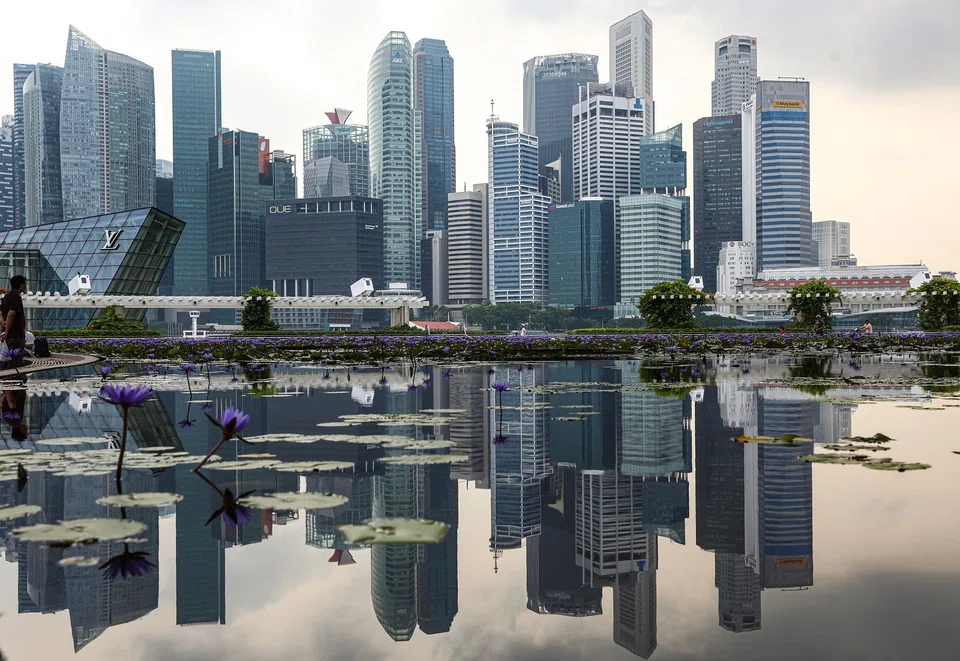
    AS in many parts of the world, the built environment in Singapore plays a significant role in its decarbonisation efforts. Buildings in the city-state account for over 20 per cent of the country's emissions and are responsible for over a third of its total electricity consumption.

    Greening its buildings is hence a key strategy in achieving its sustainability ambitions under the Singapore Green Plan 2030, and in fulfilling its international commitments on climate change, says the nation's Green Building Masterplan.

    And these efforts were given a boost in Singapore's latest Budget announcement earlier this month.

    The latest iteration of the Green Building masterplan set "80-80-80 in 2030" targets: greening 80 per cent of Singapore's buildings, by gross floor area, by 2030; having 80 per cent of new developments, by gross floor area, be Super Low Energy buildings from 2030; and achieving 80 per cent improvement in energy efficiency for best-in-class green buildings by 2030.

    "The goal is an ambitious one, and will need full public, private and people partnership to achieve it," says Charles Lim, leader, South-east Asia, at Johnson Controls.

    A green building, according to the Singapore Green Building Council (SGBC), is one that is resource-efficient and environmentally responsible throughout its life-cycle: from planning to design, construction, operation, maintenance, renovation, and demolition. The SGBC notes that green buildings are also increasingly taking occupant health factors into consideration.

    Green buildings here are certified through the Green Mark Scheme, administered by the Building and Construction Authority (BCA), while the SGBC certifies green building products and materials that play a complementary role to the national green building rating tool.

    Kamya Miglani, director of research, Work Dynamics, Asia-Pacific, at JLL, says Singapore's Green Mark scheme lays a clear emphasis on energy and water conservation through a mix of design and technology features and is now recognised and used not only in Singapore but across the region.

    She notes that the Republic has already greened 43 per cent of its buildings, which is more than half of its national target, and that the corporate sector here is aligned with the government's net-zero ambitions.

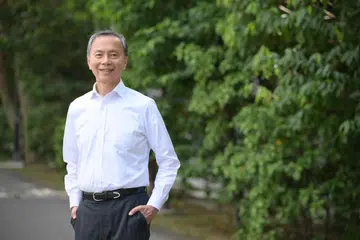
    Wong Heang Fine, group chief executive officer of Surbana Jurong Group, says the efforts are ongoing - with the BCA and SGBC actively working with key stakeholders on the next iteration of the masterplan, "paying particular attention to design, including supply chain and procurement of raw materials through to delivery, in which assets are operated and maintained sustainably through smart city management tools".

    Measures announced in this year's Budget will serve to boost the nation's efforts.

    Yoon Young Kim, cluster president, Singapore, Malaysia and Brunei, at Schneider Electric, says that Singapore's move to raise the carbon tax will help to accelerate the green transition. "Putting a higher price on carbon will urge more companies to realise the costs of inaction, and take more aggressive steps in decarbonisation. In doing so, companies should leverage innovative technologies more extensively to optimise performance in emissions, as well as to measure and achieve sustainability targets."

    Wong believes the carbon-tax increases will move the needle on decarbonisation, saying: "Major emitters and industrialists, mid- to heavy-duty transport sectors may accelerate their electrification or even adopt hydrogen as fuel. Petroleum & chemicals, iron and steel, cement and other major GHG (greenhouse gas) emitters will see more value in adopting renewable energy, electrifying their processes and/or introducing new energy alternatives in their operations."

    Lim also points out that Singapore is rolling out other measures and schemes to support its net zero ambition, such as a planned issue of up to S$35 billion in green bonds by 2030 to fund public sector green infrastructure projects.

    Schneider Electric is said to be heartened by the government's plans to put in place a transition framework that would support firms making the adjustments, while enabling them to manage their competitiveness. Yoon adds that Singapore can strengthen its role as a sustainability hub - providing the knowledge and expertise in the area of green buildings and sustainable development.

    Miglani believes the measures in Singapore's Budget 2022 will create opportunities for new technology such as carbon capture and storage, and hydrogen, which can create investment and business opportunities as well as jobs of the future. "Concrete steps taken by the Singapore government in the form of policy, incentives, taxes and collaboration is creating an ecosystem that will help Singapore achieve its net zero ambitions well within the timeline of mid-century."