

Budget 2022: Carbon tax set to rise to S$50-80 by 2030; watchers call surprise move 'bold', 'aggressive'
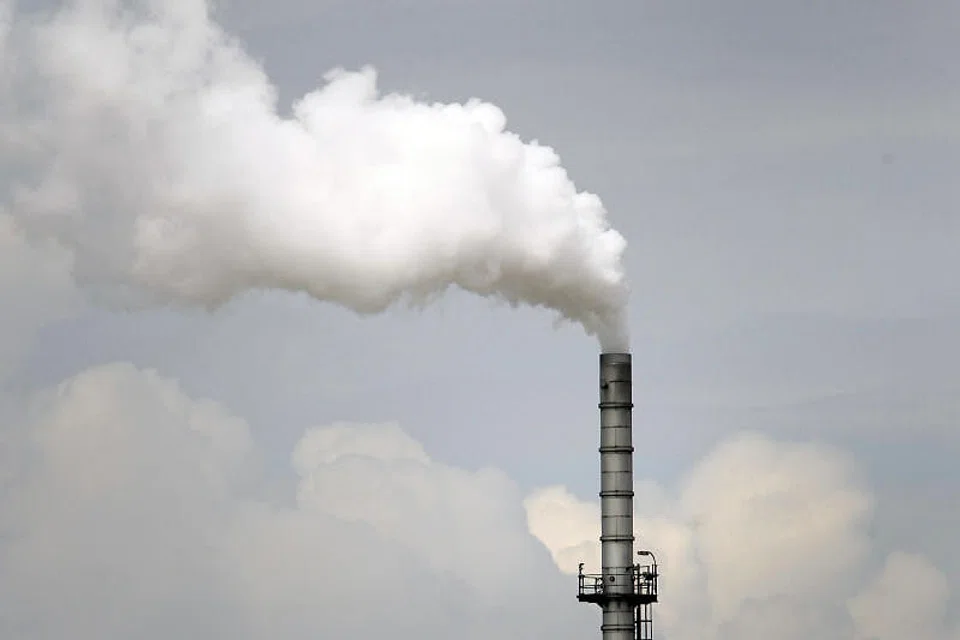
IN a surprise move watchers described as "bold" and "aggressive", the government has signalled that it will raise the carbon tax rate at least thrice within the decade, to ultimately reach S$50 to S$80 per tonne of greenhouse gas emissions by 2030.
Finance Minister Lawrence Wong announced in his Budget speech on Friday (Feb 18) that the first increase, to S$25 per tonne on companies that emit at least 25,000 tonnes of greenhouse gas annually, is set to take effect from 2024.
This will be followed by an increase to S$45 per tonne in 2026 and 2027, with the view to reach S$50 to S$80 per tonne by 2030, he added.
This is a far cry from the original plan to raise the price to between S$10 and S$15 per tonne by 2030, and the first increase to S$25 per tonne is significantly higher than the S$10 to S$15 per tonne range predicted by watchers.
But Wong said a stronger carbon price signal is necessary to achieve the country's new climate ambition of achieving net zero emissions "by or around mid-century".
With the change, Singapore's carbon tax trajectory will now be comparable with the carbon prices expected to be seen in China and South Korea. Their carbon prices were estimated to hit S$45 and S$61 per tonne by 2030, respectively.
It is also comparable with internal carbon prices used by companies, including state investor Temasek, which has set a price of S$57 per tonne of carbon dioxide equivalent to guide its investment decisions.
But the S$25 per tonne rate would translate to an increase of about S$4 per month in utility bills for an average 4-room HDB household, Wong pointed out.
'VERY BOLD, MAYBE TOO AGGRESSIVE'
Commenting on the changes, OCBC chief economist Selena Ling said they may come across as "very bold, maybe too aggressive" from companies' perspective, but it is the "right thing to do" if one were to take a societal view.
"What is important is that the additional carbon tax revenue will be channelled into carbon solutions, so the focus is really to invest in costly low-carbon infrastructure, help the greening of aviation and tourism industries and capture economic opportunities in green areas, including green finance," she said.
Melissa Low, a research fellow at the Energy Studies Institute who is surprised by the move, believes the increased carbon price will put Singapore "in a good position to be a climate leader in Asia".
The changes will spur growth in the sustainability and carbon services sector, and help it build and retain expertise to become a carbon services hub, she said.
But to Chia Tek Yew, vice-chairman of management consulting firm Oliver Wyman Singapore, the more interesting announcement was the availability of carbon credits to offset taxable emissions.
In the same speech, Wong announced that businesses will be allowed to use high-quality, international carbon credits to offset up to 5 per cent of their taxable emissions, in lieu of paying carbon tax, from 2024.
This not only cushions the impact for companies, it will also help create local demand for high-quality carbon credits and catalyse the development of well-functioning and regulated carbon markets, Wong noted.
Chia said this is "clear recognition" that more needs to be done to develop the voluntary carbon credits market.
Meanwhile, a spokesperson from ExxonMobil said it has "long supported" an explicit price on carbon to establish market incentives and provide the needed clarity and stability required for investments.
Tan Wooi Leong, senior director for energy and industrial at Surbana Jurong, said the carbon tax changes will "decisively move the needle" on Singapore's decarbonisation roadmap.
Major emitters and industrialists will be motivated to seriously explore and even expedite the adoption of carbon capture technologies and other solutions, while mid to heavy-duty transport sectors may accelerate their electrification or even adopt hydrogen as fuel, he said.
Industries in petroleum and chemicals, iron and steel, cement and other major emitters will see more value in adopting renewable energy, electrifying their processes, or introducing new energy alternatives in their operations, he added.
NO ADDITIONAL REVENUE EXPECTED
On Friday, Wong also announced that there will be no additional carbon tax on the use of petrol, diesel and compressed natural gas as these are already covered by excise duties, which separately encourage a moderation of fuel consumption and hence emissions.
This means that no changes will be made to the coverage of the carbon tax, which will continue to be applied on facilities that directly emit at least 25,000 per tonne of greenhouse gas emissions annually.
"We will continue to review and adjust fuel excise duties periodically," Wong added.
From now till 2023, the carbon tax will be kept at S$5 per tonne - a rate that had stayed unchanged since Singapore became the first country in South-east Asia to impose one in 2019. This is expected to generate about S$1 billion in carbon tax revenue by end 2023.
In response to The Business Times, the National Climate Change Secretariat (NCCS), a strategy group under the Prime Minister's Office, said the government now expects to collect more than S$4 billion in carbon tax between 2024 and 2027.
Notwithstanding that, Wong clarified that he does not expect to derive additional revenue from the latest increase in carbon tax. Some of the revenue will be used to cushion the impact on households and businesses, while a large part will be used to support a "decisive shift" towards decarbonisation through investments into new low-carbon and more energy efficient solutions, he said.
In a press statement, NCCS said consultation with relevant stakeholders on the support measures, transition framework and a framework for the use of carbon credits are ongoing.
More details will be shared next year before the revised carbon tax framework kicks in come 2024, it added.
TRANSITION FRAMEWORK
The transition framework to be implemented in 2024 will be meant for companies that are emissions intensive and trade-exposed. Their existing facilities will receive transitory allowances for part of their emissions, the strategy group said.
Justifying this, NCCS said this is to help maintain business competitiveness in the near term and mitigate the risk of carbon leakage - a phenomenon where companies respond to higher carbon prices by shifting their operations and emissions to locations with less stringent climate policies or carbon prices, without taking steps to reduce emissions.
Currently, many companies in such sectors have competitors in jurisdictions that may have lower or no carbon prices, it pointed out. Such transition frameworks are found in many countries with carbon taxes as well, it noted.
However, NCCS stressed that the allowances will be determined based on efficiency standards and decarbonisation targets to continue to spur decarbonisation efforts and energy efficiency.
New investments will not qualify for the transition framework, it added.
NCCS, meanwhile, said the government is reviewing support measures for businesses to implement "needle-moving" decarbonisation solutions to make them more competitive in the medium term.
For companies undertaking energy efficiency and emissions reduction projects, the government will continue its financial support through existing schemes like the Resource Efficiency Grant for Energy (REG(E)) and the Energy Efficiency Fund (E2F).
To help households manage the impact of carbon tax on utility bills, Wong said the government is looking at building on existing measures to help households manage cost-of-living pressures, such as through additional U-Save rebates.
READ MORE:
- Budget 2022: Singapore to target net zero 'by or around mid-century'
- Budget 2022: Boost to green plan from public sector green bonds, more EV chargers
- Budget 2022: Quick Takes on carbon taxes and other green initiatives
- Budget 2022: Minimum salaries for Employment Pass, S-Pass holders to increase from September
TRENDING NOW
World’s largest offshore wind platform by Seatrium consortium on track to be completed by 2028

Is stamp collecting enjoying an analogue revival or are its best days over?

GovTech retrenches another 38 staff in second round of layoffs
MBS adjusted property Ebitda falls 20.6% in Q3 with fewer high-roller visits, weaker hold

