Budget 2022: SMEs welcome S$500m aid, GST delay but some say it's just band-aid
EVEN as the government had forewarned the weaning off of support measures this year, it has been pragmatic in its approach, businesses and organisations told The Business Times.
They cited the S$500 million Jobs and Business Support Package for small and medium-sized enterprises (SMEs). Satya Ramamurthy, partner and head of infrastructure, government and healthcare at KPMG in Singapore, said Singapore is at the tail-end period of extended support measures and the new support package is fundamentally about dealing with the last period of soft demand.
"If you look at what the Budget is signalling overall, it is that growth is returning, the economy is recovering, and we're beginning to live with the pandemic - it's no longer something holding us back."
Previous budget schemes have already set the momentum for growth, and the 7.6 per cent economic growth in 2021 coupled with the projected growth of 3 to 5 per cent this year show that Singapore is riding out the pandemic well, noted senior lecturer of the marketing programme at Singapore University of Social Sciences, Associate Professor Lau Kong Cheen.
"The amount set aside for assisting SMEs should suffice, barring any unforeseen new waves of Covid variants that are more dangerous, or war breaking out in Eastern Europe that would destabilise the global business outlook," he noted.
The support package entails a Small Business Recovery Grant, where SMEs in eligible sectors will get a one-time payout of S$1,000 per local employee up to a cap of S$10,000 per firm.
It also includes targeted assistance for the aviation sector; extension of the Jobs Growth Incentive to September 2022; as well as the extension of the Covid-19 Recovery Grant for workers who continue to face income-loss till year-end.
The grant will be beneficial in the restructuring and recovery of SMEs, said T Chandroo, chairman of Singapore Indian Chamber of Commerce and Industry.
"With the announcement of the GST increase pushed to 2023, SMEs can now concentrate on their road to recovery and play their part in the nation's economic development," he said.
Ramamurthy observed that there is a logical reduction of government support measures as businesses are expected to return becoming commercially viable on their own.
However, the government recognises that there are other areas of the economy, such as aviation which may require more support, he added.
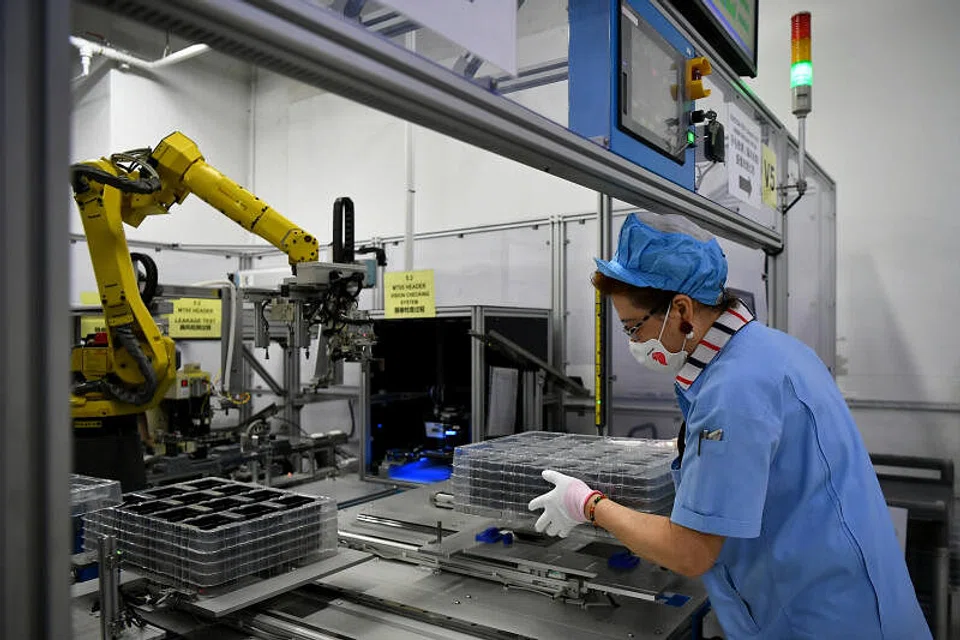
Aerospace services firm ECK has been a beneficiary - having received a Productivity Solutions Grant of S$20,860 in 2020 for its robotic arm to automate the cold spray-coating process.
The automation has helped it to increase productivity by at least 20 per cent, said Koh Pak Keng, director of ECK.
"The extension of the targeted assistance for the aviation sector is definitely going to help as the recovery in the industry has been patchy with no clear indication of full recovery in the short term," said Koh.
The aviation industry is still trying to get back on its feet entering into the third year of the pandemic and every type of measure will help, noted CIMB Private Banking economist Song Seng Wun.
Although the new package is welcomed by travel agency Travel Wanders as a short-term relief to their ailing travel business, its founder Sheryl Lim said more sector-specific support should be rendered by the government as opposed to broad-based schemes.
"We have stopped receiving manpower and operational support from the government, so currently we have to pay for all our overheads ourselves. The pick-up in the travel business is still not fast enough to make up for these costs. Despite the vaccinated travel lanes, travellers are still adopting a cautious stance towards travel," Lim said.
K F Seetoh, founder of the Makansutra food guide, said that the package is "a good plaster treatment", but the budget measures still don't address the core issue for the food and beverage industry (F&B) - manpower shortages.
"There is no F&B player that I have spoken to in recent times who doesn't face manpower issues. We need more help in hiring blue-collar workers, especially from our neighbouring region - these are the people who will do the work Singaporeans are not willing to do," Seetoh said. "The additional money does help, but what we actually need is support in hiring skilled labour."
Read more:
- Budget 2022: Quick Takes on support packages for jobs, businesses, families
- Budget 2022: Quick Takes on carbon taxes and other green initiatives
- Budget 2022: Quick Takes on corporate and personal income taxes