

Built sector highlights other rising costs even as job support extended
Singapore
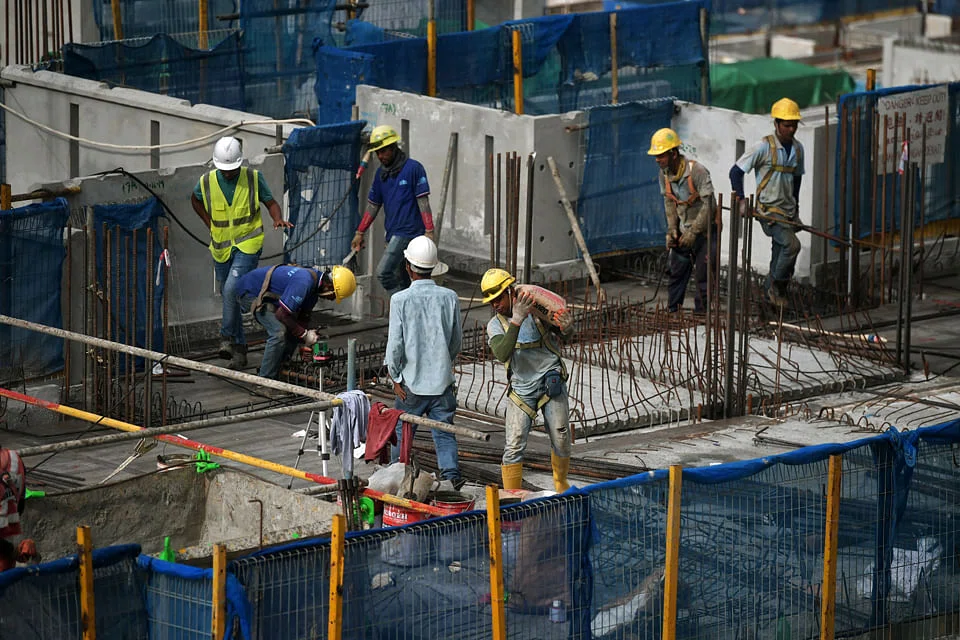
CONSTRUCTION firms welcomed the extension to the Jobs Support Scheme (JSS), although not all are sure that it will be sufficient to get them back on their feet in seven months' time.
Deputy Prime Minister and Finance Minister Heng Swee Keat on Monday announced 50 per cent wage support for two more months, before lowering it to 30 per cent for five more months for wages paid up to March 2021.
This is in line with the phased resumption of construction activities, he said.
Selena Ling, head of treasury research & strategy, OCBC Bank, said that the way the scheme was tapered seems to suggest that the distressed industries should wean off the support sooner rather than later.
The Building and Construction Authority last week also announced further measures to accelerate the resumption of construction work, after almost all foreign dormitories were declared cleared of Covid-19 by the Inter-Agency Taskforce.
This, together with an extension of the waiver of foreign worker levies announced at the start of August, should work together to help revive the built sector.
But Kenneth Loo, executive director and chief operating officer at Straits Construction Singapore, said that the pace at which construction activity has restarted is "nowhere near before, given health and safety measures".
While the state of the construction sector has improved compared to the past few months when it had remained in a lockdown, it is not ideal yet, he noted.
"Even with the JSS and the foreign worker levies in the past few months, the construction sector was still bleeding. The relief helped to cushion the impact, but it probably only covers 40 to 60 per cent of costs." Equipment rental and other overheads make up the rest.
Right now, with stringent virus-safety measures in place, construction activity on its sites are just at about 30 per cent of pre-Covid-19 levels.
"That is a new norm that we need to grapple with," he said, referring to the safety measures. "The support gives us a breather as we transit back to the new norm. It won't be business as usual."
John Mo, director of BBR Construction Systems and Moderna Homes, said that the company is grateful for the extended assistance, but it is not enough.
Costs are rising, including accommodation and transport costs for foreign workers due to social distancing measures.
On-site productivity is also expected to be affected given the halving of number of people allowed to be on-site, at most.
In addition, with construction restarting and "cross-contamination" inevitable, there is the fear of triggering a second Covid-19 wave. For this, every company has to play its part to minimise new cases, he said.
Mr Mo added the government relief over the past few months has helped to sustain a lot of companies; without it, many would have gone under.
Asked if seven months is enough to get the sector back on track, he replied: "Frankly, I hope so. Otherwise, a lot of people would be out of job. I think the government also has constraints, that's why it cannot continue to pour in the money to help all the industries."
Several listed construction companies such as BBR Holdings, Chip Eng Seng and Soilbuild Construction Group have already reported net losses for the first six months of this year.
The construction sector was deemed not to have restarted in June and August; therefore all built environment construction and consultancy firms qualified for the enhanced JSS, where the government co-funded three quarters of the first S$4,600 of gross monthly wages for each Singapore citizen and PR employee, covering their wages from June to August 2020.
TRENDING NOW
One-third of Singapore-listed firms at risk in severe AI downturn: MAS

‘Not done’: Keppel CEO Loh Chin Hua transformed the group, but says there’s ‘still a lot to do’

He built the Vingroup empire. Now South-east Asia’s richest man is handing some key roles to his sons

‘We don’t want to stay as we are’: CEO Patrick Ng builds a more resilient Huationg

