

Bureaucracy stands in Greece's way
Businesses and jobs are jeopardised by high administrative costs and inefficiency
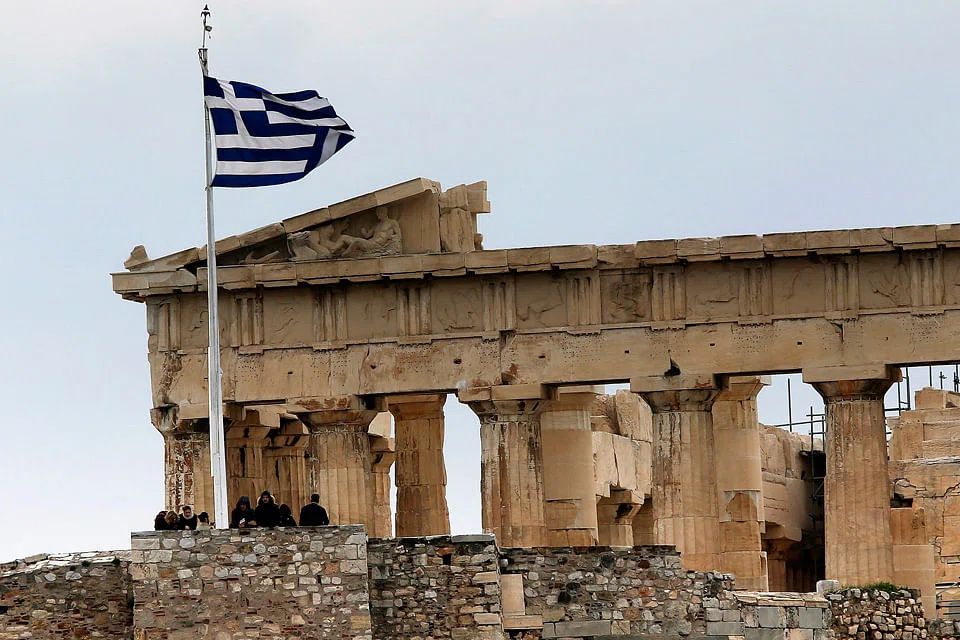
Athens
YANNIS Stamatiou is one of this country's many business owners who say that Greece's economic problems are not just about austerity.
Just ask him about the bureaucracy, which the new government has vowed to streamline but is a snarl of rules, decades in the making, that could prove hard to untangle.
Mr Stamatiou recalled with disgust his trip last summer to a dingy tax office in south-west Athens. The large plastics factory that his family has run for 40 years, which employs 150 workers and is one of the few in the industry to survive Greece's wrenching economic crisis, was poised to get a rare bank loan. But because of a welter of changes to Greece's tax rules in recent years, the tax official could not produce a critical document which the bank needed to seal the deal.
"We came this close to closing the whole company because the government couldn't give me a piece of paper," said Mr Stamatiou, the chief executive of Stamatiou Plastics, lighting a cigarette as he described the anxiety that he said keeps him awake night after night. "Greece is never going to move forward unless this new government tackles the dysfunction, bureaucracy and uncertainty that we have failed to address since the crisis."
As Prime Minister Alexis Tsipras stages a showdown with European creditors over a debt deal, he has insisted that a first step must be removing many of the austerity measures that previous governments agreed to starting in 2010 as conditions for bailout loans totalling 240 billion euros (S$371.7 billion).
But without many of the other economic changes that Mr Tsipras and his finance minister, Yannis Varoufakis, said that they intend but need time to make, removing austerity may not be nearly enough to restore economic stability - let alone stoke growth and create the new jobs that Greece desperately needs.
Whether the government can buy that time is the multibillion-euro question that now hangs over the ultimatum that European officials set on Monday in Brussels, insisting that Athens agree by the end of the week to continue honouring the current bailout rules while negotiations proceed or risk a cut-off of funds that could soon cause a default.
News reports late on Tuesday suggested that Athens was poised to request an extension of its loan arrangements for six months. Whether that would include a pledge by Athens to abide by the kind of austerity demanded by the country's European lenders was unclear.
There is no question that Greece is struggling to recover from the austerity cuts that its international creditors have demanded. To improve the national balance sheet, previous governments slashed state spending 20 per cent in five years, mostly by cutting wages, pensions, health care and social services, which impoverished many Greeks and depressed consumption.
The economy has shrunk by a quarter in the last five years, and unemployment is above 25 per cent. New data released on Tuesday showed that Greece is lapsing even further into deflation, a debilitating downward price spiral.
But just as harmful as austerity cutbacks have been the structural problems inhibiting economic efficiency, many of which have barely budged, despite creditors' demands.
Businesses are still stymied by labour rules and tax policies that under the previous government often changed week to week - 2,200 new tax regulations in the last two years alone.
Firms like Mr Stamatiou's, as well as investors and startups, face high administrative costs and bureaucratic inefficiency that Greek business associations said jeopardise jobs and leach about 14 billion euros a year from the economy.
Corruption remains widespread, and vested interests have fought against opening swaths of the economy to competition.
"The removal of austerity is all fine and well," said Constantine Mihalos, president of the Athens Chamber of Commerce. "But it will only be the right solution if it is followed by the necessary structural reforms in the public and private sectors creating conditions for growth."
Mr Tsipras, even as his campaign and debt-negotiating rhetoric has vilified austerity, has acknowledged the need to pursue the overhauls that Greece's European partners - and many Greeks themselves - said are desperately needed. His Syriza-led government said that it can succeed where others failed because the left-leaning party, having never before been in power, will not be constrained by inertia or vested interests.
He does not have the luxury of time. A modest economic recovery that began last summer has been at least temporarily derailed by the political upheaval in Greece. Investors and bank depositors have pulled tens of billions of euros from the country over the uncertainty of whether the austerity pushback will succeed or will instead result in Greece's potentially being the first member to leave the euro currency union.
Many elements of Syriza's growth blueprint would take time to bear fruit, meaning that Greece could remain dependent on external European aid for a long time.
Mr Stamatiou, who runs the plastics business with his son, Filippos, 26, is sympathetic to the bid to end austerity. When the crisis hit, they did not cut employee wages, finding other ways to reduce costs.
"When you lower their salary for years, they have no ambition to do new things," Mr Filippos Stamatiou said of the company's workers. "It's not productive for them or for the economy."
Mr Tsipras has said that his government will break most of those barriers. Greece's new budget minister, Dimitri Mardas, said in an interview that the priority was to "reconstruct the state and the economy from zero, and rebuild it again".
But to the chagrin of creditors in debt negotiations this week, Mr Tsipras has resisted changes such as making labour laws more flexible, which he argued would perpetuate hardship.
Economists said that Mr Tsipras' plans to stoke consumption by eventually rolling back austerity could help. But businesses said that growth would come much faster if the government focused on enhancing Greece's productive capacity, in part by following through immediately on basic changes such as cutting red tape and enhancing competition. NYT
TRENDING NOW

Nvidia reinstates Jensen Huang as CEO; Trump says move poses no national security risk

Indonesia’s coal tycoon Low Tuck Kwong replaced as Bayan Resources president-director

Nvidia surges 33% after reinstating Jensen Huang, reviving AI trade; stocks soar in US and Europe

Consider lowering homeownership barriers for some non-resident foreigners

