

Cambodia’s Prince Group denies link to scams after asset seizures
The company said in a statement it rejects the claims that its chairman Chen Zhi amassed his fortune running an internet scam empire

A CAMBODIAN conglomerate whose founder has had more than US$15 billion of allegedly ill-gotten assets seized said it “categorically rejects” claims that he amassed his fortune running an Internet scam empire.
A frenzy of asset confiscations in Europe, the US and Asia have targeted Cambodia’s Prince Holding Group, with authorities alleging that its founder Chen Zhi was running a transnational criminal organisation.
The US Justice Department in October unsealed an indictment against the tycoon, accusing him of presiding over forced-labour camps in Cambodia where trafficked workers conduct online scams.
US investigators seized around US$15 billion worth of Bitcoin, which they allege are criminal proceeds. This marked the largest forfeiture action in the Justice Department’s history.
Britain also froze business and property assets worth more than US$130 million; Taiwan, Singapore and Hong Kong each swooped with national seizures as high as US$350 million.
“The Prince Group categorically rejects the notion that it or its chairman Chen Zhi has engaged in any unlawful activity,” said the company on Tuesday (Nov 11).
“The recent allegations are baseless and appear aimed at justifying the unlawful seizure of assets worth billions of dollars,” it added in a statement, the first by the company since the crackdown began.
“We are confident that when the facts come out, the Prince Group and its chairman will be fully exonerated.”
One of Cambodia’s largest conglomerates, Prince Holding Group has operated across more than 30 countries with interests in real estate, financial services and consumer businesses since 2015.
SEE ALSO


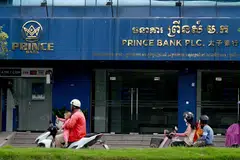
The business empire is ubiquitous in the South-east Asian country, boasting US$2 billion in real estate investments, including a large shopping mall, Prince International Plaza, in the capital Phnom Penh.
The company said allegations against it “have caused undue harm to thousands of innocent employees, partners and communities who the group serves”.
But prosecutors accuse the company of being a corrosive influence – running elaborate online networks that target people with romance or business cons and launder the proceeds through cryptocurrency.
Cyberscam operations have mushroomed across South-east Asia, often operating from unassuming office blocks or warehouses where con artists target marks living on the other side of the world.
Some workers go willingly to the scam hubs, while others are trafficked and held in prison-like conditions.
The US Justice Department last month called Prince Group “one of Asia’s largest transnational criminal organisations” and said that Chen remains “at large”. AFP
Decoding Asia newsletter: your guide to navigating Asia in a new global order. Sign up here to get Decoding Asia newsletter. Delivered to your inbox. Free.
Share with us your feedback on BT's products and services






