

Can a besieged Malaysian PM fix the faltering economy?

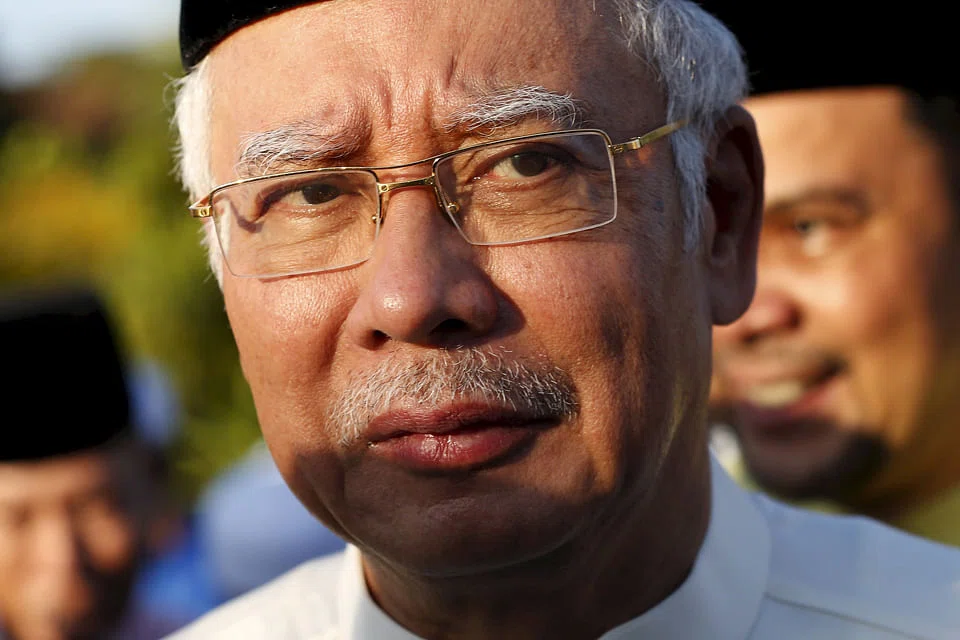
MALAYSIAN Prime Minister Najib Razak, embattled and besieged as he is due to a financial scandal, will announce tweaks to the country's budget announced last October on Thursday.
This is not just any other budget revision for Mr Najib, although it would mark the second straight year the financial plan is being recalibrated, no thanks to slumping oil prices that has hit the heavily crude-reliant economy.
It follows two days after the country's attorney general cleared Mr Najib of US$681 million graft allegations and shut down a seven-month probe on the matter without fairly substantiating his decision, further fanning public cynicism.
"I don't think Mr Najib is out of the woods yet," said Terence Gomez, a professor at the University of Malaya.
For one, merely wishing the scandal away is not going to make that happen for Mr Najib who was quick to post on his official facebook page on Tuesday for the country "to unite and move on" from the controversy which he deemed an "unnecessary distraction".
Also, the current imbroglio could persist as the country's anti-graft unit has reportedly said that it was mulling over an appeal of the AG's decision to absolve Mr Najib of criminal offences.
But Mr Najib, a political heavyweight and the country's Finance Minister, who has resolutely held on to power despite vehement calls for him to resign, may find a way out of his shattered image if he manages to get the Malaysian economy back up and running amidst China's wobbling economy and falling oil prices.
Would that be enough to turn the tide back in his favour and appease a large swathe of irate Malaysians? Maybe; surveys indicate that the top concern among Malaysians are the economy and pocketbook issues, rather than the financial scandal involving their leader and state-backed 1Malaysia Development Berhad that has dogged the country.
Rising cost of living, a stock market that is down 9 per cent from a year ago, a retreating currencyand a faltering economy are hurting businesses, sentiments, jobs and livelihoods.
The Malaysian economy's underlying strength remains hinged on basic commodities. That means a prolonged commodity slump will hit its economy hard. With oil prices now way below the US$48 per barrel as per budget assumption, it has turned the government's expected revenue collection out of whack with analysts estimating that Malaysia could suffer a fiscal shortfall of RM11 billion (S$3.7 billion) if brent crude oil price remains at the current level of US$30 per barrel.
That in turn could risk the fiscal deficit target of 3.1 per cent of GDP this year and pressure the government's goal to balance the budget by 2020. "
"There is no counter cyclical stimulus policies of 1985/86 and 1997/98 being implemented, which points towards Malaysia taking a very hardened approach in managing her economy...fiscal austerity, tight monetary policy and a weak external account," said Kuala Lumpur-based currency strategist Suresh Ramanathan.
Mr Najib has some hard choices ahead of him. If he revises the fiscal deficit target - again - to match reality, it could earn the ire of rating agencies who would frown on the government's vacillation in carrying out fiscal reforms. If that happens and the country's credit rating is slashed, it would ratchet up borrowing cost and pose another dilemma during hard times.
Public spending could be slashed further to realign the budget. Subsidies could be cut too but that's hardly politically palatable for a leader suffering from likeability issues - his approval rating has sunk to the lowest level of any sitting prime minister in the country - as the electorate grapple with rising cost issues. Furthermore, such a move could hurt domestic private consumption. Already, a key gauge of consumer confidence slumped to a record low last quarter.
Over and beyond that the country's widely-revered central bank governor, Zeti Akhtar Aziz, is expected to retire in April after 16 years of running the agency in a dependable manner.
The markets will closely scrutinise if her successor is picked based on merit or allegiance as has been the case lately in Malaysia as Mr Najib moved to tighten his grip amidst rising dissent.
The big question however really is this - can a fractured leadership rise above the negative attachment and mend a faltering economy? Mr Najib has surprised his political detractors by steadfastly remaining in power. Can he do the same to steady the Malaysian economy?
READ MORE: Anti-graft agency seeks review of AG's decision to clear Najib
TRENDING NOW

Nvidia reinstates Jensen Huang as CEO; Trump says move poses no national security risk

Beyond the greenback, Vietnam’s big borrowers turn to Asian-currency bonds

Indonesia’s coal tycoon Low Tuck Kwong replaced as Bayan Resources president-director

Six workers file employment claims against Crystal Jade Food Manufacturing

