Canada brings tempered optimism to Nafta talks
Canadian officials don't expect it will be all plain sailing when they join US and Mexican counterparts in Washington for talks on the renegotiation of the pact
Ottawa
CANADA enters crucial talks in Washington on the renegotiation of the North American Free Trade Agreement (Nafta) this week with a complex mix of self-confidence and dread about possible damage to its most important trading relationship.
The country's economy and currency are showing surprising strength, and Canadians are basking in the attention being showered on them and their popular prime minister, Justin Trudeau, in the United States and elsewhere.
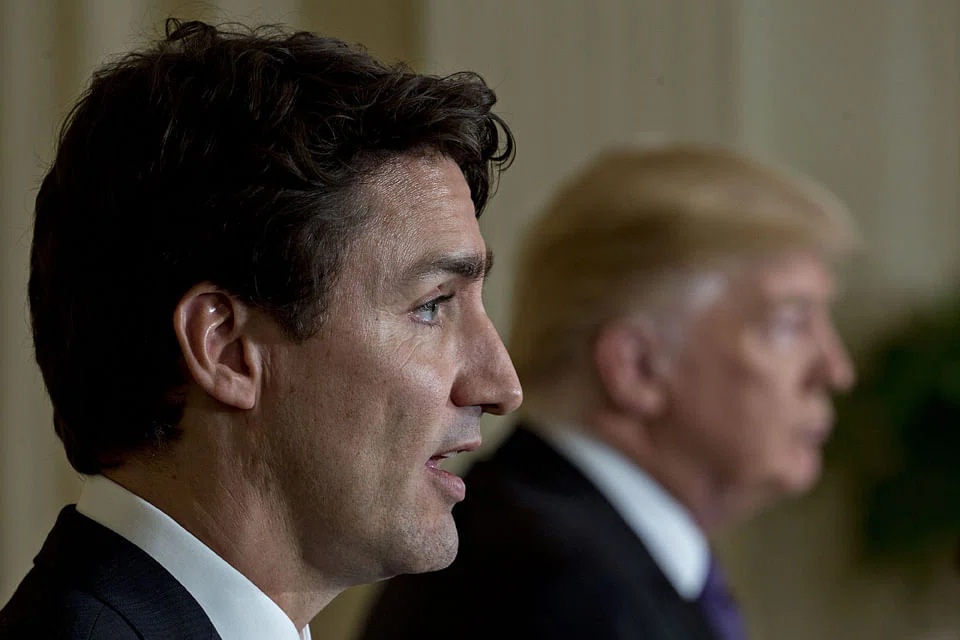
Mr Trudeau has not been immune to criticism at home, but he is credited with using his considerable charm to build a positive relationship with the mercurial US president and his family while avoiding the unpleasantness that has marred exchanges between Donald Trump and allies such as Australian Prime Minister Malcolm Turnbull and Mexico's President Enrique Peña Nieto.
He has made frequent visits to the US, attending a Canada-themed musical on Broadway with Ivanka Trump and most recently making a pitch for free trade at the National Governors Association conference in Rhode Island in July.
"Free trade has worked. Its working now," Mr Trudeau told the governors, as he urged Americans to avoid a move towards protectionism. "If anything, we'd like a thinner border for trade, not a thicker one."
But Canadian officials don't expect it will be all plain sailing in Washington when the three-way talks begin on Wednesday. While they believe Mr Trump's major trade gripes are with Mexico, they remain concerned about US efforts to gain concessions in politically contentious sectors such as lumber, dairy and wine, as well as a threat by the Americans to weaken the dispute-settlement mechanism, which Canada achieved only with difficulty in its original free-trade talks with the US in the 1980s.
There is also pressure from all sides to modernise the agreement to deal more adequately with trade in services and the digital economy.
"Canadians should be prepared for tough, difficult and rather unpleasant negotiations," Larry Herman, a Toronto trade lawyer, said. "I don't think there's any basis for complacency."
Mr Herman said that the work of the teams from Canada, Mexico and the US is complicated by the presence of two "gorillas" in the room. The first is the US Congress, which has signalled its intention to be more involved in the talks than it was in the original Nafta negotiations. The second is Mr Trump himself.
"One tweet from the president can upset a lot of the US negotiating strategy," Mr Herman said.
Michael Kergin, a former Canadian ambassador to Washington, said that the Trudeau government has handled relations with the White House well so far but that once detailed talks begin, that may not make much difference. "There are no friendships in foreign policy, only interests," he said.
Despite years of efforts to broaden its trading relationships, including the recent signing of a free-trade pact with the European Union, Canada remains highly dependent on trade south of the border. Three-quarters of Canadian exports flow to US customers, while only 18 per cent of US exports go to Canada, although Canada remains the single largest customer for US goods.
Of the three partners in the original 1994 Nafta deal, Canadians are by far the most upbeat about its benefits. According to a Pew Research Institute poll published in May, 74 per cent of Canadians thought the agreement had been "a good thing" for their country, against only 17 per cent who thought it had been bad.
Among Mexicans, 60 per cent thought Nafta was a good thing for Mexico, while 33 per cent thought it was bad. Americans were the most negative, with 51 per cent agreeing that the trade pact was good for their country, while 39 per cent thought it was bad.
And while politics plays a big role in American views on Nafta - 68 per cent of Democrats view it as good for the US, versus 30 per cent of Republicans - large majorities of Canadians view the trade deal positively, no matter what their political affiliation, according to Pew.
That cross-party consensus was on display this month when Foreign Minister Chrystia Freeland announced the members of a new 13-person advisory council on the Nafta talks. Included was Rona Ambrose, the former interim Conservative Party leader, and Brian Topp, a leading member of the left-leaning New Democratic Party.
"I do think it is smart for the government to cast a wide net and to listen widely, and that's what I hope they do," Mr Topp told the Globe and Mail newspaper.
The advisory council includes business leaders; the head of the Canadian Labour Congress, a union federation; and the national chief of the Assembly of First Nations, an indigenous group.
The Trudeau government has also recruited Canada's provincial premiers in a drive to promote Canada's pro-Nafta views with governors in US states dependent on trade with Canada for jobs. And there's been a push to win congressional support in districts where Canadian companies have large operations.
If economic relationships are seen through the prism of trade balances alone, Canada isn't much of a problem for Americans. In 2016, the US had a relatively small deficit in goods with Canada - US$12 billion, compared with a US$65 billion goods deficit with Mexico. And if trade in services is included, it actually had a US$12.5 billion surplus in its trade with Canada last year.
In any case, according to a study by the Bank of Montreal, Nafta accounts for only 10 per cent of the US goods trade deficit. Half of America's US$737 billion trade deficit in goods last year was with China, the report said.
In a Jan 27 call to Mexico's Peña Nieto, a transcript of which was published recently by The Washington Post, Mr Trump made it clear he wasn't concerned about Canada's trading relationship with the US. WP