

Cheap oil, strong US economy no cure for weak growth: Lagarde
There are still powerful factors that weigh on the downside, says IMF chief
Washington
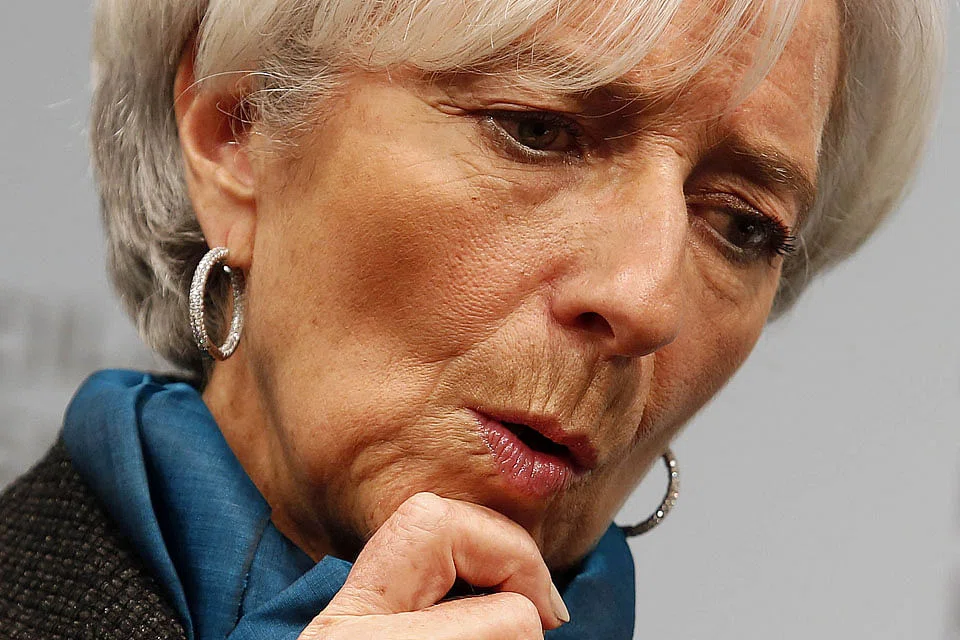
INTERNATIONAL Monetary Fund (IMF) managing director Christine Lagarde said cheap oil prices and a resurgent US economy won't be enough to help overcome sluggishness elsewhere in global growth.
"The obvious question is this: should lower oil prices and a stronger recovery in the United States make us more upbeat about the prospects for the global economy?" Ms Lagarde said in a speech on Thursday in Washington at the Council on Foreign Relations. "The answer is most likely 'No,' since there are still powerful factors that weigh on the downside."
Ms Lagarde has been warning that the global economy needs bold policies to avoid a "new mediocre" period of weak growth as the world struggles with a disappointing recovery six years after the financial crisis. While low oil prices will provide a boost to expansion, there's an increased urgency to support demand through actions such as infrastructure spending, she noted.
"The oil price and US growth are not a cure for deep-seated weaknesses elsewhere," Ms Lagarde, 59, said in her speech. "Too many countries are still weighed down by the legacies of the financial crisis, including high debt and high unemployment." Global growth is "still too low, too brittle and too lopsided", she added.
While a "promising" recovery is taking hold in the UK, growth remains "very low" in the euro region and Japan, and the Chinese economy is slowing, Ms Lagarde pointed out.
The IMF trimmed its 2015 global growth outlook in October to 3.8 per cent, citing weak demand and residual debt from the financial crisis. The Washington-based IMF plans to update its world forecast next week.
Ms Lagarde cited several risks to the global recovery, including the threat that tightening by the Federal Reserve could disrupt emerging markets and financial stability, and the prospect that Europe and Japan could become mired in low growth and low inflation.
She said it's essential that, "broadly speaking", monetary policy remain loose. At the same time, countries need to adopt growth-friendly fiscal policies, invest more in infrastructure, and carry out structural reforms such as making it easier for women to join the workforce.
In separate remarks, Ms Lagarde urged the Swiss National Bank to better communicate its plans to the IMF and other central banks, after the SNB roiled markets with its unexpected move earlier on Thursday to scrap a cap on the Swiss franc against the euro. "Clearly what is needed is cooperation, collaboration, communication," she said in an interview broadcast on CNBC. "This was a bit of a surprise."
Ms Lagarde also said she doesn't expect Greece to leave the euro currency bloc following a Jan 25 parliamentary election in that country. "Negotiations will begin to discuss the economic situation of Greece - not the exit of Greece," she told CNBC.
The former French finance minister reiterated her disappointment with the US for failing to ratify IMF governance changes agreed to in 2010 that would give emerging markets a greater voice at the fund.
Ms Lagarde said she trusts that the US will approve the so-called quota reforms, which have been blocked by Republicans in Congress. Bloomberg
TRENDING NOW

Nvidia reinstates Jensen Huang as CEO; Trump says move poses no national security risk

Indonesia’s coal tycoon Low Tuck Kwong replaced as Bayan Resources president-director

Nvidia surges 33% after reinstating Jensen Huang, reviving AI trade; stocks soar in US and Europe

Consider lowering homeownership barriers for some non-resident foreigners

