China adviser urges boosting consumption to 70% of GDP by 2035
There have been calls for the country to shift away from investment and export
 Add BT as a preferred source
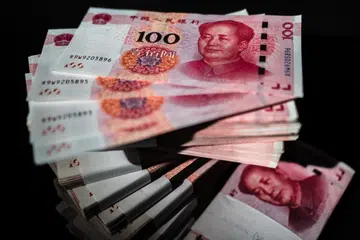
[BEIJING] China should raise consumption to a level close to those of developed countries in the next decade, a government adviser said, adding to calls to rebalance the world’s second-largest economy away from investment and export.
Peng Sen, president of the China Society of Economic Reform, said on Tuesday (Mar 25) authorities should make efforts to boost consumption as a share of gross domestic product to 70 per cent by 2035 from about 55 per cent currently. Peng’s think tank is affiliated with the National Reform and Development Commission, China’s economic planner.
“Our fiscal system used to focus on investing heavily in projects, but now we need to shift to investing in people,” Peng, former vice chairman of the NRDC, said at the Boao Forum for Asia. “China needs to narrow that international gap,” he said, citing consumption levels as high as 80 per cent of GDP in wealthier nations.
Peng’s remarks add urgency to calls for China to adjust its growth model as geopolitical tensions threaten to slow exports and returns on investment diminish. The Chinese government has made boosting domestic demand, particularly consumption, the top economic priority this year, although authorities didn’t put a number to that goal.
China’s economy expanded rapidly over the past four decades by increasing manufacturing and production, but that has had a side effect of repressing consumption, Peng said. To continue to grow, he said, consumption should increase by 5 to 8 percentage points as a share of GDP in the next five years, with the first step being boosting income and distributing more wealth to consumers.
It’s important to set such a target in China’s next five-year plan for economic development between 2026 and 2030, according to Peng, who is part of an expert committee advising the government’s drafting of the blueprint.
This proposed shift contrasts with the investment-heavy model that underpinned initiatives like “Made in China 2025,” whose progress was also discussed at the event known as China’s Davos.
China has mostly accomplished that policy’s goal of turning the country into a technology leader since it was unveiled a decade ago, according to former Chongqing mayor Huang Qifan. Some 96 per cent of the targets listed in the project have been met as of 2024, he said at the panel with Peng.
“If we continue to patch up the missing parts this year, I believe we will fully complete the goal of Made in China by the end of this year,” said Huang, academic adviser at the think tank China Finance 40 Forum.

A pivot toward consumption would likely require substantial policy efforts. The State Council, China’s Cabinet, earlier this month published a report outlining plans to improve childcare and better enforce the country’s paid leave system.
Economists have long advocated for a stronger social safety net to reduce households’ need for precautionary savings, although government spending on public services has been limited by rising debt burden and declined income from land sales.
Simmering trade tensions further complicate the picture. China’s industry policy drew the ire of Donald Trump during his first term, inflaming tensions that led to the first US-China trade war. Washington has since tried to curb China’s advancement in key technologies like semiconductors with export controls, sanctions and tariffs.
Even though the government has downplayed the programme in recent years to avoid further strains, China has kept investing in advanced manufacturing as policymakers seek new growth drivers following a property market crash. That led to explosive growth in sectors such as solar panels, batteries and electric vehicles.
Research by Bloomberg Economics and Bloomberg Intelligence last year showed that “Made in China 2025” has largely succeeded. Of 13 key technologies tracked, China has achieved a global leadership position in five of them and is catching up fast in seven others, according to the study. BLOOMBERG
Decoding Asia newsletter: your guide to navigating Asia in a new global order. Sign up here to get Decoding Asia newsletter. Delivered to your inbox. Free.
Share with us your feedback on BT's products and services