

China aims for emission trading scheme in big step against global warming
Beijing
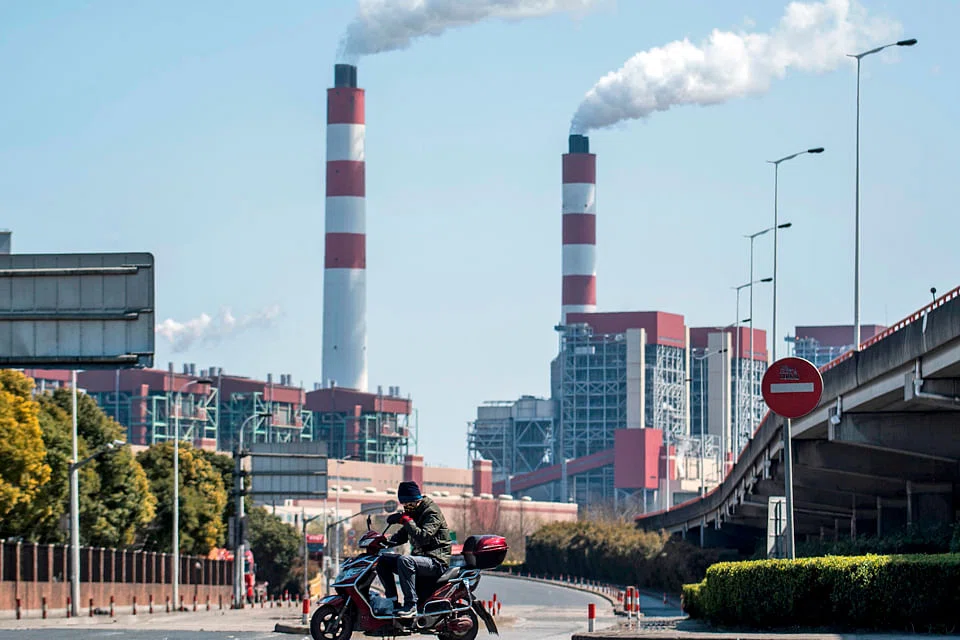
CHINA said on Tuesday that the first phase of its long-awaited nationwide carbon emission trading scheme (ETS) will focus on the power sector, as the government outlined details of what is expected to be the world's largest such programme.
The State Council approved the scheme last week and the National Development & Reform Commission (NDRC) outlined some details of how it will be implemented, marking its launch, NDRC vice-chairman Zhang Yong said at a briefing.
Trading will be based in Shanghai, involving 1,700 power companies and over 3 billion tonnes of carbon dioxide annually, he said.
He did not give a timeline for the start of trading or how permits will be allocated, but experts and analysts say that it will take at least a year to put the mechanisms in place.
That volume, accounting for a third of China's total carbon emissions, means that the scheme will eclipse the European Union's, the world's largest, which is expected to cover about 1.4 billion tonnes of emissions this year.
Launching the scheme is a major step in the world's No 2 economy's efforts to meet commitments to combat global warming.
China, the world's largest source of greenhouse gases, is aiming to raise the share of non-fossil fuels to 20 per cent of its total energy mix by 2020 from 13 per cent in 2016. As part of the Paris Agreement in December 2015, it pledged to cap carbon emissions at a peak by around 2030.
"The ETS will push industrial plants to eliminate outdated capacity and improve their production," said Jiang Zhaoli, vice-director at the climate change department of the NDRC.
Nine regions and cities, including Jiangsu, Fujian and seven regions where pilot schemes have taken place, will coordinate to establish the ETS system, the NDRC said.
Details of the plan come a day after US President Donald Trump's administration laid out a new national security strategy plan that removed a description of climate change as a US national security threat.
Mr Trump has vowed to withdraw the United States from the Paris climate accord unless changes are made to it. The news was welcomed by supporters of clean energy.
"With the top global polluter enacting policies to support the Paris Agreement and transition to a low carbon economy, it is clear that we're at a tipping point in the climate crisis,"said former US vice-president Al Gore.
Under original plans, eight sectors including iron and steel, chemicals and paper-making will eventually be included in the scheme.
The market-oriented ETS will help companies abate emissions and reduce carbon-intensified assets through the controlled allocation and trading of carbon emission allowances.
"It is important that the world's largest emitter should lead on climate . . . China has stepped up its climate leadership dramatically in recent years and is now increasingly seen as filling the leadership void left by the US," said Fred Krupp, president at the US Environmental Defense Fund.
China is not considering linking its ETS with other countries at this stage, said NDRC director Li Gao, adding that it will also take time to have a national carbon price. First mooted in 2016, the launch of carbon trading in China ran into delays as market designers struggled to handle problems such as accuracy of emissions data. REUTERS
TRENDING NOW

He built the Vingroup empire. Now South-east Asia’s richest man is handing some key roles to his sons

32 companies, 6 individuals bag accolades at Singapore Corporate Awards 2026

Can a first-time homebuyer couple earning S$18,000 a month afford a new EC unit?

Floods compound Philippine growth woes from public-works scandal

