

China calling - and Singapore lawyers heed with ni hao!
Being on the same page with language helps build rapport, say lawyers

Tay Peck Gek
Singapore
AS CHINA shapes up to be a global economic heavyweight and further opens up its markets, Chinese companies are expected to bring about more deals abroad and possibly have a greater demand for disputes resolution as well.
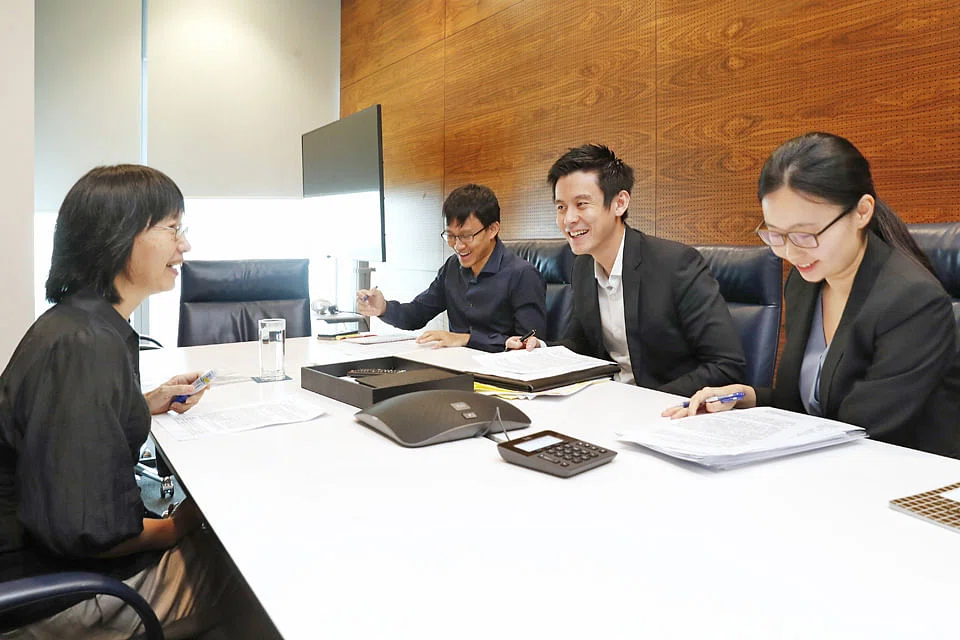
To gain a slice of the burgeoning Chinese market - and an edge over counterparts - some corporate and litigation lawyers here are taking Chinese lessons to acquaint themselves with the language and culture.
Chinese classes for these lawyers are geared towards meeting the work demands, including explaining legal processes and jargon in Mandarin. Even though learning is still a work-in-progress, lawyers are already seeing the value of their newfound skills.
Keith Han and a few fellow litigators at Clifford Chance Asia recently started filling up their Tuesday lunch-time break with nuggets of information about China during their weekly one-hour Chinese class - supported and sponsored by the firm.
The group of four to five lawyers, who already have a fairly decent ability in reading and writing Chinese, focus on picking up the legal jargon associated with their work. In class, they hone their Mandarin skills and learn through role plays.
They learnt how to deal with commonly encountered situations at work as well. For example, explaining an arbitration clause or the procedure for litigating in the Singapore Courts to clients.
Their trainer is a non-practising lawyer from China and had been working at another firm.
Mr Han told The Business Times: "Given China's emergence as a global economic powerhouse, as well as initiatives such as One Belt One Road, it is self-evident that there will be significant future opportunities for legal work involving mainland Chinese parties, where not only basic linguistic ability, but the ability to explain complicated legal concepts and procedures in Mandarin will be critical."
The lawyer recently completed a trial involving clients from China, and the Mandarin he has learnt has "allowed me to converse and deal with my clients more confidently, particularly when I have to explain complicated business and legal concepts to them".
While he had studied higher Chinese and performed well in the subject when he was a student at Chinese High School (now known as Hwa Chong Institution), the syllabus did not cover business or legal concepts and jargon.
Mr Han said: "The (ongoing) lessons are therefore very useful in helping to bridge the gap."
At Linklaters' Singapore office, seven lawyers including Hansel Ng, Choo Tse Yun and Hari Chandra are taking Chinese lessons, with the firm behind their efforts.
Ms Choo said that the Singapore team works closely with its Hong Kong office as well as the Shanghai free trade zone joint operation office, Linklaters Zhao Sheng, on international arbitration work. This involves reviewing Chinese documents and communicating with Mandarin-speaking clients and Linklaters counterparts, so her team felt that it could benefit from learning business Mandarin.
Mr Chandra told BT: "It is a combination of business needs and the desire to explore new opportunities. China is investing heavily across all industries outside of China and it is therefore no surprise that Linklaters have served an ever-increasing number of Chinese clients throughout the years.
"Having Chinese speaking skills allows me to better communicate and explain legal structures and concepts to our Chinese clients. In fact, in some cases, it is actually a requirement for mandates from Chinese clients that we have at least one Mandarin-speaking lawyer within the team to facilitate seamless communication. It is rare at this point in time to have an English-Mandarin-Bahasa Indonesia speaking lawyer, so being trilingual could open new doors for me to facilitate investments and interactions between China and Indonesia."
Speaking the same language helps build rapport with clients more easily, the Linklaters lawyers said. While classes now focus on reading and conversation, they are looking at being able to write in Chinese eventually.
Two years ago, when candidate Donald Trump was declared the winner in a key state in the US Presidential election, his victory interestingly led a law firm 15,000km away in Singapore to roll out Chinese lessons for its lawyers.
TSMP joint managing partner Stefanie Yuen Thio recalled that when she learnt of Mr Trump's win, she decided that her firm "needed to be more China-ready".
She explained: "A Trump in the White House would give the Chinese, who had been working hard to build their standing as a global power, the opportunity to steal the world stage and assume a position of leadership."
Her husband and fellow managing partner Thio Shen Yi would also laugh at Mr Trump's campaign slogan "Make America Great Again", and quipped that Mr Trump was "Making China Great".
To Mr Thio, Mr Trump's extreme rhetoric and volatile presidential style made China look moderate and reasonable by contrast. Mr Trump's anti-free trade stance would also mean that countries that believe in free trade would need to find new global partners.
TSMP wanted to be better prepared to service Chinese as well as Singaporean clients eager to do business with China, if China were to be on the ascendant.
It had the Chinese classes structured in workshop and role-play formats to give more hands-on practice to its 40 lawyers, who were divided into groups based on their language proficiency and their areas of practice. The lessons included how to break down contractual terms, describe business reorganisations and discuss the dispute resolution process in Mandarin.
Ms Yuen Thio said: "We also needed to know how to do 'beauty parades' and pitch our firm's credentials in a way that would be informative and yet strike the right tone."
For some partners such as Mr Thio, who are extremely busy, they were given one-on-one lessons so that they would get more targeted coaching.
Mr Thio was pleased that his Chinese proficiency had gone from "zero to terrible". Ms Yuen Thio said that the lessons have lifted their confidence and exposed them to the Chinese history and culture, all of which form the PRC (People's Republic of China) business mindset. "Singapore aims to be a financial and legal hub, and our ability to communicate and get deals done is a key part of the value proposition. More than the pure communication of information, we have a better grasp of non-verbal cues. The Chinese lessons have also made us more confident in working with PRCs and Mandarin-speaking clients."
Drew & Napier's dispute resolution director Foo Yuet Min had completed a business Chinese course at the Singapore Chinese Chamber Institute of Business (SCCIOB).
The litigator said: "The course was meant not just to equip us with language skills, but also to familiarise us with Chinese customs and culture and the modern way of life in China - such knowledge often comes in useful when interacting with Chinese clients. "
READ MORE: Learning Chinese transcends just speaking the language






