China calls for talks with US on spat over stock listings
 Add BT as a preferred source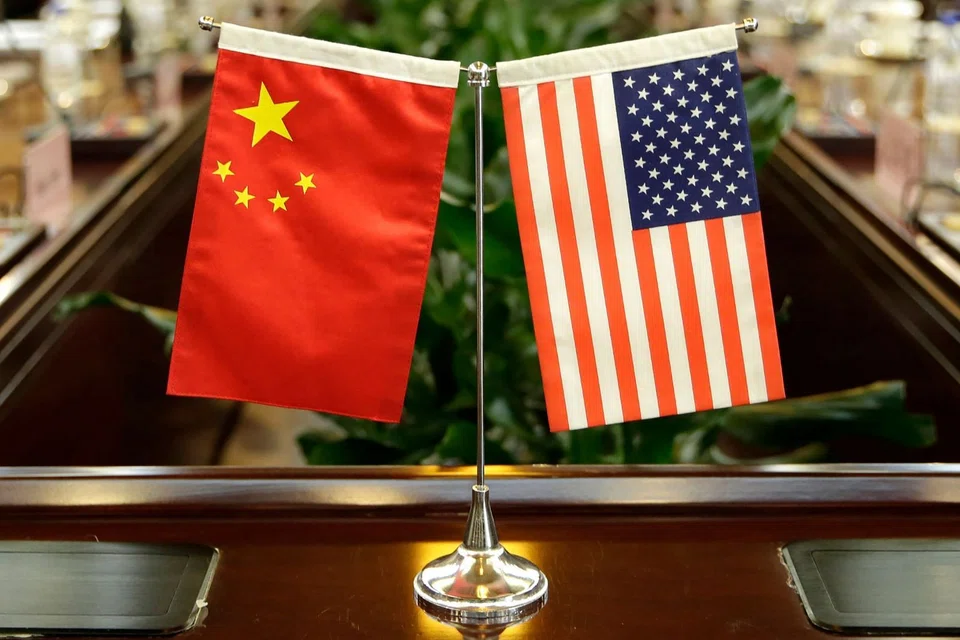
[NEW YORK] China says it has made concessions in proposing to let US regulators to audit some of its most sensitive companies and is calling for direct talks to solve a years-long dispute that threatens global markets.
In an interview in Beijing on Wednesday, Fang Xinghai, vice -hairman of the China Securities Regulatory Commission (CSRC), said China is "sincere" in wanting to solve the standoff over the accounting issues.
US officials have recently stepped up a push to gain access to audit working papers for Chinese companies that trade in the US, threatening rules that would trigger delisting shares such as those of Alibaba Group Holding and Baidu if the request isn't met. The standoff has dogged relations for years and deteriorated since 2017, after a trial inspections done jointly by Chinese and American regulators failed to yield an agreement.
Mr Fang said on Wednesday that earlier this month, the CSRC sent the US's Public Company Accounting Oversight Board (PCAOB) a fresh proposal, which would allow the US to pick any of its state-owned enterprises for another trial run. China though would still insist on redacting some information because of national security concerns, a condition Mr Fang described as an international norm.
"As both sides gain confidence we can proceed to handling these sensitive issues so that both sides are satisfied," he said. "They are a bit more urgent. We are very sincere, but on the other hand we are also serious about protecting national security information."
China's securities regulator had previously proposed in April that joint inspections begin with private-sector companies before moving onto state-owned entities, which are more likely to involve security concerns, Mr Fang said. Though some materials for private-sector firms could also be redacted because companies such as Alibaba and Baidu have contracts with the government and other "sensitive agencies", he said.
The PCAOB, however, wanted to be able to begin with state-owned entities, which China has agreed to in its latest proposal.
Mr Fang said he has reached out to the US to hold a video or phone meeting, but has yet to get a response. As to why another pilot auditing project hasn't taken place since 2017, Mr Fang said it could be due to the "general atmosphere". When Mr Fang went to the US in September 2019 to try to solve this issue, the chairman of the PCAOB refused to meet him and instead sent one of his department heads, said a person familiar, who declined to be named discussing a private matter. In the past, the previous PCAOB chairman had been happy to meet and talk, the person said.
"For more than a decade we have sought to establish a cooperative relationship with China that is consistent with others around the world," PCAOB chairman William Duhnke said in a Wednesday statement. "Such a relationship, however, cannot be meaningfully pursued without the Chinese first embracing our core access principles. Despite the CSRC's recent claims, its proposals remain materially deficient."
FINANCIAL FEARS
After a protracted trade dispute that has roiled markets over the past three years, tensions between China and the US are now spilling over onto the financial and technology sectors with tit-for-tat sanctions over a crackdown on Hong Kong and threats against some of China's biggest companies.
Mr Fang said that no one stands to gain from a financial decoupling between the two nations and that it would be bad for both New York as a financial centre and for Chinese companies.
The disputes are playing out against a backdrop of China this year opening its financial markets more fully to Wall Street giants such as Goldman Sachs Group, counting on them to provide fresh investments and foster a more competitive local industry.
This has proceeded unhindered with the most approvals being granted to US financial institutions and is expected to gain pace as the Chinese economy gathers steam, Mr Fang said.
"The presence of foreign investors in our market has provided kind of an anchor," he said. "The continued presence of foreign investors in our market will help promote the quality of our stock market. Both from a demand and supply point of view I do expect that foreign participation in our market, whether its providing services or providing capital, will accelerate."
BLOOMBERG
Decoding Asia newsletter: your guide to navigating Asia in a new global order. Sign up here to get Decoding Asia newsletter. Delivered to your inbox. Free.
Share with us your feedback on BT's products and services