

China central bank eases cross-border financing rule to temper yuan weakness
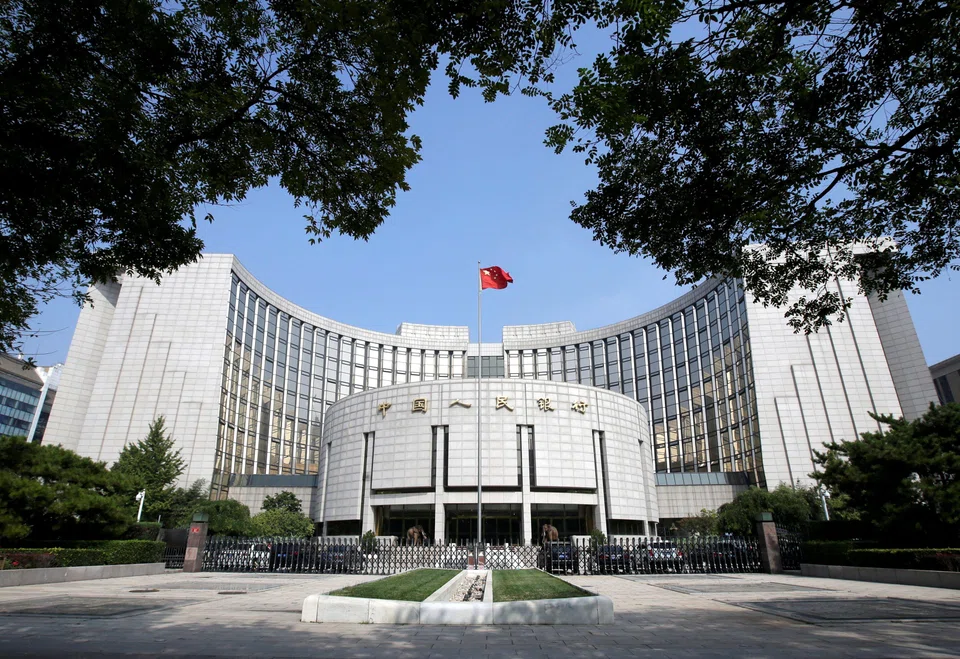
CHINA’S central bank and foreign exchange regulator on Thursday (Jul 20) announced a relaxing of a cross-border financing rule, making it easier for domestic firms to raise funds from overseas markets and easing depreciation pressure on the yuan currency.
The People’s Bank of China (PBOC) said in a statement it raised a parameter on cross-border corporate financing under its macro-prudential assessments to 1.5 from 1.25, effective immediately.
The central bank said the move was to “further improve the macro-prudential management of cross-border financing, continue to increase the sources of cross-border funds for enterprises and financial institutions and guide them to optimise their asset-liability”, according to an online statement.
The onshore yuan jumped following the PBOC’s statement. It strengthened more than 0.8 per cent to a high of 7.1620, before last fetching 7.1840 as of 0211 GMT.
“The PBOC stepped up its policy to defend its currency and prevent excessive FX volatility by increasing the parameter for cross-border funding to 1.5 from 1.25 under the macro prudential assessment (MPA) framework,” said Ken Cheung, chief Asian FX strategist at Mizuho Bank in Hong Kong.
“Alongside the strong CNY fixing bias, the MPA parameter hike sent a clear message that the PBOC intends to defend the RMB above the 7.2 handle,” he said.
The central bank has been setting its daily yuan midpoint persistently firmer than market projections over the past few weeks, with market participants widely interpreting it as a sign of authorities’ growing discomfort over yuan weakness.
The PBOC said in May that China will resolutely curb speculation and large fluctuations in the exchange rate, adding it will guide expectations, correct pro-cyclical and one-sided behaviour when necessary.
The central bank last adjusted the ratio in October 2022 by raising it to 1.25 from 1, to ease yuan depreciation pressure.
China’s yuan has lost nearly 5 per cent so far this year. REUTERS
Decoding Asia newsletter: your guide to navigating Asia in a new global order. Sign up here to get Decoding Asia newsletter. Delivered to your inbox. Free.
Share with us your feedback on BT's products and services
TRENDING NOW

OCBC mobile, online banking services restored after Friday afternoon disruption

SGX CEO Loh Boon Chye to step down; succession planning under way

Waymo founder predicts ‘landslide’ robotaxi adoption in Singapore, driven by high car costs

Vietnam’s northern provinces, not Hanoi or Ho Chi Minh City, are powering near 10% GDP growth

