

China December exports down as trade tensions with US loom
For the full year, overseas shipments are 7.7% lower at US$2.1 trillion; trade surplus comes to US$510 billion
Beijing
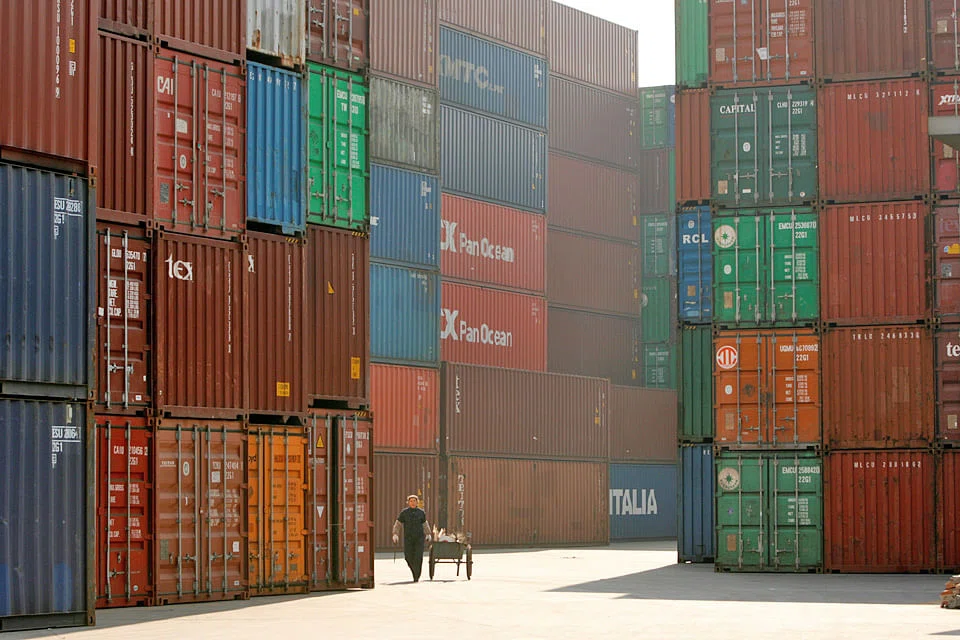
CHINA exports in December have fallen amid tepid global growth and threats of a trade war with the United States, China's biggest export market.
Overseas shipments dropped 6.1 per cent from a year earlier in US dollar terms. For the full year, exports fell 7.7 per cent to US$2.1 trillion.
Imports fared better, rising 3.1 per cent on strong demand for commodities, leaving China with a US$40.8 billion trade surplus. Over the year, imports dropped 5.5 per cent to US$1.59 trillion.
That left a trade surplus of US$510 billion for the full year.
"There remain some obstacles facing China's foreign trade development," Customs spokesman Huang Songping told reporters at a news conference announcing the results on Friday.
He said that the international trading environment was "severe and complex".
The disappointing data comes despite a weaker currency, a strong pick-up of manufacturing activity in China towards the end of the year as well positive trade data in other Asian economies such as Taiwan and South Korea.
"The drop-back in trade growth is still concerning given that the current environment of rising prices and relatively buoyant global manufacturing growth ought to have been supportive of Chinese trade values," said Julian Evans-Pritchard, economist with Capital Economics.
China is the world's biggest trader with the exports a pillar of GDP growth. But in recent years, increases in labour costs and wages have made it less competitive with many textile and toy manufacturers moving to South-east Asian countries.
China is also facing an increasingly hostile trading environment, with the European Union and the US accusing it of subsidising steel and aluminium production and putting millions of workers out of jobs.
Mr Huang said: "The trend of anti-globalisation is becoming increasingly evident, and China is the biggest victim of this trend."
Earlier this week, the Obama administration filed a new complaint with the World Trade Organization on Chinese aluminium subsidies, which according to a group of US senators have cost the United States 15,000 local jobs.
"We're taking action to protect the workers - at home and around the world - who are hurt every day by these policies," said Barack Obama in a statement on Thursday.
Beijing immediately retaliated and announced higher anti-dumping duties on imports of certain animal feed from the United States.
President-elect Donald Trump has repeatedly accused China of being a currency manipulator and has threatened to impose punitive tariffs on all China imports when he steps into office next week.
He has also said that he would impose a "border tax" on companies that move production outside of the United States.
Mr Huang said: "We will pay close attention to foreign trade policy after Trump is inaugurated president."
China's trade surplus with the United States was US$366 billion in 2015, according to US customs data.
Economists at ANZ said in a note: "Our worry is that Trump's stance towards China's trade could bring about long-term structural weakness in China's exports.
"Trump's trade policy will likely motivate US businesses to move their manufacturing facilities away from China, although the latter's efforts in promoting high-end manufacturing may offset part of the loss."
Analysts in general see little upside for China trade this year.
Sun Jiwen, a spokesman for the Ministry of Commerce, said earlier this week: "In 2017, the trade situation remains complicated and severe. External demand is weak, trade protectionism is accelerating, the unstable and uncertain factors are increasing, and downward pressure on trade is piling up."
TRENDING NOW

He built the Vingroup empire. Now South-east Asia’s richest man is handing some key roles to his sons

Chagee, Mixue and Luckin won the market. Sustaining their edge is the harder part

From Haidilao to Oriental Kopi: How some of Asia’s favourite F&B players are faring in 2026

CPIB hauls Multi-Chem CEO, COO in for questioning; stock hits ‘circuit breaker’

