
China finds way to do 'Covid Zero' while keeping factories open
 Add BT as a preferred source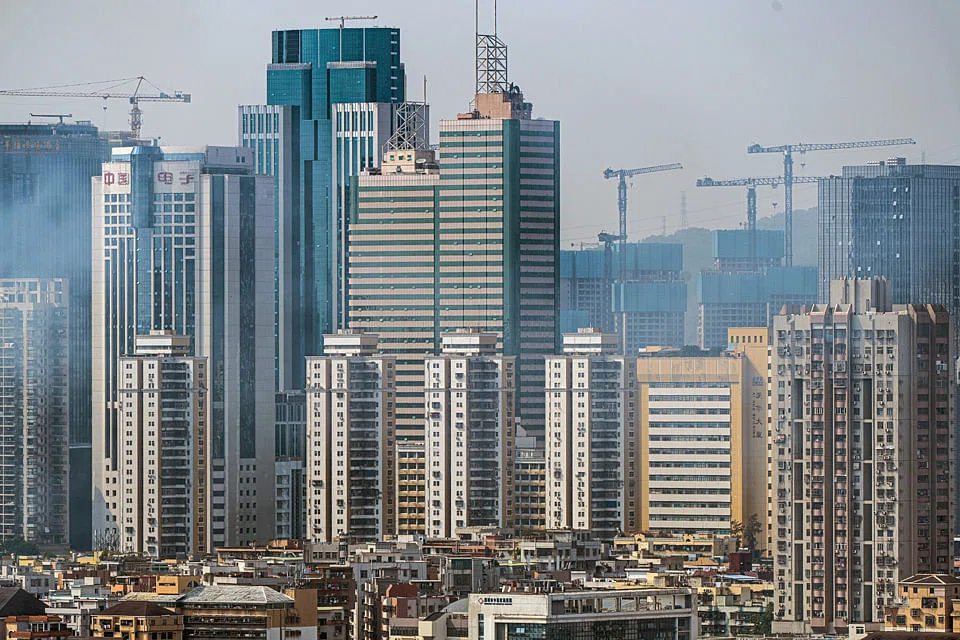
Beijing
JUST days into a Covid-19 lockdown that bars residents of Shenzhen from leaving their homes, China is allowing some companies to restart factories in the tech hub, in a move that may provide a blueprint for shielding the economy and supply chains from the country's fight against the virus.
iPhone maker Foxconn Technology Group is the most prominent; it was allowed to partially resume its operations in Shenzhen on Wednesday (Mar 16) by deploying a so-called "closed-loop" system: workers are ferried from their company-run dormitory to the factory and back, subject to regular Covid testing and checks.
Zhen Ding Technology Holding, a Taiwanese maker of printed circuit boards, is also operating a closed loop at its plant, along with a medical device company manufacturing essential goods that declined to be named.
The system - which effectively puts factory workers in a bubble, insulated from outside infection - is also being used in nearby Dongguan, a manufacturing centre that manufactures shoes, toys and textiles for export around the globe, but restrictions are in place to quell a virus outbreak, as well.
On Thursday, a Shenzhen government official said factories will gradually be able to resume production in an "orderly manner".
Navigate Asia in
a new global order
Get the insights delivered to your inbox.
With economists increasingly warning about the hit to the world's second-largest economy from lockdowns and other aspects of China's "Covid Zero" strategy, such systems could help keep the engines of growth running while other curbs remain in place.
Plunged into a snap lockdown on Sunday as infections climbed, Shenzhen's restaurants and subway are closed, its 17.5 million residents unable to leave the city limits for non-essential reasons. Whole neighbourhoods are being sent to isolation sites under China's policy of quarantining every Covid case.
By deploying factory bubbles, the economic impact will be "significantly less", said Paul Donovan, UBS' global chief economist.
"The problem is that people hear 'lockdown' and instinctively think of what happened in 2020," he said. "That is not what is happening now."
In the early days of the pandemic, China sealed off the original epicentre of Wuhan, with industry and manufacturing in the city shut down for months. Still, as the outbreak was contained and Wuhan started to cautiously emerge from restrictions, it started to deploy similar moves to those now being rolled out in the south, with computer maker Lenovo Group taking factory workers' temperatures multiple times a day and isolating staff for testing.
Such measures enabled China to emerge swiftly from the initial pandemic economic hit, despite fears that restarting factories would contribute to the virus's spread.
The theory may be the same now. As part of a vow to stabilise financial markets and stimulate the economy on Wednesday, China also said virus controls should be coordinated with economic development.
The comments, made at a meeting of China's top financial policy committee, reiterated what has been a regular drumbeat from officials the past month - that Covid policy needed to be tweaked to minimise disruption for business.
Michael Hart, president of the American Chamber of Commerce in China, said member companies had proposed similar setups to the Olympics model, where technical and training staff from abroad could fly into China and work alongside locals after a period of negative tests.
"I don't know of any companies that have been able to execute this yet, but we're hopeful that something like this could be approved on a case-by-case basis as a workaround to the current quarantine restrictions," he said.
China has imposed more lockdowns in the past week than at any point in the pandemic, with Shenzhen, Langfang city near Beijing, Changchun city in the north-east and then its surrounding province, Jilin, all put under movement restrictions.
Banks such as Nomura Holdings and Morgan Stanley say China's resource-intensive approach to containing Covid - a strategy that has delivered one of the lowest death tolls globally - dampen the country's growth outlook.
The closed-loop system may help individual manufacturers keep operating under Covid curbs, but it is unlikely to be a model of where China's overall approach to the virus may be heading, said Louis Kuijs, Asia-Pacific chief economist at S&P Global Ratings. "Most people in China do not work in factories, but in offices, shops, restaurants and the like. In those type of workplaces, it is much harder to set up a closed-loop bubble."
It may also not prove a panacea for factories, if the lockdown has halted logistics and deliveries. Chinese logistics firm 4PX said on its website early this week that it had stopped picking up parcels from Shenzhen due to the Covid restrictions; most online retail exporters have been disrupted by the measures, said Wang Xin, head of the Shenzhen Cross-Border E-Commerce Association. BLOOMBERG
Decoding Asia newsletter: your guide to navigating Asia in a new global order. Sign up here to get Decoding Asia newsletter. Delivered to your inbox. Free.
Share with us your feedback on BT's products and services

