
China imposes Covid curbs in centre of factory hub Guangzhou
 Add BT as a preferred source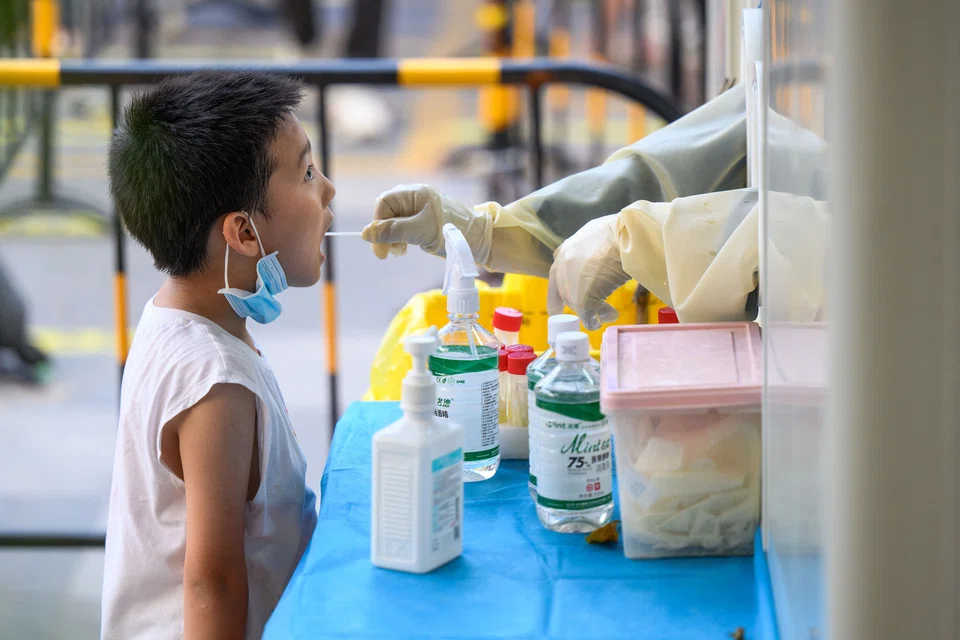
CHINA suspended in-person schooling and dining-in at restaurants in a district at the centre of Guangzhou, stoking concerns about the potential for disruption in the southern Chinese manufacturing hub that’s home to about 19 million people.
All primary and middle schools in Haizhu district, where about 10 per cent of the city’s total population lives, has halted in-person lessons from Monday (Oct 24). The restrictions come more than a week after Huadu district shut entertainment venues and schools and, while a small number of neighbourhoods were allowed to ease curbs on Sunday, most of the area remains subject to control measures.
Guangzhou reported 69 new infections for Sunday.
The latest curbs coincide with the end of the Communist Party’s once-in-five-years congress, where President Xi Jinping reinforced the rectitude of his Covid Zero policy but gave few indicators of how the strategy may play out going forward. His appointment of Li Qiang, a close ally who oversaw the two-month lockdown of Shanghai earlier this year, to No 2 on the Politburo’s supreme Standing Committee has also clouded the outlook for any easing of the virus policy.
While Li initially took a lighter-touch approach to China’s strict Covid Zero policy, a surge in cases in Shanghai prompted him to seal off the city, leading to rare social unrest and causing the financial hub’s economy to shrink by almost 14 per cent in the second quarter. Li is now set to become premier in March, despite never having served as vice-premier – a prerequisite for the post for decades.
The party congress wouldn’t be the occasion for major policy changes, with a gradual relaxation of Covid Zero expected to start in the second quarter of 2023, Goldman Sachs Group analysts including Andrew Tilton wrote in a report. Policy implementation could be more efficient though, with personnel-related issues related to party roles settled, the report said.
Navigate Asia in
a new global order
Get the insights delivered to your inbox.
Others have a more bullish view, with Bank of America predicting a pivot on Covid Zero could happen sooner than expected. The two conditions for Xi to shift towards easing – political certainty and public support for reopening – have been met, economists wrote in a report. There are two natural windows to act: between now and mid-November, when Xi is due to visit Indonesia for the G20; and right after he returns and before the end of the year, they wrote.
Nation-wide, China reported 919 new local infections, the highest since Oct 14. The north-western region of Xinjiang still accounts for most of the country’s cases even as the tally eases from its recent high. Shaanxi province’s capital, Xi’an, which locked down some areas last week, reported 51 cases. BLOOMBERG
Decoding Asia newsletter: your guide to navigating Asia in a new global order. Sign up here to get Decoding Asia newsletter. Delivered to your inbox. Free.
Share with us your feedback on BT's products and services

