
China inflation exceeds forecasts as lockdowns roil supplies
 Add BT as a preferred source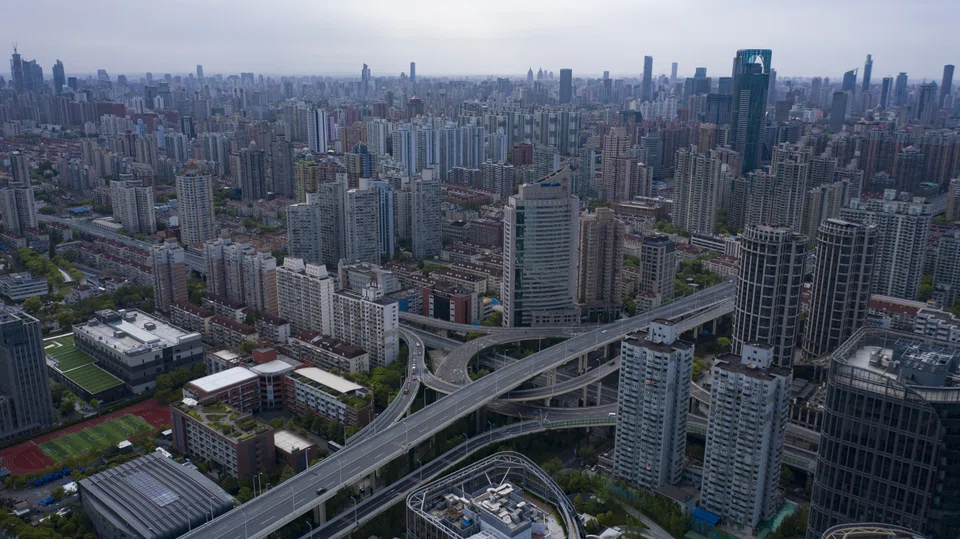
CHINA’S factory and consumer prices rose faster than expected in April as Covid lockdowns battered supply chains and pushed people to stockpile food.
The producer price index rose 8 per cent from a year earlier compared to 8.3 per cent in March, official data showed Wednesday (May 11), above the median estimate of a 7.8 per cent increase in a Bloomberg survey of economists. Consumer-price growth accelerated to 2.1 per cent from 1.5 per cent in the previous month, faster than a projected 1.8 per cent gain.
While commodity prices are inching down from the very high levels spurred by the war in Ukraine, costs remain elevated and have squeezed manufacturers’ profits. Covid outbreaks in China and restrictions intended to contain them have indirectly added to operating costs, making it tougher for factories to maintain production, obtain raw materials and ship out finished goods.
The uptick in consumer inflation was attributable to virus outbreaks and higher global commodity prices, Dong Lijuan, senior statistician at the National Bureau of Statistics (NBS), said in a statement accompanying the data.
“Panic buying and stocking among consumers likely also pushed up demand,” said Zhang Zhiwei, president and chief economist at Pinpoint Asset Management. “As supply chain disruption is gradually resolved, inflationary pressure may fade away.”
Despite the higher-than-expected inflation figures, Zhang said the issue is not a concern for policymakers. “The main challenge remains the balance between containing Omicron outbreaks and stabilising economic growth,” he said.
Navigate Asia in
a new global order
Get the insights delivered to your inbox.
China’s benchmark CSI 300 Index gained as much as 1.7 per cent, extending Tuesday’s rise while the ChiNext Index advanced 3.3 per cent. The rally came as virus cases in China declined, boosting sentiment among traders.
The onshore yuan, meanwhile, advanced by 0.2 per cent to 6.7235 as of 10.34 am against a softer US dollar. Yields on 10-year Chinese government bond edged up 1 basis point to 2.82 per cent.
Food became pricer in April as several areas locked down to contain the spread of Covid. Fresh vegetable costs jumped 24 per cent from a year ago, compared to an increase of 17.2 per cent in March, NBS data showed. Pork prices continued to fall, plunging 33.3 per cent. Wholesale vegetable prices in the first week of May have continued to drop from the level in April, but are still almost 12 per cent above the price in the same week last year.
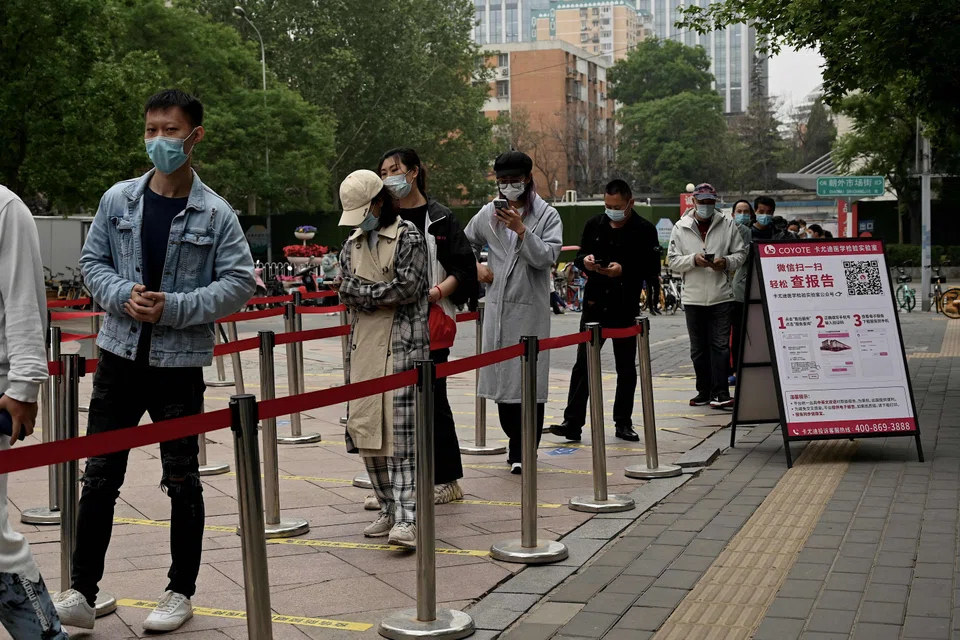
A 28 per cent jump in fuel costs also contributed to higher consumer prices. Prices of vehicle fuel rose the fastest of any metric within the CPI (consumer price index) basket, according to a breakdown provided by the NBS.
Core CPI, which excludes volatile food and energy prices, rose 0.9 per cent, compared to March’s 1.1 per cent increase.
The lockdown in Shanghai threatens to exacerbate global supply chain pressures and inflation concerns, according to economists at Fitch Ratings. The economists cited a plunge in Shanghai freight traffic volume in April and early May resulting in backlogs at the port of Shanghai as contributors to those issues, according to a research note published Tuesday before China’s inflation data was released.
“With Shanghai handling around a fifth of China’s port volume and China accounting for 15 per cent of world merchandise exports, shortages of manufactured goods could intensify, adding to existing global inflationary pressures,” the Fitch economists wrote. “This channel is likely to outweigh the effect of slower growth in China on global inflation through a weakening of commodity demand and prices.”
The decision to stand by a strategy built on strict Covid curbs has led several economists to cut growth forecasts for the year to well below the government’s target of about 5.5 per cent, as an unswerving commitment to Covid-Zero means more cities will lock down or mass test their citizens for as long as the virus is spreading. The capital city Beijing, e-commerce hub Hangzhou and Yiwu, a city known for wholesaling Christmas decorations, have all rolled out restrictions to contain the virus.
As long as authorities can contain the virus and alleviate the disruption to supply chains, though, the rise in consumer prices will remain “benign” for the year, according to Bruce Pang, head of macro and strategy research at China Renaissance Securities Hong Kong.
The room for policy action by the People’s Bank of China “is more constrained by the policy tightening of overseas major economies and the need to maintain a stable yuan exchange rate”, he said. BLOOMBERG
Decoding Asia newsletter: your guide to navigating Asia in a new global order. Sign up here to get Decoding Asia newsletter. Delivered to your inbox. Free.
Share with us your feedback on BT's products and services

