

China left out of Sri Lanka debt talks amid angst over delays
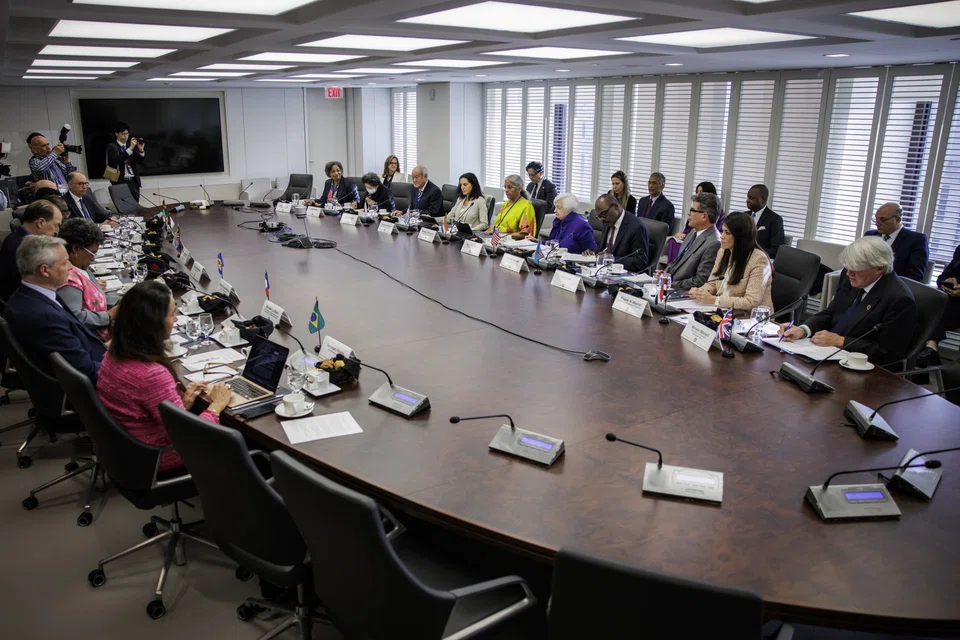
SRI Lanka and major creditors formally launched talks to restructure the nation’s debt without China — its biggest bilateral lender — a signal of growing frustration with Beijing’s approach to debt woes in the developing world.
Finance chiefs from India, Japan and the Paris Club of sovereign creditors held a joint briefing on Thursday (Apr 13) evening in Washington with the International Monetary Fund (IMF) to mark the start of the restructuring.
The event was aimed at injecting new momentum into Sri Lankan debt talks caught in a standoff between China and other lenders over how best to deal with the island nation’s debt problems, people familiar with the matter said. They declined to be identified because the talks are private.
“Sri Lanka remains in a deep debt crisis and expeditious debt resolution is fast needed for Sri Lanka to emerge as quickly as possible from its crisis,” IMF deputy manging director Kenji Okamura said. “We hope all official bilateral creditors can participate and the negotiations can progress swiftly.”
Other officials in the briefing also called for all creditors to participate, without mentioning China by name. Kenji added that they aim to complete the debt rework by the first review of nation’s IMF programme that’s expected for about September, based on fund norms.
It comes a day after China agreed to soften some of its demands during a roundtable convened by the International Monetary Fund and World Bank to hammer out broader guidelines for providing debt relief to low-income countries. Those discussions are due to continue in the months ahead, with significant issues still unresolved.
Hanging over those wider talks have been concerns about China’s role in negotiations involving countries like Sri Lanka and Zambia, which are facing increasing economic strains because of slow progress in resolving their debt issues.
China participation
Both Sri Lanka and its creditors have said they would like China to participate in restructuring discussions. But people familiar with the talks said they are also eager not to let Beijing hold up negotiations any further.
One person familiar said Sri Lanka had committed not to negotiate a separate debt deal with China, which has been a concern for other creditors. Thursday’s move was also intended to make sure that Beijing did not have any leadership role in the creditor committee’s guiding talks, they said.


It’s unclear whether China was asked to participate in Thursday’s launch of talks to restructure Sri Lanka’s debt. The Chinese embassy in Washington didn’t immediately respond to a request for comment.
Japanese Finance Minister Shunichi Suzuki said the framework for the Sri Lanka talks had been negotiated by Japan, India and France as the traditional representative of the Paris Club of rich creditor countries.
“In relation to China, the basic idea of this is to have many related countries to participate. So, of course, it’s appropriate if China joins,” Suzuki told reporters on Wednesday. But, he added, “it’s unfair if some nation holds bilateral talks and secures its own benefits before others. Fairness is a basic idea for this.”
Support sought
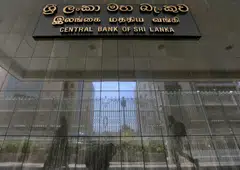
Sri Lanka wants China to support its effort to restructure its debt, central bank governor Nandalal Weerasinghe said.
“It’s in the best interest for China and Sri Lanka both to complete this process soon and we can get back to repaying our distressed obligation,” Weerasinghe said in an interview. “We have to make sure that we do it as soon as possible.”
Paris Club members including Japan account for US$4.8 billion, or more than 10 per cent of Sri Lanka’s external debt, according to IMF data. That’s slightly higher than China, which stands at US$4.5 billion, while India is owed US$1.8 billion.
“Given the relationship between Japan, India, the Paris Club and China — and that none of them have as much skin in the game — the chances that China would join a group led by them was somewhere between slim and none,” said David Loevinger, a sovereign analyst at TCW Group and former US Treasury Department senior coordinator for China affairs. Beijing “is unlikely to take diktats from smaller creditors”, he said, adding that it “will likely go its own way in dealing with Sri Lanka”.
The IMF approved a US$3 billion four-year bailout for Sri Lanka on Mar 20 and has urged a speedy resolution of debt-restructuring talks.
Emerging-market debt distress, and cooperation among creditors, has been a key theme at this week’s the IMF and World Bank meetings in Washington. Much of the focus has been on the role of China, which in recent years has become the world’s top sovereign creditor.
Test case
The rescue efforts for Sri Lanka have been a test case of China’s willingness to work with other creditors in providing debt relief.
In February, Paris Club creditors, as well as Hungary and Saudi Arabia, called on China to join the international effort to provide debt relief to Sri Lanka. The appeal for financial backing from the world’s second-biggest economy came amid fears that China’s unilateral positioning might delay and even complicate the rescue of Sri Lanka just like it happened in Zambia.
The rift between Beijing and the Paris Club as well as multilateral institutions has delayed efforts to ease debt burdens on developing economies struggling to recover from the pandemic and repay loans even as a stronger US dollar and higher interest rates increase debt servicing costs. China has said it wants multilateral lenders to also provide debt relief.
Sri Lanka last month took a key step towards winning the cooperation of its external bondholders for restructuring US$84 billion in debt by agreeing to include local-currency bonds in the programme.
The exercise, which will include the shorter-term treasury bills held by the nation’s central bank and also some longer-term treasury bonds, on a voluntary basis, is intended to reduce the burden on foreign commercial creditors. BLOOMBERG
Decoding Asia newsletter: your guide to navigating Asia in a new global order. Sign up here to get Decoding Asia newsletter. Delivered to your inbox. Free.
Share with us your feedback on BT's products and services
TRENDING NOW

OCBC customers face difficulties accessing online, mobile banking services
SGX CEO Loh Boon Chye to step down; succession planning under way

Waymo founder predicts ‘landslide’ robotaxi adoption in Singapore, driven by high car costs

Vietnam’s northern provinces, not Hanoi or Ho Chi Minh City, are powering near 10% GDP growth

