

China is lending to the Gulf at record pace, tightening ties
Dim sum and panda bonds are both denominated in Chinese yuan
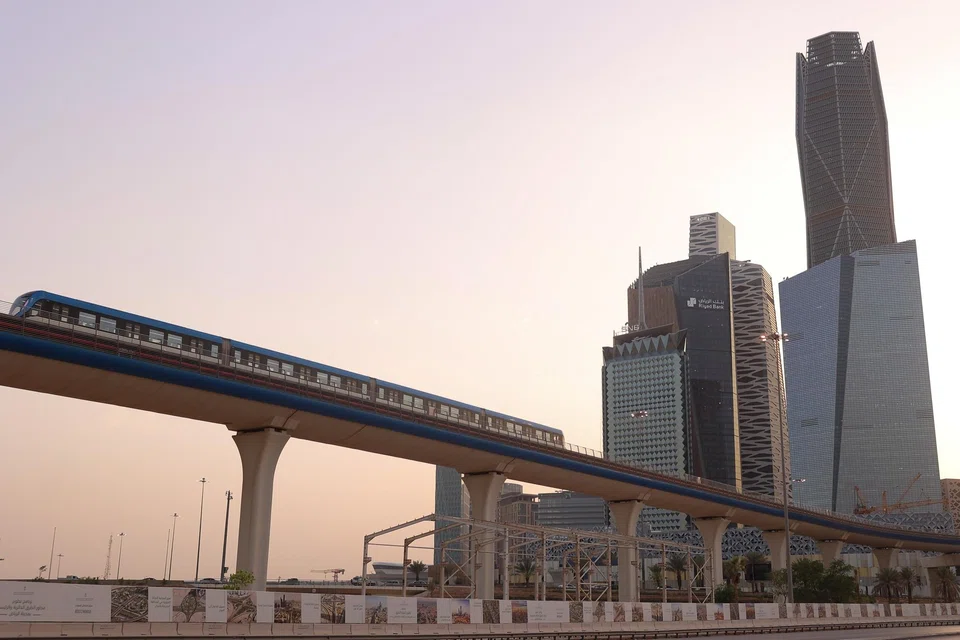
[CAIRO] The Gulf is fast emerging as part of China’s next big financial play, with years of diplomatic overtures now translating into hard cash.
Chinese banks’ lending to the region jumped nearly three-fold to a record US$15.7 billion in 2025, excluding bilateral loans, with the bulk going into Saudi Arabia and United Arab Emirates, according to Bloomberg-compiled data. In contrast, banks from the US, UK and eurozone together provided only about US$4.6 billion to the Gulf last year, the data showed.
China’s appetite extends beyond loans. Already this year, Saudi Arabia raised US$11.5 billion through a US dollar bond sale, with major Chinese banks among bookrunners for the deal.
In another measure of the deepening ties, the chairman of a major Chinese bank made a rare visit to Riyadh, Dubai and Abu Dhabi last year, while another senior executive travelled to the Gulf three times in 2025 – a first in their career, according to sources familiar with those trips. Both had one goal in mind: to capture financing opportunities fuelled by deepening ties and rising capital flows between China and the Middle East.
This strengthening of relations reflect both geopolitics and economics. As competition with the US intensifies, Chinese banks are diversifying away from American markets, while supporting domestic companies expanding into the Gulf, a region rich in oil and wealth.
For Saudi Arabia, this liquidity will help fund its US$2 trillion economic transformation plan at a time when low oil prices have pushed the kingdom’s budget into deficit. The UAE, meanwhile, is channelling funds into infrastructure as it positions itself as a global hub for artificial intelligence (AI).
“It’s an incredible marriage of convenience,” said Vasuki Shastry, a Dubai-based senior adviser at geopolitical risk firm Gatehouse Advisory Partners. “The Gulf countries are eager to learn from China and at the same time, they want access to capital.”
Still, Saudi Arabia and the UAE are likely to remain cautious about opening sensitive sectors – particularly AI and defence – to Chinese banks, wary of straining ties with Washington that have enabled them to make progress on both fronts.
Last year, the US approved the sale of advanced AI semiconductor chips to both countries, bolstering their high-tech ambitions, while also authorising an estimated US$3.5 billion weapons deal for Saudi Arabia.
SEE ALSO




The UAE and Saudi Arabia are also among the countries that have made hundreds of billions of US dollars in investment pledges to the US, though questions have been raised about those commitments.
Trade expansion
China is growing its financial footprint during an era of disruption in global trade as the tariff war started by US President Donald Trump reshapes commerce. Just as the world’s biggest manufacturing nation has started to export more to the Gulf, it’s also ramped up purchases of oil after Saudi Arabia cut prices to their lowest in five years.
In 2024, China overtook the West as the Gulf’s largest trading partner, with volumes hitting US$257 billion – a historic milestone, according to a November report from think tank, Asia House. That figure could rise to US$375 billion in 2028, the report said.
Gulf borrowers are also increasingly seeking financing in Chinese yuan to facilitate trade. Last year, the government of one of the emirates that make up the UAE secured its first-ever 1.8 billion yuan (S$330 million) syndicated loan, according to sources familiar with the matter.
Saudi National Bank and Abu Dhabi National Oil are also considering so-called dim sum bonds, while Arab Energy Fund plans to raise panda notes of as much as 10 billion yuan.
Dim sum and panda bonds are both denominated in Chinese yuan. The former is issued offshore to international investors, while the latter is launched within China by foreign entities, primarily targeting the domestic market.
These developments have prompted repeated trips by Chinese bankers to strengthen cooperation with regional counterparts, according to at least half a dozen bankers who spoke to Bloomberg News on the condition of anonymity. These visits are also driven by their need to drum up more business overseas to offset strains at home, where a prolonged property crisis has weighed on the financial industry, they said.
At the same time, Chinese lenders are following their clients into the Gulf. Solar firms such as Jinko Solar and TCL Zhonghuan Renewable Energy Technology are planning manufacturing plants in Saudi Arabia, with more set to follow, creating fresh demand for financing.
The growing trade relationship between China and the Gulf, coupled with a rise in Chinese firms setting up factories in the region, “gives the ties more substance”, said Simon Williams, chief economist for Central & Eastern Europe, Middle East and Africa at HSBC Holdings.
Against that backdrop, Gulf borrowers offer what Chinese banks need: investment-grade deals with relatively low risk but higher yields than comparable Asian credits.
Recent examples include Riyad Bank SJSC, which closed a five-year loan offering a margin of 90 basis points over the benchmark Secured Overnight Financing Rate. In contrast, South Korea’s Shinhan Card is paying just 80 basis points on its recent five-year facility.
The former entity is rated A1 by Moody’s Ratings and A by S&P Global Ratings, while the latter is rated A2 and A-, respectively. BLOOMBERG
Decoding Asia newsletter: your guide to navigating Asia in a new global order. Sign up here to get Decoding Asia newsletter. Delivered to your inbox. Free.
Share with us your feedback on BT's products and services
TRENDING NOW

Britain’s mansion tax shows the difficulty of targeting wealth

Once staunchly pro-China, Malaysian Chinese businesses are now distancing themselves from Beijing

The only common thing in S-E Asia is that we all eat rice: Cisco’s Asean president
Singapore data centre operator DayOne opts for US IPO at likely US$20 billion valuation

