

China regulator rushes to meet MSCI deadline
It aims to get yuan-denominated shares into Emerging Markets Index
Hong Kong
CHINA'S securities regulator has rushed through stockmarket rule changes under its new chairman in a bid to persuade MSCI to include domestic Chinese shares in one of its global benchmarks.
The New York-based index provider will announce on June 14 if China has done enough to overcome investor concerns, which were heightened by its heavy-handed response last year to a stockmarket crash.
A decision to allow yuan-denominated shares - or A shares - into its widely used Emerging Markets Index, could draw US$400 billion into Chinese shares in the next decade, MSCI estimates show.
Still, while China has met some key requirements of the MSCI, other concerns remain unaddressed, investors and people familiar with the discussions said, making the widely anticipated decision far from certain.
The MSCI told China last June that it needed to increase access to its equity markets and fix other rules to win foreign investor backing for inclusion in the benchmark, tracked by US$1.5 trillion in assets globally.
Scepticism that China could satisfy the requirements deepened owing to unprecedented intervention by authorities during last summer's stockmarket crash. As shares slumped more than 40 per cent in a few months, more than half of Chinese companies suspended their stocks to avoid the slide.
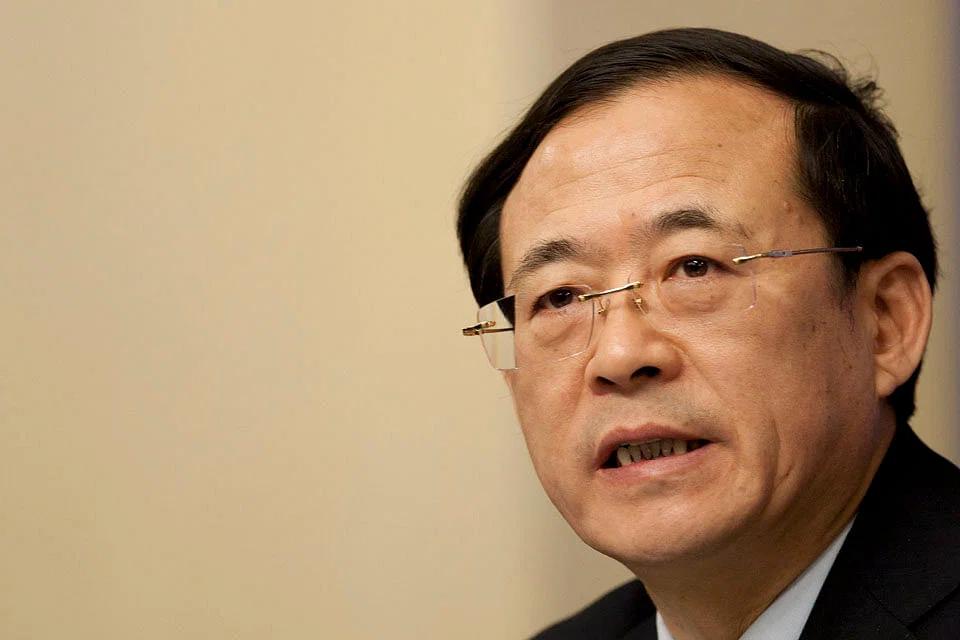
Over the past four months, though, the China Securities Regulatory Commission (CSRC) has stepped up its efforts to woo global benchmark providers under a new reform-focused senior management team led by chairman Liu Shiyu, investors and people familiar with the discussions said.
A CSRC spokesman said that an MSCI Emerging Markets Index without A shares was a "shortcoming" and the regulator would be happy to see them included.
Mr Liu, a former chairman of the Agricultural Bank of China and former deputy governor of the People's Bank of China (PBOC), was appointed to the top CSRC job in February, replacing Xiao Gang, who had been widely criticised for mishandling the stockmarket crisis.
Since Mr Liu's appointment, the CSRC has satisfied two of MSCI's key demands: introducing restrictions on company share suspensions and clarifying the beneficial ownership rights of foreign investors under China's cross-border investment schemes.
"The CSRC had previously been pretty slow at working out liberalisation issues," said Ivan Shi, head of research at Shanghai-based investment consultancy Z-Ben Advisors. "Everyone is more on the same page regarding market opening and the CSRC has responded to many of MSCI's requirements."
Last June, the MSCI and the CSRC said they would create a working group to address MSCI's concerns. Neither party has provided details about the working group.
Discussions were slow to start as the CSRC dealt with the market crash, said people briefed on the matter. Key CSRC managers also left, making it difficult to schedule meetings, and a CSRC roadshow to woo US and European investors was postponed, they said.
But things picked up from February, said people briefed on the matter. One source said Mr Liu attended some of the meetings. MSCI also fielded top executives and its global chief executive, Henry Fernandez, visited regulators in Beijing in April, three people briefed on the matter said.
MSCI declined to comment.
While many foreign investors harbour worries over inclusion, investment banks are more bullish. Goldman Sachs, for example, said in May that there was a 70 per cent chance MSCI would add the shares to its major index, citing the steps taken by China to remove investment obstacles.
Still, China has yet to address another MSCI concern, which is to remove rules that require foreigners to get permission from the Shanghai and Shenzhen exchanges to launch A share hedging products.
Nor does the CSRC have the power to address all of MSCI's concerns. The PBOC and the State Administration of Foreign Exchange control the size of investment quotas and have played a central role in liberalising the country's US$81 billion Qualified Foreign Institutional Investor (QFII) scheme and its yuan equivalent, RQFII.
Neither the PBOC nor the State Administration of Foreign Exchange were immediately available to comment on Friday, a public holiday in China.
Under the QFII scheme, China has yet to lift a 20 per cent net monthly cap on capital repatriation, one of MSCI's last remaining concerns. A Hong Kong-Shenzhen stock connect system has yet to be announced, a route that would allow two-way trade and which foreign investors expect to dramatically open up the market.
"The problem is that there is not just one regulator involved," said one person with direct knowledge of the discussions. "But I am convinced they are trying to meet our requirements." Reuters
TRENDING NOW
Easy to rent out, hard to sell: Are buyers losing interest in Singapore’s one-bedroom condos?

GovTech retrenches another 38 staff in second round of layoffs

Stocks to watch: Seatrium, CapitaLand Investment, Keppel DC Reit, Suntec Reit, CLCT, TSH Resources

World’s largest offshore wind platform by Seatrium consortium on track to be completed by 2028

