

China revises aviation law to regulate drones, tighten safety rules
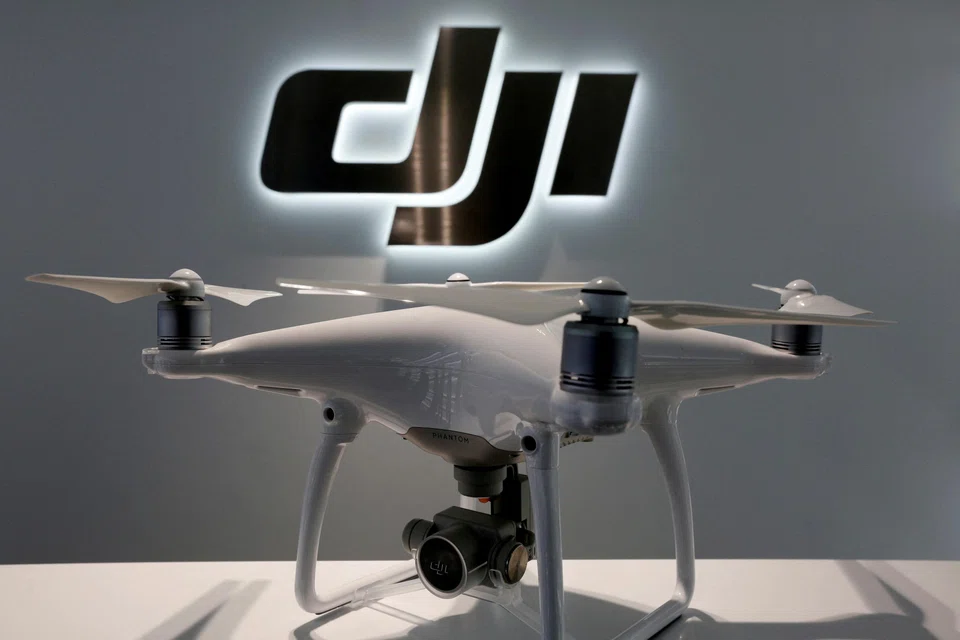
[BEIJING] China passed a revised law that for the first time formally regulates unmanned aircraft, a move set to reshape the country’s fast-growing drone and low-altitude economy sectors, according to state media on Saturday (Dec 27).
The Standing Committee of the National People’s Congress approved the changes under the Civil Aviation Law on Saturday, adding provision on airworthiness certification for drones that plugs a key regulatory gap.
The overhaul comes as China’s low-altitude economy – a national strategic initiative focusing on commercial activities below 3,000 m – is forecast to grow to more than two trillion yuan (S$365 billion) by 2030, from 1.5 trillion yuan in 2025, according to estimates from the Chinese Academy of Sciences, Peking University and China’s Civil Aviation Administration (CAAC).
Under the new rules, effective Jul 1 next year, all entities involved in the design, production, import, maintenance and operation of drones must obtain airworthiness certification.
Drone manufacturers will be required to assign a unique product identification code to each unit, in accordance with relevant national regulations.
China has implemented “interim regulations” for unmanned aircraft starting from 2024, which stipulate that civil unmanned aircraft must be registered under real names. The regulations also specify that micro, light and small civil unmanned aircraft do not require airworthiness certification, while medium and large ones must apply to CAAC for airworthiness certification.
As China’s drone market has rapidly expanded, oversight has lagged. In recent years, several cities have reported flight delays caused by illegal drone operations, prompting fines and other penalties.
The tighter requirements will affect manufacturers such as DJI, the world’s largest consumer drone maker, and EHang, which produces passenger drones.
Drone logistics have become an important driver of China’s low-altitude economy, with 2.7 million packages containing everything from hamburger lunches to life-saving medicine delivered throughout 2024, according to transport ministry data.
E-commerce and food delivery leaders such as JD.com and Meituan have long talked about investing in drone logistics to improve supply chain efficiency.
JD Logistics has tested drone delivery networks in Jiangsu, Shaanxi and Sichuan, and has said drones can reduce shipping times for rural customers by up to 70 per cent. REUTERS
Decoding Asia newsletter: your guide to navigating Asia in a new global order. Sign up here to get Decoding Asia newsletter. Delivered to your inbox. Free.
Share with us your feedback on BT's products and services
TRENDING NOW

Could stablecoins be the future of money?

Once staunchly pro-China, Malaysian Chinese businesses are now distancing themselves from Beijing

Vietnam’s data-centre investment rush faces reality check on power and site constraints

‘My grandfather’s legacy’: Sherman Kwek lays out three-year plan for CDL to drive returns

