

China rolls over US$600 million loan to Pakistan

CHINA has rolled over a US$600 million loan to Pakistan, helping shore up the South Asian country’s foreign exchange reserves following a long-awaited deal with the International Monetary Fund (IMF), Prime Minister Shehbaz Sharif said on Tuesday (Jul 18).
China had already rolled over more than US$5 billion in loans to Pakistan in the last three months, helping it avert a default as negotiations to secure the IMF bailout dragged on.
“We have received another US$600 million from our friend China,” said Sharif at an event in Islamabad.
The IMF talks took months, and in the meantime Pakistan’s foreign exchange reserves shrunk to barely enough to pay for a month of controlled imports, and an acute balance of payment crisis pushed the country to the brink.
Pakistan finally secured a US$3 billion bailout on Jun 30 from the IMF, which later disbursed an initial instalment of about US$1.2 billion.
A further US$3 billion of financial support from Saudi Arabia and the United Arab Emirates after the IMF pact helped steady the Pakistani economy, according to Finance Minister Ishaq Dar.
Pakistan’s central bank said on Tuesday the current account recorded a surplus of US$334 million for June, while the trade deficit for the same month fell 62 per cent year-on-year.
In the financial year to end-June, Pakistan’s trade deficit fell 43 per cent from the previous year to US$27.6 billion.
The current account deficit for the year fell to US$2.56 billion against US$17.48 billion for the 2022 financial year, Dar said in a recorded statement, after the central bank released the data.


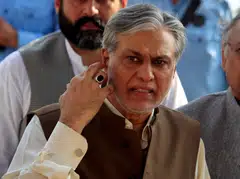

“That’s how Pakistan didn’t default, God be praised,” he said. “We’re now in a safe zone.”
Analysts say the huge drop in the deficit was due to import suppression policies Pakistan put in place late last year to try to overcome its balance of payment crisis.
The IMF programme, however, includes objectives that require Pakistan to lift its import curbs, which have artificially depressed the economy.
Another key objective of the programme is achieving a real effective exchange rate for the Pakistan rupee.
As a result of the IMF deal, the rupee has been appreciating, but on Tuesday it dropped 1.34 per cent in the interbank market to 283.04 rupees against the US dollar, the central bank said.
Analysts believe the decline was due to the US dollar demand after Pakistan’s import restrictions were eased. REUTERS
Decoding Asia newsletter: your guide to navigating Asia in a new global order. Sign up here to get Decoding Asia newsletter. Delivered to your inbox. Free.
Share with us your feedback on BT's products and services






