

China to limit daily price swings in national emissions trading to 10%
 Add BT as a preferred source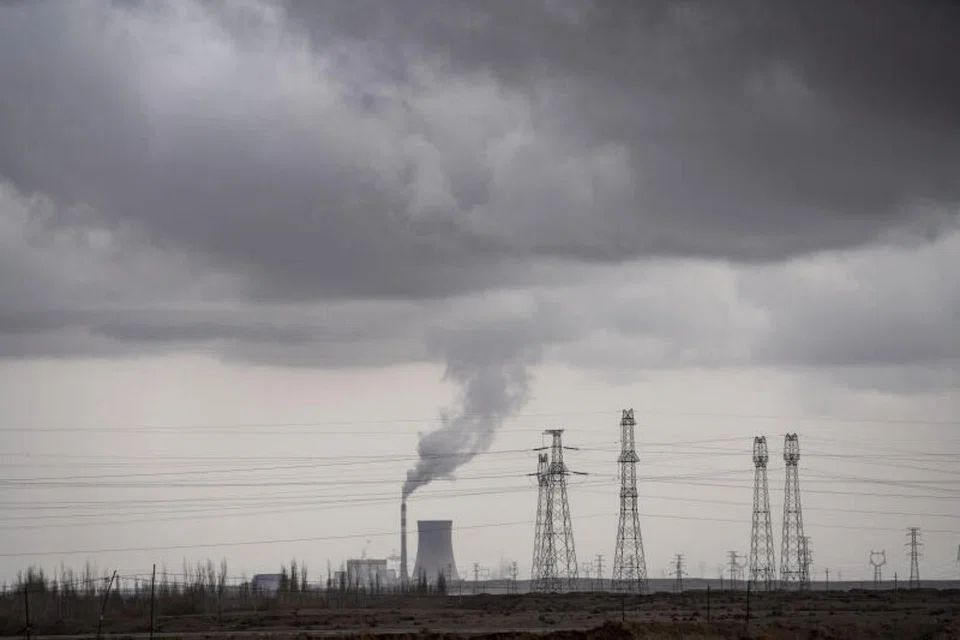
DeeperDive is a beta AI feature. Refer to full articles for the facts.
[BEIJING] China's national emission trading scheme (ETS) will initially set daily trading limits at 10 per cent of prices when it comes on line late in June, according to a report in the Securities Times citing the chairman of the exchange that will host the trading.
In its first phase, China's long-awaited national ETS, seen as a key Beijing policy lever to achieve the country's net-zero emission pledge, will cover some 2,225 power plants across China, responsible for about 4 billion tonnes of carbon emission each year.
The Securities Times cited Lai Xiaoming, the chairman of the Shanghai Environment and Energy Exchange, in its report. Mr Lai also said limits for block deals in national ETS will be set at 30 per cent of price moves at the beginning, and adjusted in accordance to market movements.
While Mr Lai's exchange will host trading, the Wuhan exchange will manage the ETS registry platform.
Financial institutions or individual investors will not be allowed to participate in trading in the early stage of the national ETS, restricted to carbon-emitting utilities, but as soon as the trading mechanism matures, institution investors would be included, said Mr Lai.
At a conference last Saturday, Mr Lai said China is looking to bring two more sectors into carbon emission verification this year and include them into the national ETS next year.
Navigate Asia in
a new global order
Get the insights delivered to your inbox.
China had aimed to cover eight high-emission industries, including petrochemicals, chemicals, building materials, non-ferrous, papermaking, steel, power generation and aviation, into the national trading scheme.
REUTERS
Decoding Asia newsletter: your guide to navigating Asia in a new global order. Sign up here to get Decoding Asia newsletter. Delivered to your inbox. Free.
Share with us your feedback on BT's products and services
TRENDING NOW
China pips the US if Asean is forced to choose, but analysts warn against reading it like a sports result
Beijing’s calculated silence on the Iran war

Shelving S$5 billion office redevelopment plan proved ‘wise’ as geopolitical risks mount: OCBC chairman
Vietnam formalises new state leadership, redefining ‘four pillars’ power balance

