
China warns Olympics diplomatic boycott nations will 'pay a price'
US, Australia, UK and Canada's decisions to skip Games over human rights concerns infuriates Beijing
 Add BT as a preferred source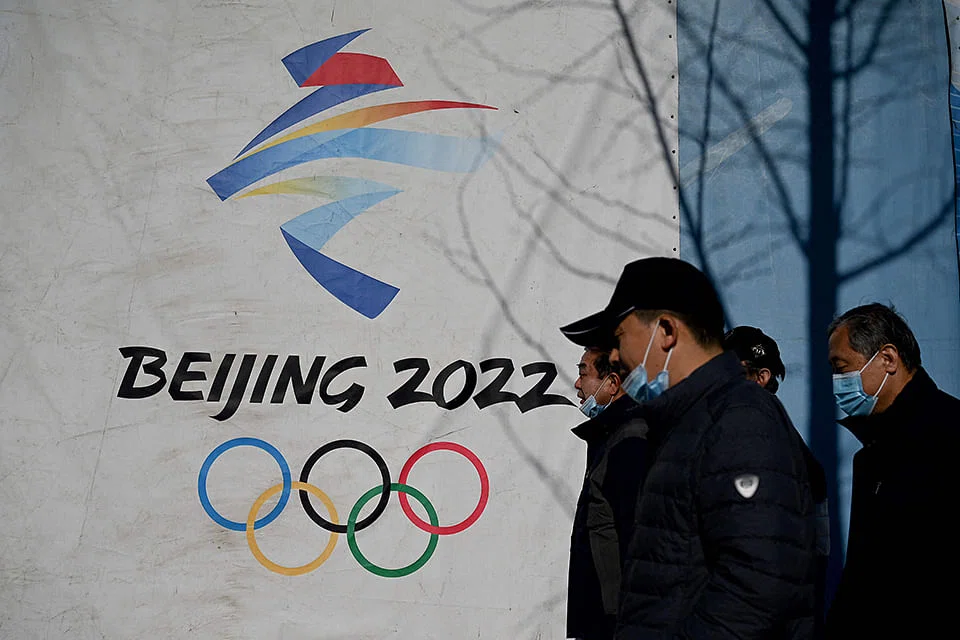
Beijing
CHINA warned Western nations on Thursday (Dec 9) that they would "pay the price" for a diplomatic boycott of the 2022 Beijing Winter Olympics.
Washington announced its boycott earlier in the week, saying it was prompted by widespread rights abuses by China and what it sees as a "genocide" against the Muslim Uyghur minority in Xinjiang. Australia, Britain and Canada followed suit in a flurry of diplomatic bonhomie on Wednesday.
The boycott stopped short of not sending athletes but nonetheless infuriated Beijing, which hinted at retaliation on Thursday.
"The US, Australia, Britain and Canada's use of the Olympic platform for political manipulation is unpopular and self-isolating, and they will inevitably pay the price for their wrongdoing," foreign ministry spokesperson Wang Wenbin told reporters.
Advocacy groups have backed the boycott, with Human Rights Watch's China director Sophie Richardson calling it a "crucial step towards challenging the Chinese government's crimes against humanity targeting Uighurs and other Turkic communities".
Navigate Asia in
a new global order
Get the insights delivered to your inbox.
Campaigners say that at least 1 million Uighurs and other Turkic-speaking, mostly Muslim minorities have been incarcerated in "re-education camps" in Xinjiang, where China is also accused of forcibly sterilising women and imposing forced labour.
Beijing has defended the camps as vocational training centres aimed at reducing the appeal of Islamic extremism.
International Olympic Committee president Thomas Bach said on Wednesday that he was staying politically neutral on the matter, while insisting the important point was "the participation of the athletes in the Olympic Games".
All 4 of the boycotting Western countries have seen relations with Beijing cool dramatically in recent years.
Britain has also criticised China for its crackdown in Hong Kong. It angered Beijing last year by blocking Chinese tech giant Huawei's involvement in its 5G broadband rollout, after Washington raised espionage concerns.
Canada's relations with China, meanwhile, hit a low over the December 2018 arrest in Vancouver on a US warrant of Huawei executive Meng Wanzhou, and Beijing's detention of 2 Canadian nationals in response.
All 3 were released and repatriated in September.
Canberra's ties with Beijing have also been in freefall in recent years, with China introducing a raft of punitive sanctions on Australian goods. China has been angered at Australia's willingness to legislate against overseas influence operations, its barring of Huawei from 5G contracts, and its call for an independent investigation into the origins of the coronavirus pandemic.
Australia's recent move to equip its navy with nuclear-powered submarines under a new defence pact with Britain and the US - widely seen as an attempt to counter Chinese influence in the Pacific region - further angered Beijing.
UK Prime Minister Boris Johnson announced Britain's boycott in Parliament on Wednesday but joined the other 3 nations in saying athletes should still attend. "I do not think that sporting boycotts are sensible - that remains the policy of the government," he added.
In Ottawa, Prime Minister Justin Trudeau announced Canadian officials too would skip the Games, saying his government is "extremely concerned by the repeated human rights violations by the Chinese government".
Australia's leader Scott Morrison made a similar announcement earlier in the day.
Other countries are weighing their own moves.
France, which is set to take over the European Council presidency on Jan 1, said on Tuesday it would seek a coordinated EU response to the US decision.
The Kremlin, however, criticised the US move, saying the 2022 games should be "free of politics".
Russian President Vladimir Putin has already accepted an invitation by Chinese leader Xi Jinping to attend. AFP
Decoding Asia newsletter: your guide to navigating Asia in a new global order. Sign up here to get Decoding Asia newsletter. Delivered to your inbox. Free.
Share with us your feedback on BT's products and services

