

China will not resort to massive stimulus, yuan devaluation: PM Li
Beijing
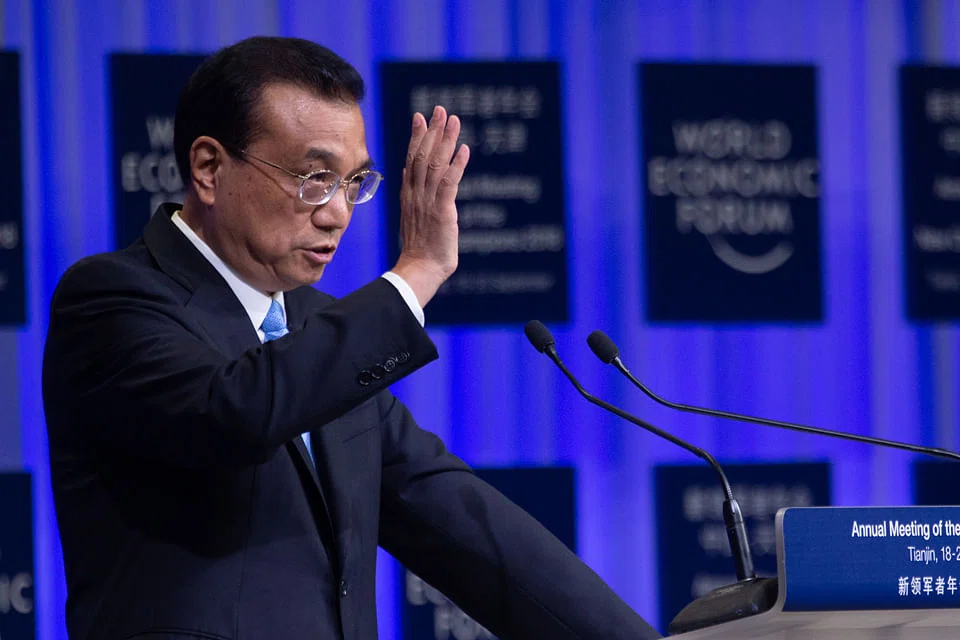
CHINA will not resort to a massive stimulus as it did in 2008 to boost its economy, Prime Minister Li Keqiang said in his opening speech at the summer edition of the World Economic Forum held in Tianjin on Wednesday.
To a floor of mostly Chinese and foreign business executives, he said China was facing challenges both at home and overseas, and that it will aim to keep its growth rate at a medium- to-high level.
"China is deeply integrated in the world economy and is notably affected by external factors. Maintaining steady growth is increasingly difficult, but China will not resort to a massive stimulus," he said.
"When it comes to investment, there has been lower growth. We will not follow the path of being reliant on investment," he added, in a reference to the government's past practice of relying on investment and public spending to spur growth; this had led to massive local government debt and shady loans.
The world's second-largest economy is now challenged by the efforts of the government to deleverage and restructure its growth model, as well as by aggressive US trade policies to curb imports of Chinese goods.
Earlier this week, the Trump administration said it would implement another round of tariffs on US$200 billion worth of goods. These will be raised from 10 per cent currently to 25 per cent in January. These come on top of a first batch of taxes imposed in July, and Washington has said it would not hesitate to tax all imports of Chinese goods into the US.
Beijing retaliated on Tuesday by announcing tariffs of between 5 per cent and 10 per cent on US$60 billion worth of US imports.
Analysts say the Chinese manufacturing sector could begin to feel the pinch next year, when the entire length of the supply chain would be affected.
While the economy has proved resilient with GDP growth at 6.8 per cent in the first half of this year, there have been increasing signs of a slowdown, with investment growth hitting an all-time low last month.
The yuan has been pressured in recent months, dropping 8.5 per cent since April, with investors worried about the negative impact of the trade tensions.
In a bid to reassure investors, Mr Li said China would not devalue its currency and instead work at reforming and restructuring its economy.
"We will not go down the path of devaluation to stimulate exports. Persistent depreciation will do more harm than good to our country."
He said China had ample tools to offset the downward pressures, such as stabilising investment, reducing taxes and fees, instituting a more pro-active fiscal policy and easing credit difficulties for small and medium-sized companies.
He said monetary policy would remain prudent and liquidity reasonably ample, with employment taking priority.
Taking the lead from Chinese President Xi Jinping who championed free trade in a speech at the World Economic Forum in Davos in January, Mr Li also positioned China as the leader of multilateralism.
"The trend of globalisation is unstoppable, even though there are flaws in the process, and the basic principle of free trade should be maintained," he said.
With no new talks between Beijing and Washington on the horizon, he called for "respect" between all partners.
"If there are problems, negotiation is needed to solve them. Unilateralist acts in any form won't solve problems," he said.
TRENDING NOW
32 companies, 6 individuals bag accolades at Singapore Corporate Awards 2026

He built the Vingroup empire. Now South-east Asia’s richest man is handing some key roles to his sons
URA to review guidelines on floor space to give developers more design flexibility: Chee Hong Tat
Chagee, Mixue and Luckin won the market. Sustaining their edge is the harder part

