

China’s economy slows in October as business confidence slumps
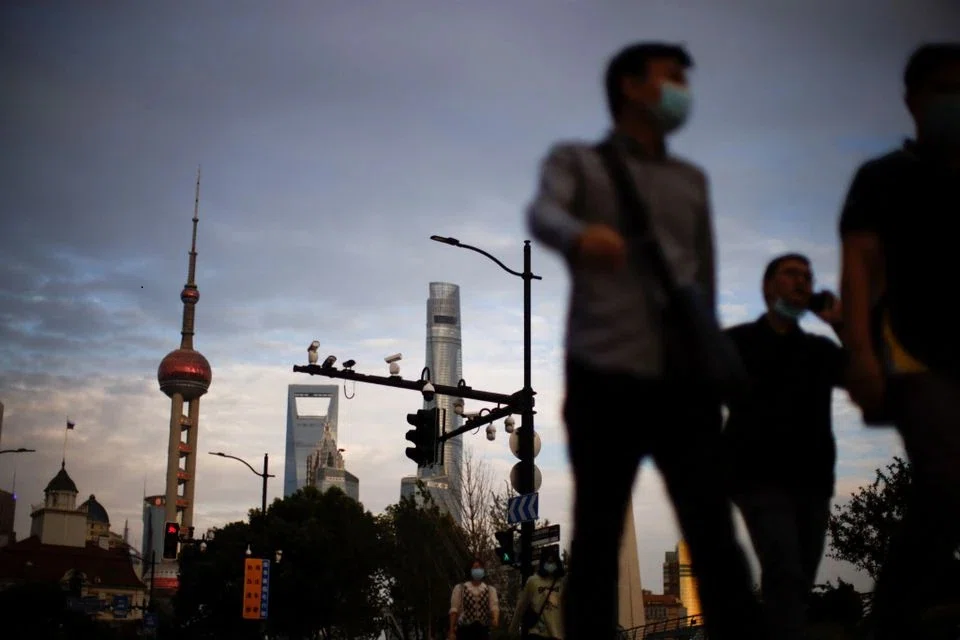
CHINA’S economy slowed in October as car and real-estate sales weakened and global trade and small business confidence contracted, signalling last month’s pickup in activity wasn’t enough to change the country’s grim economic picture.
That’s the outlook based on Bloomberg’s aggregate index of eight early indicators for this month. The overall gauge was at 4, indicating a dropoff in momentum after three months of improvement.
Small business confidence fell back into contraction this month for the first time since May when Shanghai and other cities were at the height of lockdowns. The expectation index slowed and almost every other indicator on conditions for smaller companies was negative, according to a survey of more than 500 firms by Standard Chartered economists.
While export orders rose, a contraction at domestically focused companies implied weaker demand in China, the economists wrote. An indicator for the manufacturing sector dropped to its lowest level since February 2020, while the index for accommodation and catering was at the lowest level since at least May 2020, underlining how Covid Zero restrictions on movement and travel are weighing on the economy.
“Both manufacturing and services performance sub-indices dipped into contractionary territory,” wrote economists Hunter Chan and Ding Shuang. “Covid resurgence and weaker demand were likely drags,” they wrote. The National Day holiday period also didn’t appear to boost spending much, with the economists calling its effect “insignificant”.
Daily Covid case numbers in China have been hovering around 1,000 since early August, despite strengthened efforts to contain outbreaks and much tighter restrictions on travel and movement ahead of the just-ended Communist Party congress. Those controls have stopped exponential increases in cases at the expense of private consumption, which only grew 2.5 per cent in September from a year earlier.
There was no indication from the party congress that the government is planning any changes to the Covid Zero strategy, adding to a stock market rout on Monday (Oct 24) that was the steepest since 2008. That drop reversed course somewhat on Tuesday, though the benchmark onshore share index has still lost more than a quarter of its value this year.
The epic selloff, though, was almost completely ignored by Chinese state media, which instead dedicated the bulk of their front pages to official news articles about President Xi Jinping. News and discussion on social media was also censored.
The Securities Times, which is managed by the Communist Party, ran a report on how the housing market might recover this quarter from its more than year-long contraction.

Despite that optimism, housing sales in the four biggest cities in China were down almost 30 per cent in the first three weeks of the month compared to a year earlier, and property transactions slumped almost 40 per cent during the long holiday earlier in the month, which is usually a time of brisk sales.
The housing market slump has slashed demand for all sorts of commodities used in construction, including steel and cement. While stocks of steel rebar have continued to fall, total steel inventories at mills rose this month, while daily crude steel output fell from earlier in October. That’s caused the price of iron ore to drop to the lowest since November. The prices of other metals have also fallen in recent months on dimming prospects for global growth. BLOOMBERG
Decoding Asia newsletter: your guide to navigating Asia in a new global order. Sign up here to get Decoding Asia newsletter. Delivered to your inbox. Free.
Share with us your feedback on BT's products and services
TRENDING NOW

First Resources blames El Nino, outside fires for Kalimantan hotspots amid haze scrutiny

High Court rules against Julius Baer’s Singapore trust arm in US$50 million family trust dispute
Singapore key exports jump by higher-than-expected 68.4% in September, led by non-electronics
MSCI proposes downgrading Indonesia to standalone market status

