China’s exports turbocharge into 2026 after record-breaking year
Trade surplus tops expectations, reaching US$213.6 billion in first two months
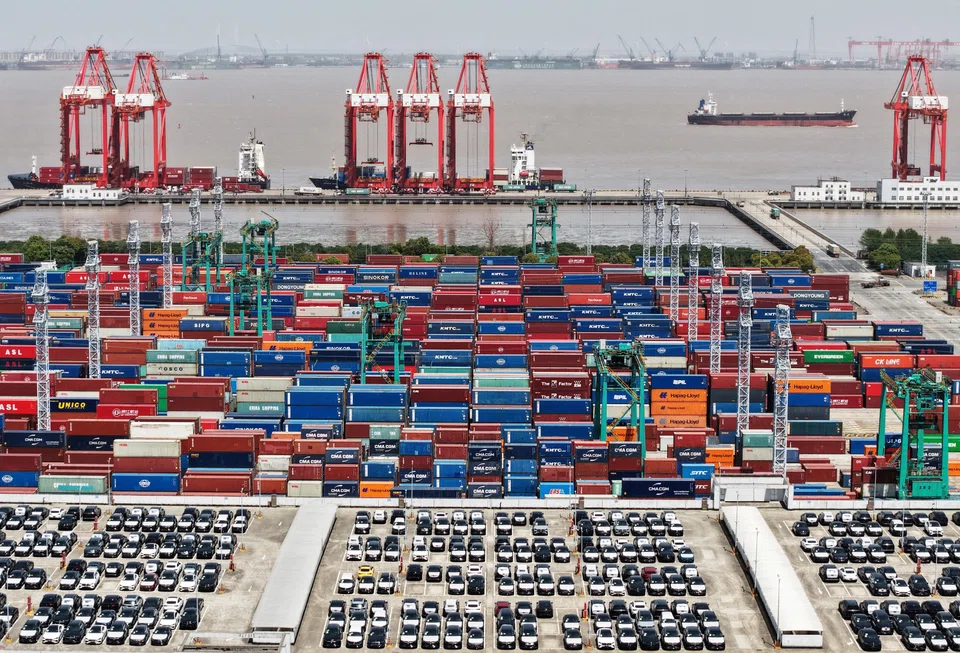
[BEIJING] China roared into 2026 with exports far outstripping forecasts, fuelled by red-hot electronics demand, putting the economy on track to top last year’s record US$1.2 trillion trade surplus – barring a wider energy and shipping shock from the war in Iran.
Outbound shipments from the world’s second-largest economy grew 21.8 per cent in US dollar terms in the January-to-February period, sharply up from the 6.6 per cent increase recorded in December and blowing past the median forecast in a Reuters poll of 7.1 per cent growth.
“The strength in integrated circuits and technology exports is well expected, in line with the artificial intelligence investment boom,” said Xu Tianchen, senior economist at the Economist Intelligence Unit.
“Growth in clothing, textiles and bags exports was surprising, given their poor performance in 2025 amid challenges from South-east Asia and South Asia,” he added.
China’s export momentum could accelerate further in the near term, Xu said, with March data likely to show factories rushing shipments to the US to exploit the Supreme Court’s tariff reprieve and Chinese firms muscling back into low value-added sectors like textiles.
Economists say that it is still too soon to know whether US and Israeli strikes on Iran – and the shutdown of the Strait of Hormuz, a chokepoint for one-fifth of global oil – will derail manufacturers in the months ahead.
China stockpiled key commodities needed by its manufacturers, including iron ore and crude oil, in the first two months of the year.
Vessels that are laden with iron ore cargoes destined for the Middle East are changing course for new destinations such as China, data from ship-tracking agency Kpler shows.
Supply-chain dominance
Meanwhile, rapidly rising global defence spending could lift external demand for Chinese industrial goods, according to Dan Wang, director for China at Eurasia Group. She added that there is also big demand for China’s ‘New Three’: electric vehicles, lithium-ion batteries and solar cells.
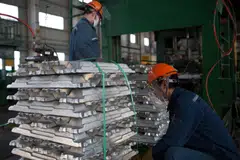



Landing just days after Beijing rolled out a five-year blueprint centred on speeding up tech breakthroughs and embedding AI across industry, the data reinforces policymakers’ conviction that heavier investment in strategic sectors will lock in China’s grip on global supply chains.
China’s trade surplus for the first two months came in at US$213.6 billion, the data showed, far exceeding the US$169.21 billion recorded in the same period last year.
Economists had forecast a trade gap of US$179.6 billion in the survey.
Semiconductor exports rose an annual 66.5 per cent, the fastest growth in well over a decade, buoyed by a global memory chip shortage.
China and Hong Kong shares rose on Tuesday, rebounding from the lowest levels since December and August, respectively, supported by comments from US President Donald Trump that the Middle East war could come to a quick conclusion and the better-than-expected trade data.
Xi-Trump summit looms large as markets eye Iran war risks
Lynn Song, ING’s Greater China chief economist, said that it’s “a risky bet” to assume the momentum will hold, warning that the Iran war’s impact on energy prices could tip economies towards stagflation.
“However, if Trump’s prediction of an end to the Iran war ‘very soon’ comes to fruition and we see a timely resolution, we may need to revisit our expectations for a more modest boost from external demand this year,” he added.
Another major wild card for China’s export-led growth is this month’s much-anticipated summit in Beijing between Trump and Chinese President Xi Jinping.
Hopes for a meaningful truce between the two superpowers remain low, with both sides appearing ready to resume their trade war if necessary.
All the same, Trump’s 2025 tariff onslaught barely dented China’s industrial momentum, with manufacturers redirecting their exports to South-east Asia, Africa and Latin America to blunt the impact of losing US demand.
Exports to Asean jumped an annual 29.4 per cent in the January-to-February period, while shipments to Europe and South Korea rose 27.8 per cent and 27 per cent, respectively.
China’s export push may face hurdles in 2026 if more nations adopt US-style tariffs, driven by rising concerns that Chinese overcapacity is spilling surplus goods into global markets and squeezing local industry.
Premier Li Qiang announced last week that China would seek an economic growth target of 4.5 to 5 per cent for 2026, down from last year’s 5 per cent, which was met largely through a one-fifth surge in its trade surplus.
Although policymakers pledged a “notable” increase in household consumption in the government’s next five-year plan, economists are sceptical that Beijing will move away from its reliance on exports any time soon, as the strategy document offered few specifics to bolster expectations for robust demand-side reform.
China’s imports increased 19.8 per cent in January-to-February period, well above the 5.7 per cent gain in December.
Economists said the upbeat data may prompt policymakers to delay stimulus and lean even harder on exports.
“Against this backdrop of strong export performance and a low official growth target, China is unlikely to introduce further stimulus measures in the short term,” said Zhiwei Zhang, chief economist at Pinpoint Asset Management. REUTERS
Decoding Asia newsletter: your guide to navigating Asia in a new global order. Sign up here to get Decoding Asia newsletter. Delivered to your inbox. Free.
Share with us your feedback on BT's products and services