

China’s exports weaken on Covid disruptions, global risks
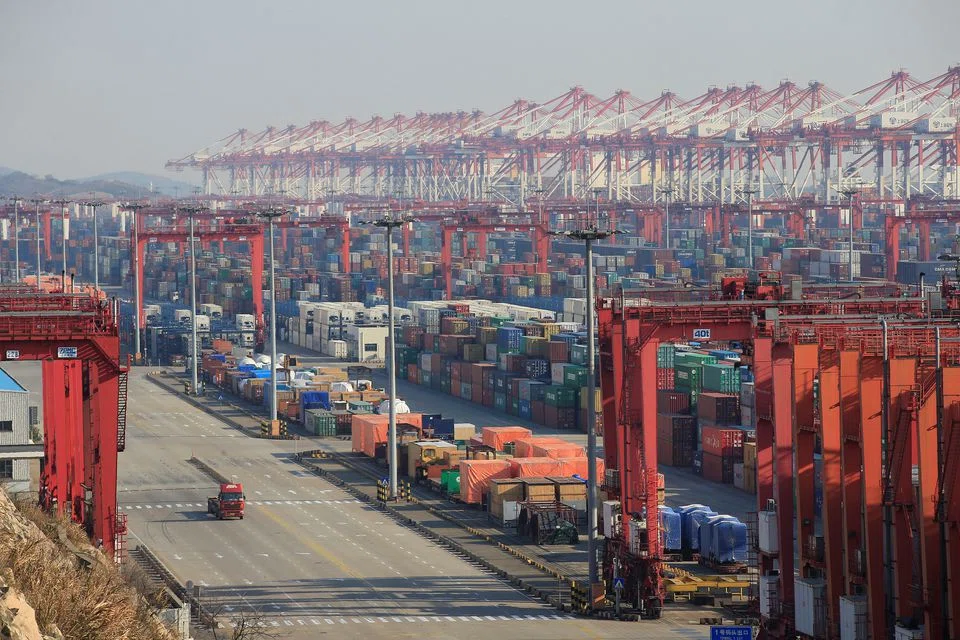
CHINA’S export growth slowed more than expected in August as global demand weakened and Covid lockdowns disrupted manufacturing production. Imports barely grew as domestic demand continued to struggle.
Exports in US dollar terms expanded 7.1 per cent last month from a year earlier to US$314.9 billion, the General Administration of Customs said in a statement Wednesday (Sep 7). That missed the median estimate for a 13 per cent rise in a Bloomberg survey of economists and was the slowest since April.
Imports grew 0.3 per cent, slowing from an increase of 2.3 per cent in July and lower than the median forecast of 1.1 per cent. The trade surplus narrowed to US$79.4 billion last month, according to the data.
The data comes after factory activity in Europe and the rest of Asia slumped in recent months, reflecting slowing global economic momentum. That’s in part driven by dwindling consumer demand due to the surging prices of energy and other consumer goods and services. Meanwhile, Covid outbreaks worsened within China during August, resulting in lockdown in places like Yiwu in the eastern province of Zhejiang, a major manufacturing and exporting hub.
“China’s export growth is retreating to its more normal levels after 2 years of exceptional growth,” said Lu Ting, chief China economist at Nomura Holdings. The trade surplus is elevated “due to low imports, pointing to China’s weak domestic demand”, he said after the data was released.
Weaker exports will weigh on the currency, which is close to breaching 7 to the dollar. The People’s Bank of China has taken several steps recently to slow the yuan’s depreciation, and set its reference rate for the currency at the strongest bias on record on Wednesday.
The volume of imports of crude oil, iron ore, coal, natural gas and soybeans all fell in the first 8 months of this year, the data showed.
Domestic factory output contracted for a second month in a row in August, according to official data, due to power cuts, weak property demand and worsening Covid outbreaks and restrictions. Declining global demand bodes ill for China’s exports, which was an important driver for the economy since the pandemic and contributed to about a fifth of gross domestic product growth last year.
There are signs that export price inflation is beginning to play a bigger role than volume growth in driving exports - about half of the headline export growth in July was due to the price effect, according to an estimate by Macquarie Group.


In real terms, import growth has turned negative since late in the first quarter, suggesting that the demand side is still facing headwinds, according to Zhou Hao, chief economist at Guotai Junan International Holdings. But the pricing effects will continue to cloud the picture for trade performance, he said.
A slowdown in exports would add further strain on the economy already suffering from a stop-start Covid reopening and a yearlong property market slump.
“Single-digit export growth is more likely” for the rest of the year, according to Zhang Zhiwei, chief economist at Pinpoint Asset Management. “Exports will continue to contribute to GDP growth in China but not as strongly as in the first half of the year,” so China will probably need to rely more on domestic demand, he said. BLOOMBERG
Decoding Asia newsletter: your guide to navigating Asia in a new global order. Sign up here to get Decoding Asia newsletter. Delivered to your inbox. Free.
Share with us your feedback on BT's products and services
TRENDING NOW
World’s largest offshore wind platform by Seatrium consortium on track to be completed by 2028

Is stamp collecting enjoying an analogue revival or are its best days over?

GovTech retrenches another 38 staff in second round of layoffs

MBS adjusted property Ebitda falls 20.6% in Q3 with fewer high-roller visits, weaker hold

