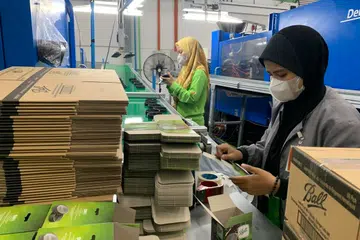
China's factory activity contracts unexpectedly in July as Covid flares up
 Add BT as a preferred source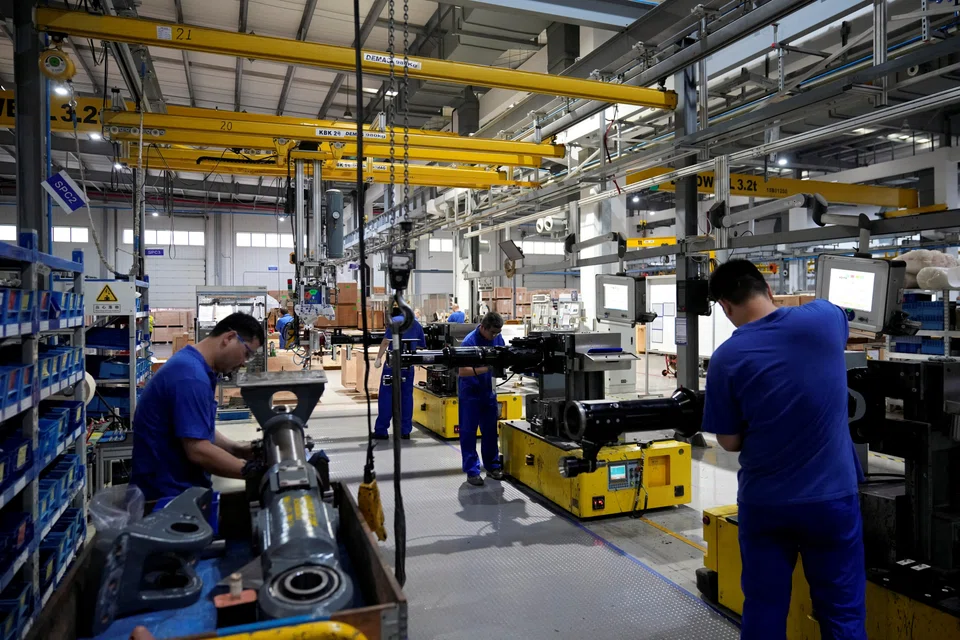
CHINA’S factory activity contracted unexpectedly in July after bouncing back from Covid-19 lockdowns the month before, as fresh virus flare-ups and a darkening global outlook weighed on demand, a survey showed on Sunday (Jul 31).
The official manufacturing purchasing managers’ Index (PMI) fell to 49.0 in July from 50.2 in June, the National Bureau of Statistics (NBS) said, below the 50-point mark that separates contraction from growth and the lowest in 3 months.
Analysts polled by Reuters had expected a reading of 50.4.
“The level of economic prosperity in China has fallen, the foundation for recovery still needs consolidation,” NBS senior statistician Zhao Qinghe said in a statement on the NBS website.
Continued contraction in the energy-intensive industries, such as petrol, coking coal and ferrous metals, contributed most to pulling down the July manufacturing PMI, he said.
Sub-indexes for output and new orders fell by 3 points and about 2 points in July, respectively, while the employment sub-index edged down by 0.1 point.
Weak demand has constrained recovery, Bruce Pang, chief economist and head of research at Jones Lang Lasalle, said in a research note. “Q3 growth may face greater challenges than expected, as recovery is slow and fragile,” he added.
The official non-manufacturing PMI in July fell to 53.8 from 54.7 in June. The official composite PMI, which includes manufacturing and services, fell to 52.5 from 54.1.
China’s economy barely grew in the second quarter amid widespread lockdowns, and top leaders recently signalled their strict zero-Covid policy would remain a top priority.
Policymakers are prepared to miss their GDP growth target of “around 5.5 per cent“ for this year, state media reported after a high-level meeting of the ruling Communist Party.
Beijing’s decision to drop mention of the target has doused speculation that the authorities would roll out massive stimulus measures, as they often have in previous downturns.
Capital Economics says that policy restraint, along with the constant threat of more lockdowns and weak consumer confidence, is likely to make China’s economic recovery more drawn-out.
After a rebound in June, the recovery in the world’s second-biggest economy has faltered as Covid flare-ups led to tightening curbs on activity in some cities, while the once mighty property market lurches from crisis to crisis.
Chinese manufacturers continue to wrestle with high raw material prices, which are squeezing profit margins, as the export outlook remains clouded with fears of a global recession.
China’s southern megacity of Shenzhen has vowed to “mobilise all resources” to curb a slowly spreading Covid outbreak, ordering strict implementation of testing and temperature checks, and lockdowns for Covid-hit buildings.
The port city of Tianjin, home to factories linked to Boeing and Volkswagen, and other areas tightened curbs this month to fight new outbreaks.
According to World Economics, the lockdown measures had some impact on 41 per cent of Chinese companies in July, though its index of manufacturing business confidence rose significantly from 50.2 in June to 51.7 in July. REUTERS
Decoding Asia newsletter: your guide to navigating Asia in a new global order. Sign up here to get Decoding Asia newsletter. Delivered to your inbox. Free.
Share with us your feedback on BT's products and services