China’s factory output, retail sales miss forecasts, economy losing steam
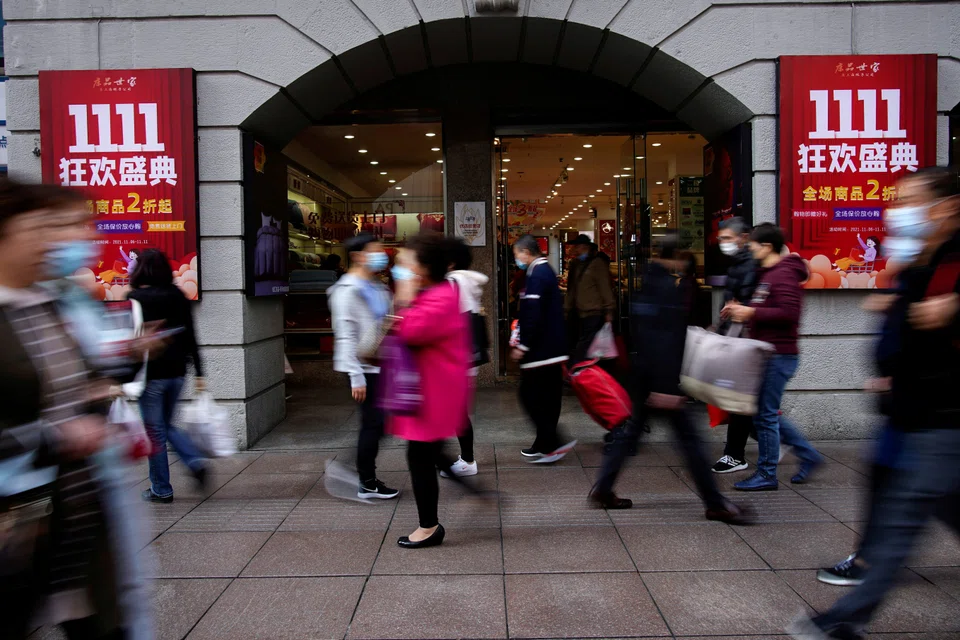
CHINA’S factory output grew more slowly and retail sales fell in October, the latest sign that the world’s second-largest economy is losing momentum as it struggles with protracted Covid-19 curbs and a property downturn.
Property investment also fell at a faster pace in the January-October period, pointing to further weakness in a key pillar of China’s economy.
Industrial output rose 5.0 per cent in October from a year earlier, missing expectations for a 5.2 per cent gain in a Reuters poll and slowing from the 6.3 per cent growth seen in September, official data showed on Tuesday. Retail sales fell 0.5 per cent, the first fall since May when Shanghai was under a city-wide lockdown. Analysts had expected retail sales to rise 1.0 per cent, slowing from a 2.5 per cent gain in September.
It was the latest data to point to a slowdown in China’s economy, with recent figures also showing exports falling, inflation slowing and new bank lending tumbling.
China’s economy is facing a series of headwinds including its zero-Covid policy, a property slump and global recession risks. Recent moves to ease some Covid-19 curbs and provide financial support to the property market have underpinned market sentiment, but analysts expect Beijing’s strict Covid-19 policy to continue to weigh on economic activity.
Chinese consumers have borne the brunt of stringent Covid-19 curbs, as fresh virus lockdowns and restrictions impeded travels and hurt shoppers’ confidence while the government has focused on ramping up infrastructure investment.



Fixed asset investment expanded 5.8 per cent in the first 10 month of the year, versus expectations for a 5.9 per cent rise and growth of 5.9 per cent in January-September. Property investment fell 8.8 per cent year-on-year in January-October, after declining 8 per cent in January-September.
China’s property sector, which accounts for a quarter of the economy, has slowed sharply this year as the government sought to restrict excessive borrowing by developers. A plan to shore up liquidity outlined by Chinese regulators on Sunday sent Chinese property stocks and bonds soaring on Monday. Hiring remained low among companies growing increasingly wary about their finances. The nationwide survey-based jobless rate stayed at 5.5 per cent in October, unchanged from September. Youth unemployment stood at 17.9 per cent, also the same level as September. The country is on track to miss its annual growth target of around 5.5 per cent, analysts say. Economists in a Reuters poll expect the economy to grow 3.2 per cent in 2022 growth. REUTERS
Decoding Asia newsletter: your guide to navigating Asia in a new global order. Sign up here to get Decoding Asia newsletter. Delivered to your inbox. Free.
Share with us your feedback on BT's products and services