

China's growth seen slowing to between 6.9% and 7.1% this year
Sluggish demand will hit expansion; biggest medium-term uncertainty is deflation risk: official
Beijing
CHINA'S economic growth could slow to between 6.9 per cent and 7.1 per cent this year as the country fends off deflation risks, the head of the Chinese central bank's research bureau said on Tuesday.
In an opinion piece in the China Daily newspaper, Lu Lei said that fixed asset investment growth in the world's second-largest economy is likely to cool further this year, dragged by a sagging property market and a fall-off in state investment.
"China's economic growth rate may remain stable at a relatively lower level in 2015, between 6.9 per cent and 7.1 per cent, restricted by sluggish demand," Mr Lu wrote.
"The biggest medium-term uncertainty for the economy is deflation risk."
Judging that "it is difficult to anticipate any rise in the producer price index" partly because manufacturers are still struggling to deplete a glut in raw materials, Mr Lu forecast that China's consumer inflation would also likely stay weak in 2015.
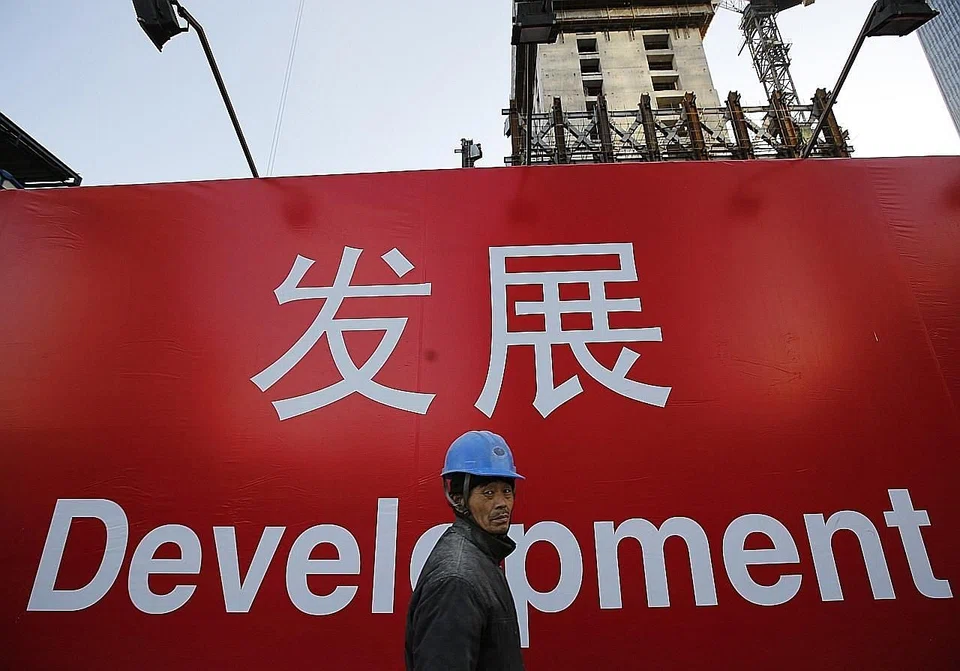
Hurt by erratic export growth, softening domestic demand, reduced government investment and a sputtering housing market, China's economic growth slipped to a 24-year low of 7.4 per cent last year.
The downturn has fuelled financial risks in the country as companies delay repaying their loans or default altogether, leading to a rise in bad debt levels among banks.
Acknowledging the problem, Mr Lu said that rising non-performing loan ratios at commercial banks will lead to liquidity problems, and cause volatility in interbank interest rates.
Mr Lu said the central bank may take measures to temper rising debt levels, but did not elaborate. "It is unlikely that we will see a systemic liquidity crisis, although there may be a short-term liquidity squeeze," he noted. As such, he said that the central bank faced more difficulties in managing liquidity, and that monetary policy will be adjusted to keep liquidity at a reasonable level.
"Monetary policy fine-tuning is likely according to changes in the economic situation, with a preference for maintaining reasonable market liquidity and providing a neutral financial environment," Mr Lu added.
In a bid to re-energise the economy, the Chinese central bank reduced the amount of cash that banks must hold as reserves for the first time in over two years earlier in February. This was after it had cut interest rates for the first time in over two years as well in November. REUTERS
TRENDING NOW

He built the Vingroup empire. Now South-east Asia’s richest man is handing some key roles to his sons
Despite the de-dollarisation debate, demand for dollar liquidity in Asia is growing
Can a first-time homebuyer couple earning S$18,000 a month afford a new EC unit?

Asia needs new energy security architecture

