China’s interbank repo turnover hits record, PBOC drains cash
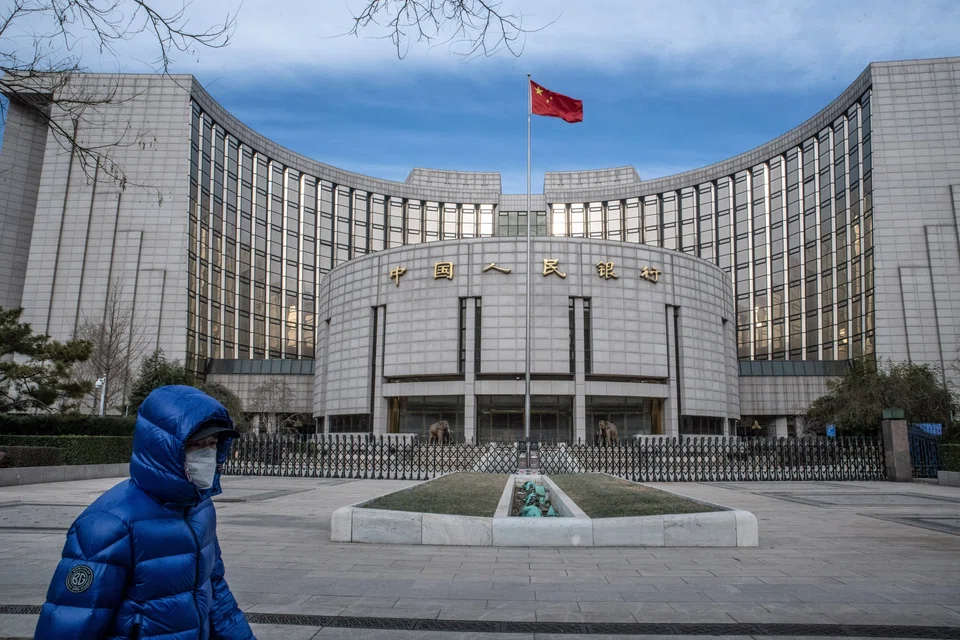
THE volume of repurchase agreements (repos) traded in China’s interbank market surged to a record high this week, as loosened liquidity conditions at the start of the month prompted investors to build up leverage to amplify profit.
Total turnover rose 637.7 billion yuan (S$123 billion) to 8.11 trillion yuan on Thursday (Apr 6), data from the National Interbank Funding Center showed, the highest on record.
High turnover is considered a gauge of leverage in the bond market, as investors usually take advantage of ultra-low short-term financing costs to fund investment in government bonds.
Low bond market volatility this year has also forced some investors to increase leverage to ensure profit.
The volume-weighted average rate of the benchmark seven-day repo has fallen about 39 basis points since March-end to 1.9972 per cent as of Friday morning, not far from the policy rate of the central bank’s reverse repos for the same tenor at 2.0 per cent.
The weighted average of overnight repos plunged about 45 basis points during the same period.
Market rates fell and liquidity increased as cash conditions eased after seasonal money demand at quarter-end ebbed and official monetary easing measures came into effect.
“The central bank mother has sent a clear signal to the market: as long as market funding costs are at the similar levels as policy rates, she is fine,” said a trading director at a commercial bank, adding investors have perceived such a signal and traded aggressively by adding leverage.
The central bank surprised the market last month by lowering the amount of cash banks must hold in reserve for the first time this year to keep liquidity ample and support a nascent economic recovery.


However, market watchers pointed out that higher leverage reflects investor optimism towards further easing measures. But any sudden change to policy stance would likely trigger significant volatility in the bond market, they said.
The People’s Bank of China (PBOC) made its biggest weekly cash withdrawal in three months, draining 1.132 trillion yuan on a net basis for the week, the biggest since early January.
“We see near-term downside for China rates at the front end on the possibility of further easing, before a further rise in Q2 on strong supply and credit growth,” analysts at Standard Chartered said in a client note. REUTERS
Decoding Asia newsletter: your guide to navigating Asia in a new global order. Sign up here to get Decoding Asia newsletter. Delivered to your inbox. Free.
Share with us your feedback on BT's products and services