

China's June factory inflation cools counter to global trends
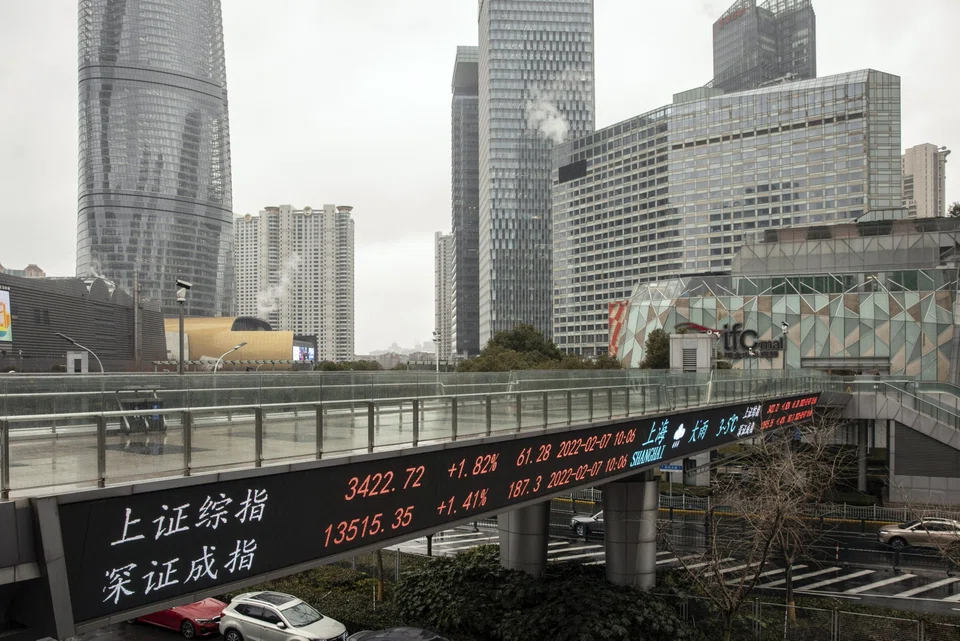
CHINA’S factory-gate inflation cooled in June to the lowest in 15 months as the country continues to buck the global trend of accelerating prices.
The producer price index (PPI) rose 6.1 per cent year-on-year, the National Bureau of Statistics (NBS) said on Saturday (Jul 9), after a 6.4% rise in May. Analysts had expected an increase in the PPI rate of 6.0% in a Reuters poll.
The slower rise in the PPI was driven by the resumption of additional industrial production, stable supply chains in key sectors and government polices to stabilise commodity prices, NBS official Dong Lijuan said in a separate statement.
Inflation in the ferrous metal mining and processing industry decreased the most, while producer prices for the oil and gas extraction industry rose the most, according to NBS.
The falling factory-gate inflation reflects easing cost pressure on the middle and downstream manufacturers, Zhou Maohua, an analyst at China Everbright Bank, said in a note.
China’s producer inflation has cooled for 6 consecutive months. That contrasts sharply with soaring global inflation that has prompted major central banks in the rest of the world to raise interest rates.
The consumer inflation rate in the world’s second-largest economy increased by the highest in nearly 2 years though it remained within the country’s target of an around 3 per cent rise.
The pickup in consumer inflation follows a surge in fuel prices and suggests policymakers will need to keep a close watch on any persistent cost pressures amid the global surge in prices.
The consumer price index (CPI) increased 2.5 per cent from a year earlier, widening from a 2.1 per cent gain in May and the highest in 23 months. In a Reuters poll, the CPI was expected to rise 2.4 per cent.

The CPI stayed flat month-on-month, after the 0.2 per cent drop in May, beating the 0.1 per cent decline in a Reuters poll.
Vehicle fuel prices soared 32.8% in June, the NBS said.
“China will continue to face the dual pressure of structural inflation and imported inflation. The slow recovery of domestic demand will also raise up the headline consumer inflation,” said Ying Xiwen, a senior analyst at Minsheng Bank.
Overall, CPI is expected to rise moderately and very likely to surpass 3% in the second half of the year, but the whole year average level will still be within the annual target, Ying said.
China’s economy has showed some signs of recovery in recent months after a sharp COVID-induced slump because extensive lockdowns in cities including the commercial hub Shanghai.
However, headwinds to growth persist, including worries of any recurring waves of COVID infections. Some areas have recently reported flare-ups in cases, which could slow or even stymie a recovery.
In order to boost the flagging economy, China will issue 2023 advance quota for local government special bonds in the fourth quarter, with the new quota likely bigger than 1.46 trillion yuan ($218.09 billion) for 2022, sources have told Reuters.
In late June, the People’s Bank of China (PBOC) Governor Yi Gang pledged to keep monetary policy accommodative to support an economic recovery.
“Monetary policy faces constraints such as aggressive Fed hikes and rising inflation concerns and appears to be switching from a crisis mode into a wait-and-see mode. Looking ahead, we think the PBOC would be careful and data-dependent in calibrating its stimulus,” Citi analysts said in a note. ($1 = 6.6945 Chinese yuan renminbi) (Reporting by Gao Liangping, Ellen Zhang and Ryan Woo; Editing by Christian Schmollinger)
Decoding Asia newsletter: your guide to navigating Asia in a new global order. Sign up here to get Decoding Asia newsletter. Delivered to your inbox. Free.
Share with us your feedback on BT's products and services
TRENDING NOW

He built the Vingroup empire. Now South-east Asia’s richest man is handing some key roles to his sons
Quarter of Singtel special discounted shares sold ahead of CPF Board transfer

Why Tan Aik Keong of digital solutions specialist Agmo wants to make himself less indispensable

Asia needs new energy security architecture

