China’s local government financing vehicles splurge on land shunned by developers
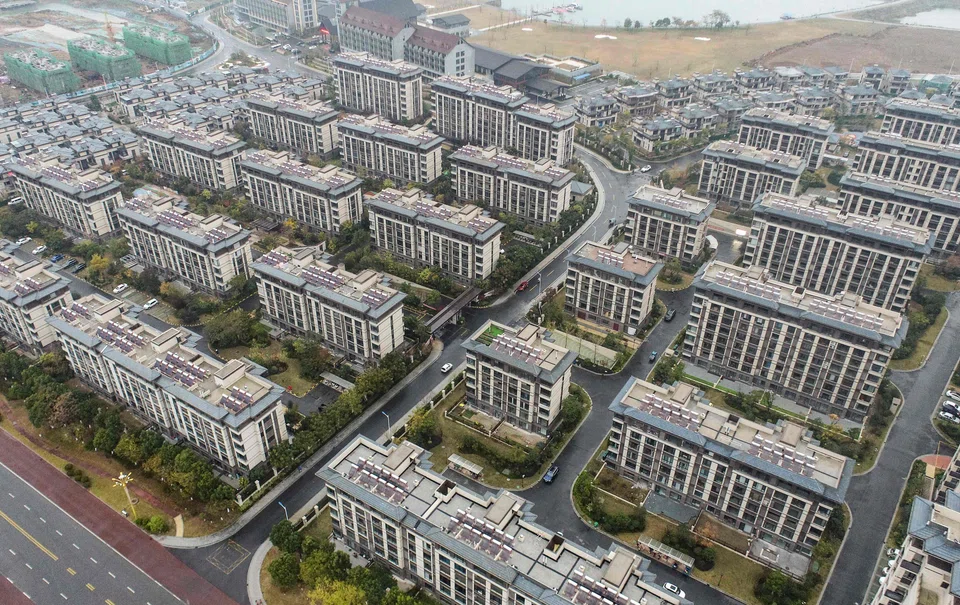
AS CHINA’S cash-strapped private developers avoid buying land to build homes during an unprecedented slump in the industry, one group has emerged to prop up the ailing market.
Local government financing vehicles, or LGFVs, snapped up more than half of residential land sales last year, a tally by brokerage Guangfa Securities last week showed. They spent 2.2 trillion yuan (S$425.9 billion).
Liu Shui, research director at China Index Holdings, said: “LGFVs and national state-owned developers have dominated the land market. National private players have almost vanished from land buying under liquidity pressure.”
The trend has helped shore up the finances of local governments that rely on land sales for much of their revenue. But it has also stoked concerns that municipalities are using LGFVs to support land values, while adding to the entities’ debts and raising questions over the sites’ development prospects as housing demand plummets.
Antan Credit Rating, a company based in Hubei province, last month said that 79 per cent of the land that LGFVs bought at auctions was at the reserve price, suggesting that the transactions were largely intended to prevent the market from collapsing.
Even after the government unveiled plans to support financing for property developers towards the end of last year, there was no sign that LGFVs were letting up on their purchases. They made up 65 per cent of land sales in the final quarter, up from 43 per cent in the first.
Despite the buying, local government income from land sales slumped 23 per cent to 6.69 trillion yuan last year, the lowest annual figure since 2018, official data showed. Local governments made only 312 billion yuan from last year’s transactions, after deducting the cost of selling the land. This was two-thirds less than the income in 2021.
Revenue from deed taxes also slid 22 per cent from 2021 levels.
Based on a Bloomberg calculation of Ministry of Finance data, weakening land sales pushed China’s overall budget deficit to a record 8.96 trillion yuan last year, putting local governments in increasingly poor fiscal positions.


The deficit was larger than the previous record of 8.72 trillion yuan in 2020, when the economy was battered by the initial Covid outbreak. BLOOMBERG
Decoding Asia newsletter: your guide to navigating Asia in a new global order. Sign up here to get Decoding Asia newsletter. Delivered to your inbox. Free.
Share with us your feedback on BT's products and services