

China’s sweltering heat pushes Shanghai power demand to record
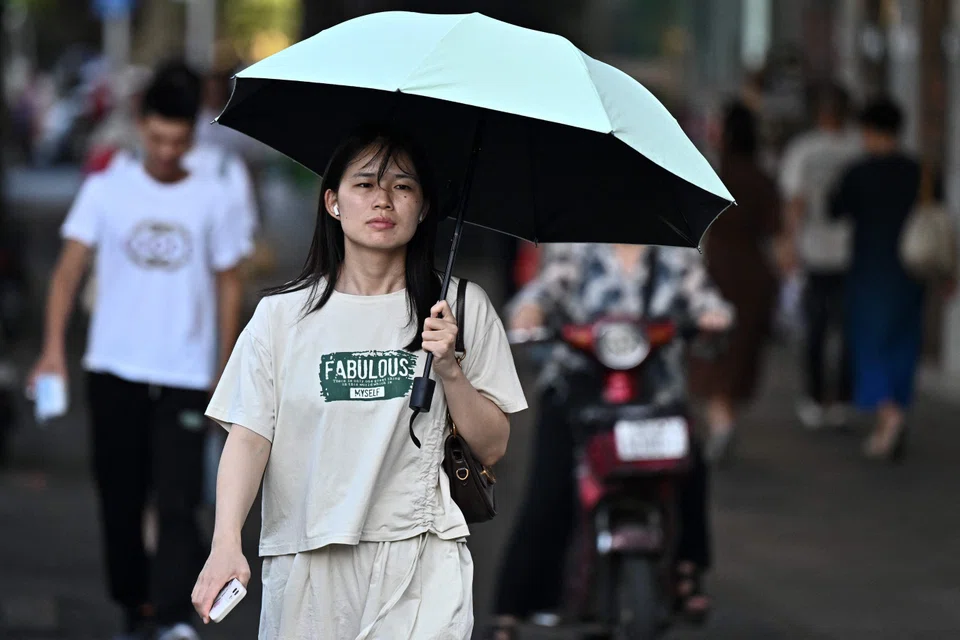
PUNISHING heat throughout southern China is stressing power networks and farmland as extreme weather continues to exact a deadly toll in the world’s second-biggest economy.
Electricity demand in Shanghai has hit a record as temperatures surged to 40.4 degrees Celsius (deg C) on Sunday (Aug 4), close to the city’s all-time high of 40.9 deg C first recorded in 1873 and repeated two years ago. Nearby provinces are also closely tracking the heat to ensure power supplies, while officials have warned rice farmers in Jiangxi and tropical fruit growers in Fujian to protect crops from the blistering conditions.
So far, the grid is holding up, supported by ample stockpiles of coal, China’s mainstay fuel, as well as increased contributions from solar and hydroelectric power, which is still the nation’s chief source of renewable energy. Having learned the lessons from crippling power outages in recent years, the authorities have lifted coal imports to all-time highs and domestic production to near-record levels. Heavy rains, meanwhile, have swelled the reservoirs that supply the nation’s hydropower.
Climate change is now making extreme weather events more frequent and intense, and the searing heat comes even as parts of the country continue to be buffeted by torrential rain and floods. A mudslide in the southwestern province of Sichuan on Saturday killed at least eight people, according to state media.
In Shanghai, the coastal metropolis of 25 million people, the local grid announced that power demand soared to over 40 gigawatts on Friday, more than the entire capacity of the Philippines. The financial centre of Lujiazui, filled with glass-encrusted skyscrapers and designer malls, consumes twice as much electricity per square metre as Manhattan.
The city’s efforts to decarbonise and shift away from heat-trapping coal involve importing 22 per cent of its power from hydroelectric dams, as well as plans to develop 29 gigawatts of offshore wind turbines.




Nearby provinces including Zhejiang, Jiangsu and Anhui – some of the richest and most industrialised areas of the country – are also facing extreme heat, according to the China Meteorological Administration, although widespread power outages have so far been avoided. BLOOMBERG
Decoding Asia newsletter: your guide to navigating Asia in a new global order. Sign up here to get Decoding Asia newsletter. Delivered to your inbox. Free.
Share with us your feedback on BT's products and services






