

Chinese economy stalls as spending, investment drop to Covid-era levels
The data shows two-speed economy with stellar exports but worsening domestic demand
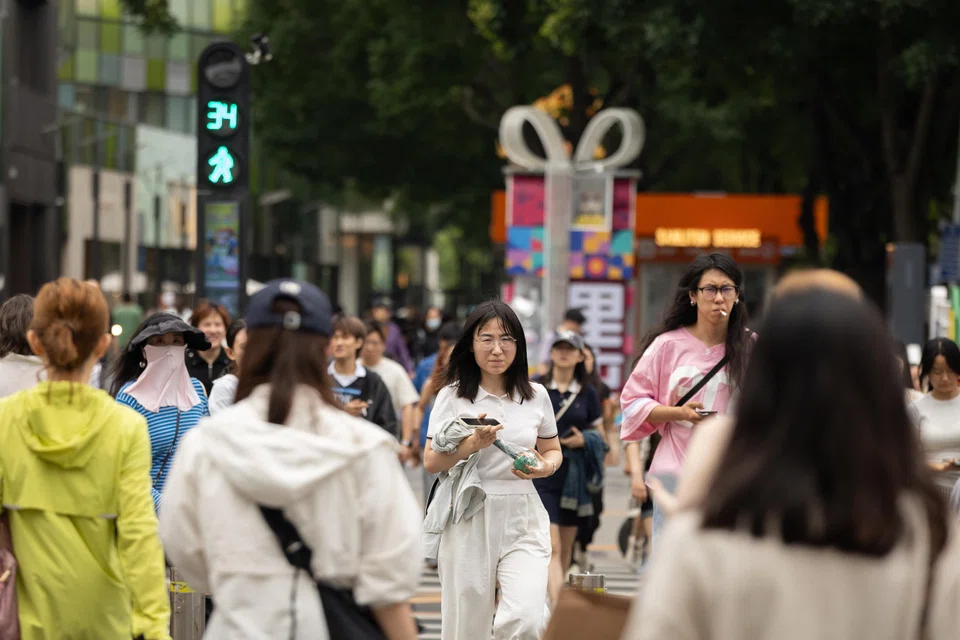
[BEIJING] China’s consumer spending and investment slumped to levels unseen since the pandemic, exposing risks still facing the economy even as it benefits from a de-escalation in tensions around Iran while exports boom.
Retail sales declined 0.6 per cent last month from a year ago, posting a worse-than-forecast drop that was their first fall since the reopening from Covid lockdowns in late 2022.
Home prices fell at a quicker pace in May and fixed-asset investment shrank a deeper-than-expected 4.1 per cent in the first five months from a year ago, according to data released by the National Bureau of Statistics on Tuesday (Jun 16).
In contrast to weakness on the demand side, industrial production climbed 4.5 per cent, up from 4.1 per cent in April and slightly better than forecast. The surveyed urban jobless rate eased to 5.1 per cent.
“While there are pockets of strength in tech and export-related industries, the broader economy is still struggling,” said Lynn Song, chief economist for Greater China at ING Bank. “This could eventually add pressure on policymakers to ease policy.”
An export boom driven by artificial intelligence has become a new source of economic imbalance in China, lifting production as domestic consumer spending sags under the weight of a housing crisis and a fragile jobs market.
But without stronger demand at home, the economy is at risk of a deeper slowdown even as the US-Iran deal to reopen the Strait of Hormuz holds out the promise of stabilising global shipping and energy prices.
The worse-than-expected slump in retail sales and investment also reignited questions around their accuracy in gauging broader economic health.
The services production index, which inched up to 4.4 per cent on year in May, has a stronger correlation with the pattern of growth in gross domestic product than retail sales, which comprised mostly goods, according to Yu Song, chief China economist at UBS Securities.
SEE ALSO





Inconsistency in the fixed-asset investment data that became apparent last year also mean it might exaggerate the weakness, he said.
“Second-quarter GDP data looks to be weak, but not quite as weak as one would expect from April data,” Song told Bloomberg Television. Some analysts estimated growth at near 4 per cent in April, tracking below the government’s official full-year target of 4.5 per cent to 5 per cent.
In a sign the figures disappointed investors, the yuan weakened in offshore trading after the data release, a day after reaching its strongest level since early 2023. The Hang Seng China Enterprises Index extended losses, falling about 1.3 per cent as at 1 pm in Hong Kong.
Within investment, private capital expenditure slumped 7.1 per cent in the first five months of 2026 from a year ago, the worst pace since 2020. Manufacturing investment declined for the first time in six years.
Further evidence emerged indicating a growing divergence in the economy. Investment in high-tech industries expanded 4.5 per cent, with capital expenditure of semiconductor and lithium battery makers up 11 per cent and 25 per cent, respectively.
NBS spokesman Fu Linghui attributed the slump in investment and retail sales to factors including heavy rainfall. Fu also pointed to last year’s high level of spending driven by subsidies as well as the economy’s transition to new growth drivers.
“Since the second quarter, certain economic indicators slowed because of complex changes in the global environment as well as structural adjustment in the domestic economy,” said Fu in a briefing in Beijing. “Some companies are facing difficulties. But looking at the overall trend, the momentum of the economy remains overall stable.”
Under retail sales, big-ticket items led the decline. Car purchases, which make up about 8 per cent of the overall figure, plunged 16 per cent in May from a year ago. Excluding autos, retail sales grew 1.1 per cent in May.
Sales of home appliances as well as construction and decoration materials also contracted at a double-digit pace.
A faster fall in home prices last month doesn’t bode well for consumer sentiment. Both new and second-hand homes declined in price at a quicker pace compared with April.
Any signs of improvement in the property market remain limited to the largest cities, partly thanks to better earnings related to the global AI investment boom.
A breakdown of the industrial output data showed a widening divergence between advanced manufacturing and the rest.
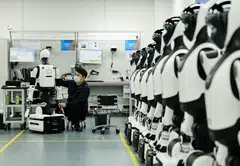
High-tech manufacturing soared 15 per cent in terms of value added in May from a year ago, accelerating from 13 per cent in April. The electronics industry saw a 17 per cent jump in output, thanks to booming demand for AI-related products and equipment.
The spurt of export growth this year has still been sufficient to keep China’s economy from cooling off too much. A global investment supercycle in AI is driving up prices and demand for hardware made by the world’s manufacturing powerhouse.
Outbound shipments soared in May at their fastest pace in three months. Chips and computers contributed to about half the growth in both exports and imports, with overseas sales of semiconductors soaring 111 per cent.
Stabilising trade ties with the US, reinforced by President Donald Trump’s visit to Beijing, further bolster the outlook.
Policymakers have appeared to be taking a wait-and-see approach in responding China’s two-speed growth, after efforts to coax consumers into spending delivered gains that proved fleeting.
The government dialled back public spending in March and April as bond sales decelerated. Authorities likely felt comfortable with GDP’s first-quarter performance – when it expanded 5 per cent – though economists also pointed to a potential lack of eligible projects.
“Domestic demand still requires a boost from loose monetary policy and proactive fiscal policy,” said Allen Ding, chief economist at China Citic Bank International. “There’s a high chance of interest and reserve requirement ratio cuts and increased fiscal spending in the second half if oil prices fall back.” BLOOMBERG
Decoding Asia newsletter: your guide to navigating Asia in a new global order. Sign up here to get Decoding Asia newsletter. Delivered to your inbox. Free.
Share with us your feedback on BT's products and services
TRENDING NOW

ComfortDelGro appoints two new independent directors

Once staunchly pro-China, Malaysian Chinese businesses are now distancing themselves from Beijing

NoonTalk needs continued financial support from CEO Dasmond Koh, auditors warn

DP Architects sets the benchmark for sustainability disclosure and design

