

Chinese exporters ‘numb’ to US threats as Trump set to visit
China ended 2025 with a record trade surplus of US$1.2 trillion
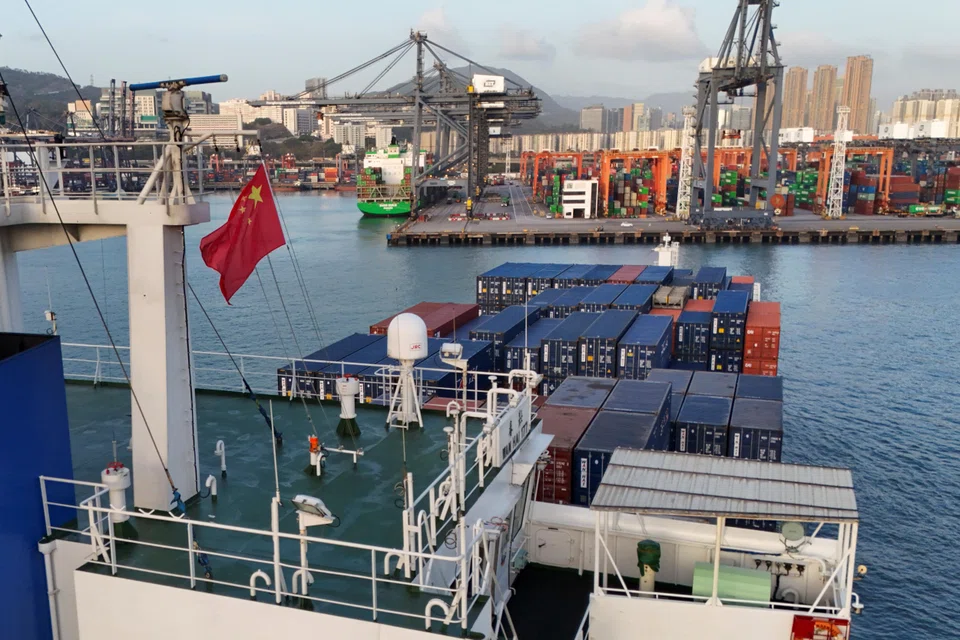
[SHANGHAI/BEIJING] US President Donald Trump’s visit to Beijing this month is none of her business, says Chinese salesperson Yu Yangxian, even though a large share of the electric lockers and vending machines sold by her company are destined for the United States.
“As long as the United States continues to trade, it will have to do business with us,” said Yu, whose company uses a strategy of partially passing on added costs to US consumers. “China’s supply chains and the product quality are strong.”
While tariffs still matter, she said that the company emerged from a turbulent 2025, when levies briefly rose to triple-digits, with its US client base largely intact and, like many Chinese exporters, gaining new markets globally.
That shows how competitive and resilient Chinese manufacturing has become, Yu added, by following a long-time national strategy of self-sufficiency to build nearly complete domestic supply chains across industries.
“Whether he comes to negotiate or to declare a fight, it does not pose a major threat to us,” she added, speaking of Trump.
Expanding to more regions
Expanding in Europe, South America, South-east Asia and Africa is the other prong of her firm’s strategy to cope with Trump’s tariffs and the rising prices of raw materials brought by the Iran war, Yu said.
It replicates Beijing’s national game plan.
China ended 2025 with a record trade surplus of US$1.2 trillion – the size of the Dutch economy – pushing into new markets by offering lower prices than incumbent competitors.
Exports to the United States fell 20 per cent, but rose 25.8 per cent to Africa, 7.4 per cent to Latin America, 13.4 per cent to South-east Asia and 8.4 per cent to the European Union.
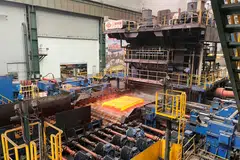
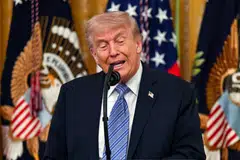
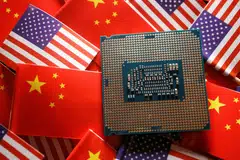
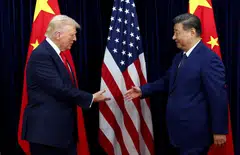
To get Trump to row back on tariffs, Beijing leveraged global dependence on Chinese supply chains and put export controls on rare earths.
These materials, critical in some semiconductor and defence uses, are produced almost exclusively by China, and industries worldwide, including US firms, cannot function without them.
“The rare earth thing really is just the ultimate trump card,” said Cameron Johnson, senior partner at supply chain consultancy Tidalwave Solutions.
Beijing can also curb supplies of pharmaceuticals, industrial machinery or the transformers the United States needs to expand its electric grid, he added.
In the short term, the Iran war gives Trump some leverage because the United States has excess energy that China and others need, but longer-term Beijing’s industrial breadth gives it an edge if the conflict escalates, he said.
“That’s why they are playing nice,” Johnson added, referring to Washington.
Relocation pressure on Chinese firms subsides
As tariffs fade from the forefront of the US-China rivalry, manufacturers in China face less pressure to diversify their production base.
Jonathan Chitayat, Asia head at Genimex Group, a contract manufacturer whose US business makes up 70 per cent of revenue, found new suppliers in Vietnam and Thailand during Trump’s first term, and more recently in India and Indonesia.
But 75 per cent of his network of 500 suppliers is still in China, many of whom abandoned plans to relocate after the US cut back levies on China, while they rose elsewhere.
“We have all learned not to take drastic action,” he said. “Everyone who waited feels pretty good about waiting now.”
Mike Sagan, vice-president of sourcing at Pride Mobility Products, a maker of wheelchairs, scooters and other items for those with difficulty moving about, said his firm’s supply chain of roughly 100 firms remains 70 to 80 per cent reliant on China.
“De-risking and diversification are not going to go away, but it does not have to be as rushed,” Sagan said.
“The panic has worn off and people have grown a little tougher skin when it comes to Trump making statements.”
‘Truce is great’ but not enough
Companies no longer overreact to Trump’s moves, having become “numb” to his threats, said Ren Yanlin, an executive at a Chinese firm dealing with overseas factory projects.
“The mindset is that it does not matter anymore.”
Eric Zheng, president of the American Chamber of Commerce in the commercial hub of Shanghai, said the association’s nearly 3,000 members had limited expectations of what Trump can achieve on his trip, but drew consolation from the prospect of dialogue.
They would welcome an extended truce on tariffs and export curbs, potentially with some Chinese purchase commitments in areas such as Boeing aircraft, soybeans, or US energy, he said.
But few counted on lasting relief.
“A truce is great, better than a trade war, but a truce is temporary,” said Zheng.
“We need some certainty. Companies need to plan for the long term, not the next 90 days, not even six months. It has to be several years.” REUTERS
Decoding Asia newsletter: your guide to navigating Asia in a new global order. Sign up here to get Decoding Asia newsletter. Delivered to your inbox. Free.
Share with us your feedback on BT's products and services






