

Chinese investors rush into US stocks as Beijing opens wider path overseas
There is a scramble into US-focused funds under the raised quota ceiling; the official-channel rush follows brokerage crackdown
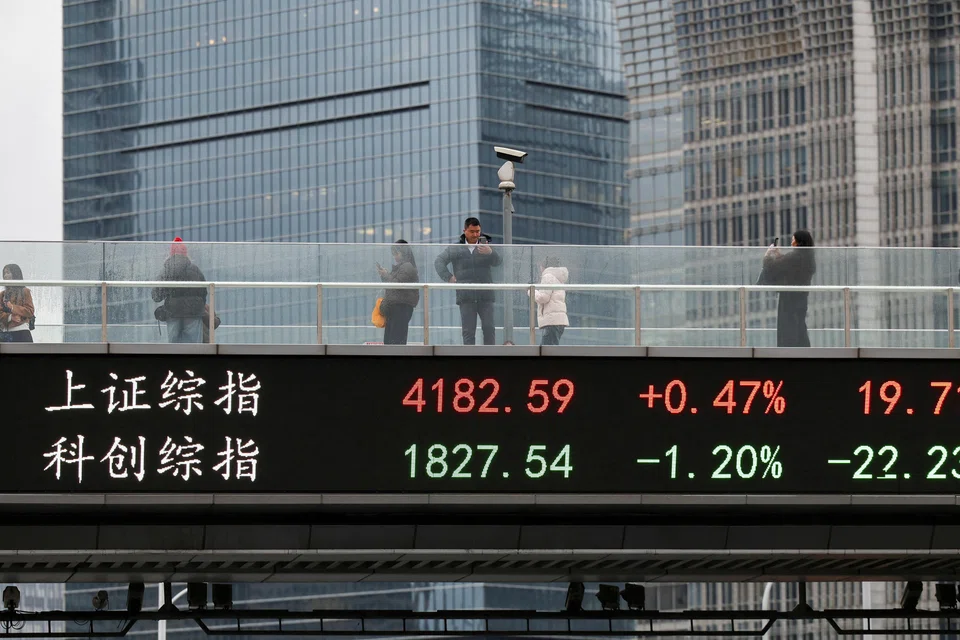
[SHANGHAI] Chinese investors are piling into foreign assets, especially US stock funds, after regulators lifted outbound quotas, unlocking pent-up demand as domestic yields are at rock bottom and Beijing tightens unofficial routes for moving money abroad.
While China has cracked down on what it deems illegal overseas investing through online brokerages, it has simultaneously broadened authorised channels to foreign markets.
Late last month China’s foreign exchange regulator raised the outstanding Qualified Domestic Institutional Investor (QDII) quota by US$6.8 billion to a record US$183 billion.
The speed with which US-focused funds moved to curb inflows just days later underscores investors’ scramble for exposure to Wall Street.
The daily inflow cap on a QDII fund tracking the Nasdaq 100 was raised from 10 yuan (US$1.5) to 5,000 yuan on Sep 9.
Just a day later, its fund manager Wanjia Asset Management sharply limited inflows again to 100 yuan daily for an individual investor.
“It means there was explosive inflows so the fund manager needed to limit the subscriptions,” said Ivan Shi, head of research at fund consultancy Z-Ben Advisors. “There remains huge appetite in China for US tech stocks.”
The rush overseas highlights Beijing’s growing challenge in stemming capital outflows.
Confidence in the domestic economy remains fragile, China’s 10-year government bond yield sits more than three percentage points below US Treasury yields, and the local stock market has broadly lagged the double-digit gains delivered by US equities this year.

Portfolio investment hit a record US$426 billion deficit in 2025, according to China’s Balance of Payments data, and net outflows reached US$146 billion in the first quarter of this year.
In another case, China Universal Asset Management eased restrictions on its Nasdaq 100 ETF, only to tighten curbs again two days later. TruValue Asset Management took a similar U-turn on its QDII fund investing in global chip stocks.
“Chinese demand for global asset allocation is getting bigger and bigger,” said Xu Jie, fund manager at Yuanzi Investment Management, which invests in global markets through exchange-traded funds (ETFs) under QDII.
Long-term investors need to “diversify risks and share growth in major global markets”.
The US is the top destination for QDII funds, accounting for nearly half of the roughly one trillion yuan business, according to Shanghai Securities.
Most US-bound ETFs trade at a hefty premium to their net asset value, reflecting investors’ eagerness to secure limited overseas exposure.
A Shenzhen-listed ETF tracking the Nasdaq-100 Technology Sector Index traded at a premium of 24 per cent on Wednesday.
“The premium just reflects strong household demand on global assets,” said Zhaopeng Xing, senior China strategist at ANZ.
China’s balance of payments turned positive recently due to strong trade inflows, “but the regulators still need a balance to control outflows”, he added. REUTERS
Decoding Asia newsletter: your guide to navigating Asia in a new global order. Sign up here to get Decoding Asia newsletter. Delivered to your inbox. Free.
Share with us your feedback on BT's products and services
TRENDING NOW

Prima to move out of historic Keppel Road flour mill building in 2028

Grab CEO’s wife Chloe Tong on life with Anthony Tan and finding her purpose

OCBC sheds S$8 billion in value as shares close nearly 6% down; analysts cautious on banks

As Asia’s food delivery giants rejig the pie, who will win the market?

