

Chinese New Year travel rush kicks off in China ahead of an extra-long holiday
It is hoped a longer holiday might prompt Chinese consumers to boost consumption
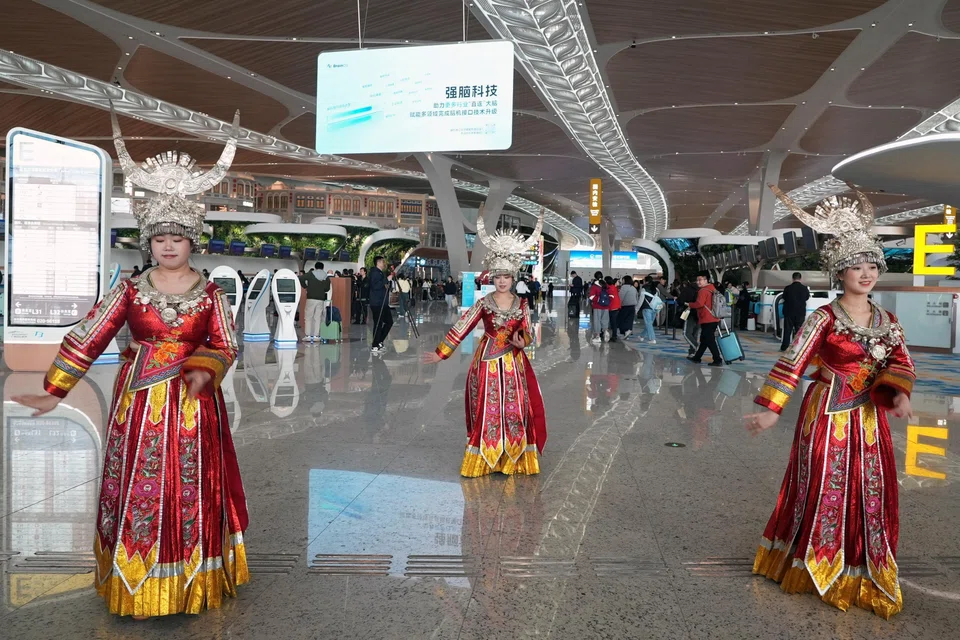
[GUANGZHOU] China’s annual Spring Festival travel rush, a 40-day period commonly referred to as the world’s largest annual human migration, kicked off on Monday (Feb 2) ahead of an extended Chinese New Year holiday.
This year’s Chinese New Year, ushering in the Year of the Horse in the Chinese zodiac, falls on Feb 17 and will be accompanied by an extra-long nine-day public holiday in China, running from Feb 15 to Feb 23.
It is hoped a longer holiday (last year’s break was eight days long) might prompt Chinese consumers to boost consumption by spending more on travel, meals and more this festival period.
Many Chinese consumers have been shaken by the country’s uncertain economic outlook and would rather save than spend. Homeowners have seen their assets depreciate in a years-long property market slump, while weaker growth momentum since the pandemic has added to job insecurity. This said, a state planning official said last week that China expects a record 9.5 billion passenger trips to be made during the travel period, surpassing the 9.02 billion trips made last year.
“Why do I feel it’s even more stressful to buy tickets this year compared to last year? For example, the flight back to my home is already sold out,” said 32-year-old Liu, a traveller flying out of Guangzhou airport on Monday. “If you don’t buy early, the price range fluctuates a lot, and can even double.”
Major travel platforms reported Chinese New Year bookings for 2026 already surpassing last year’s levels. According to data from Flight Master, as of mid-January, bookings for domestic flights during the holiday exceeded 4.13 million, up about 21 per cent year on year.


Popular outbound destinations are concentrated in South-east Asia, with those flights accounting for nearly 50 per cent of the total and Thailand among the leading destinations. Following a geo-political spat between China and Japan late last year, routes to Japan have dropped sharply, down over 40 per cent, according to Flight Master.
Domestically, culturally rich “intangible heritage towns”, such as such as Huangshan in Anhui, Jingdezhen in Jiangxi, Quanzhou in Fujian, Foshan in Guangdong and Zigong in Sichuan have emerged as popular destinations, according to data from online travel agency Qunar. REUTERS
Decoding Asia newsletter: your guide to navigating Asia in a new global order. Sign up here to get Decoding Asia newsletter. Delivered to your inbox. Free.
Share with us your feedback on BT's products and services
TRENDING NOW

Singapore identifies 7 firms responsible for haze fires, notices issued urging action: Grace Fu

DBS remains analysts’ pick ahead of Q3 earnings after Singapore banks’ share slump

High Court rules against Julius Baer’s Singapore trust arm in US$50 million family trust dispute

Could stablecoins be the future of money?

